Insert these segments where marked · spoken ~22–24 min @ 130–140 wpm
How to use: After recording A–C, record these inserts and drop them at the markers below.
Antony’s real constituency is not the Senate and not a queen. It is the men who had already learned, under Caesar, that a general is a paycheck, a land grant, and a face you can pick out of a line.
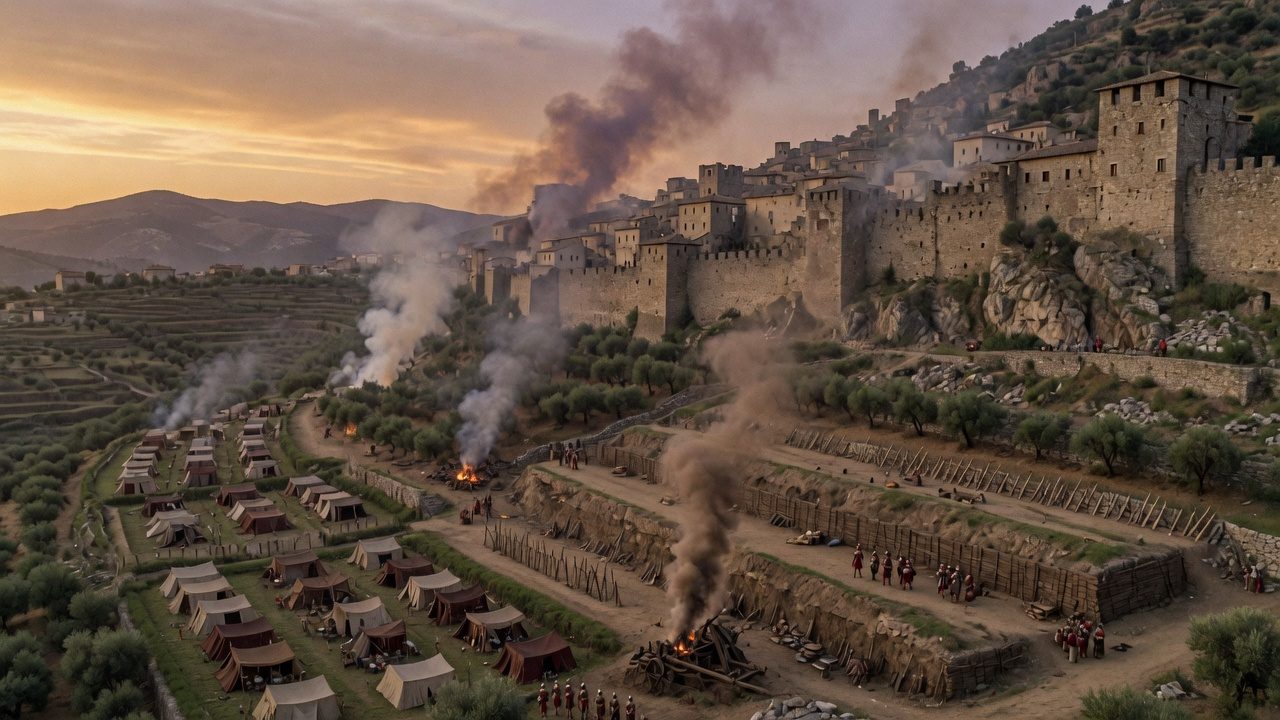
Late-republican armies are not the old farmer levy of the schoolbook. They are long-service professionals who expect a settlement at the end of the killing. Land in Italy if they can get it. Land abroad if they must. A donative in silver when the political weather changes. The man who can say, without blinking, “you will be paid,” and then pay, is their constitution.
The numbers are not romantic. After Pharsalus the Caesarian army already knows what a donative looks like. After the Ides they are promised land and the three hundred sesterces in the will. After Philippi Antony and Octavian owe sums they have to tear out of cities and farms. Appian’s figures for the eastern exactions are huge and may be rounded; the fact of the exaction is not. A soldier who has been told he is owed does not become a philosopher when the coin is late. He becomes a voter with a sword.
Antony can say “you will be paid” in a way Octavian, at first, cannot. He has been in the winter camps. He has the centurion’s humor. Plutarch, who moralizes, still keeps the useful anecdotes: Antony eating the same bread, joking in the ranks, remembering a name. Discount the glow. Keep the mechanism. A lieutenant who looks like the army will be forgiven things a clerk will not.
That loyalty has a range.
It holds at the Alps in 43, when a beaten consul is still their beaten consul. It holds at Philippi, when the other camp’s commander is a sick boy. It frays when the army is asked to become a Hellenistic escort — when the standards stand next to a Ptolemaic ensign and the pay comes through a court that does not speak the joke the same way. Italian veterans can follow Antony into Media. They are less sure they want to follow him into being the queen’s colleague.
Octavian never quite gets the joke. He gets Agrippa, and the treasury of Italy, and the habit of paying on time. In the end the habit beats the joke. But if you skip the soldiers, you will think Antony lost because he was weak. He lost, in part, because the thing he was best at — personal command — does not scale to a Mediterranean state once the person is in the wrong theater.
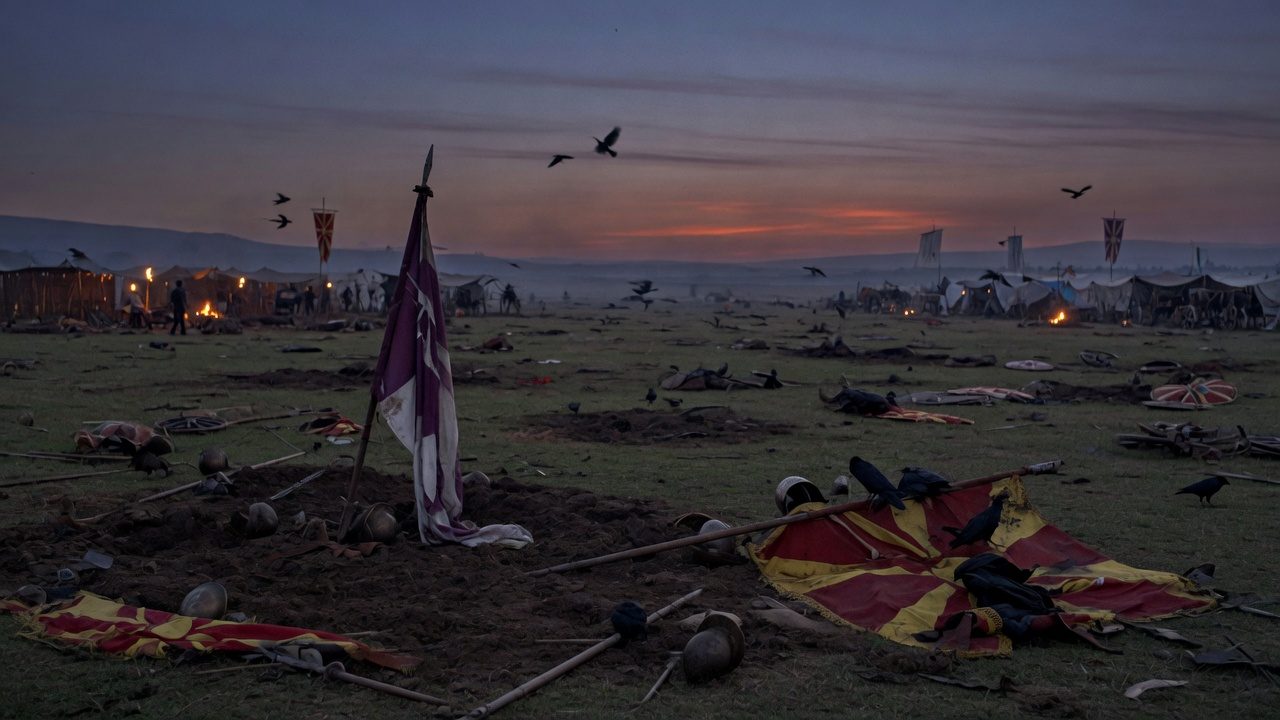
After Philippi he promises the men money he does not yet have and sends them, some of them, west to collect it from Italian towns. That promise is why Perusia happens. Octavian is the man standing on the farms. Antony is the man whose name is on the IOU. A soldier’s loyalty can survive a lost battle. It does not survive two paymasters.
Specific units stay with him longer than the pamphlets want. The old Caesarian numbered legions — the ones that will later appear on his denarii — are not a mob. They are a firm. They have a history of winning under a Julian name. They will follow that name to Media. They will sit in the ships at Actium until the face they signed for leaves. Then the firm dissolves, not because it was never loyal, but because loyalty of that kind is a person.
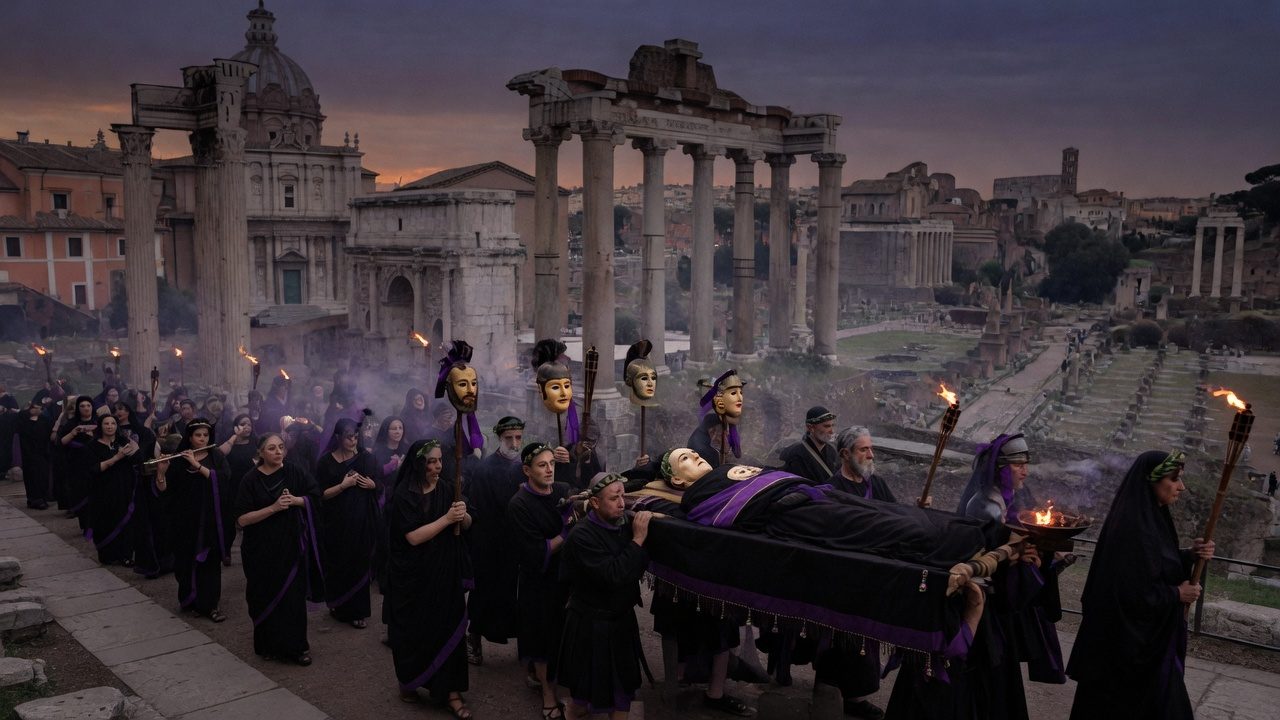
The oath you see on a relief, hands out, standards up, is not mysticism. It is a contract with a face on it. Antony’s face worked. Then it was on a ship going south, and the contract went looking for another face.
INSERT BEFORE PERUSIA
Fulvia is not a footnote who happens to be married to the lead.
She is the daughter of a family that already understood street politics. Her first husband is Publius Clodius Pulcher, the man who made the tribunate into a crowd. Her second is Gaius Scribonius Curio, Antony’s old friend, who dies for Caesar in Africa. Her third is Antony. That sequence is a career. She does not marry the revolution by accident. She is one of the people who knows how to run it when the men are in the field.
In the 40s she does things Roman writers do not like women to do. She organizes. She writes. She appears in military spaces. Cicero, who hated her world before he hated Antony, leaves you a trail of insults. After the Philippics and the lists, later tradition hangs the worst picture on her: the head of Cicero in her lap, a hairpin through the tongue. That scene is not something we can take to a bank. It is something a culture says when it wants a woman to carry the cruelty of a regime.
She is also, unusually, a face on metal. In the eastern issues of the triumviral years, Fulvia appears as Victory on some coins, and her name gets onto others in a way Roman wives of the previous generation did not. That is not a cute fact for a collector. It is a statement that the household is a government. Octavian will later let Livia be a quieter kind of power. Fulvia is the loud kind, and the sources never forgive her for it.
What we can take to a bank is Perusia.
While Antony is in the East, Fulvia and Lucius Antonius try to keep his Italian position from being eaten by Octavian’s colonies and Octavian’s name. They may have been trying to force Antony to come home and be a western power. They may have been improvising. Appian gives Lucius a speech about liberty that sounds like a historian’s furniture. Under the furniture: veterans who were promised Italian land, towns that do not want to give it, a consul who is an Antonius, and a wife who can still move money and men in the city. The war is real. The hunger in the town is real. When it ends, her policy is a corpse and she is on the road to Greece.
She dies at Sicyon in 40. Antony, coming west too late, is said to have blamed her, or ignored her, or both. The sources are enjoying themselves. A dead political wife is a convenient author of other people’s wars.
Then he marries Octavia. The replacement is the point. One woman who could run a faction is swapped for one woman who can be walked through a treaty. Rome calls the second one virtue. It is also a demotion of Antony’s Italian machine. After Fulvia, he does not have a politician in the city who is his.
If this film has a private tragedy that is not a barge, it is that. Not a lover. A partner he could not, or would not, come home to back up.
INSERT AT BRUNDISIUM / MARRIAGE
Octavia is diplomacy you can seat at a dinner.
Sister of Octavian. Widow of Gaius Claudius Marcellus. Mother already of a Marcellus who will later be Augustus’s first great hope and first great funeral. In 40 she is the living clause of the Treaty of Brundisium. Antony marries her because soldiers have made it clear they do not want another Italian war, and because a sister is a hostage who looks like a honor.
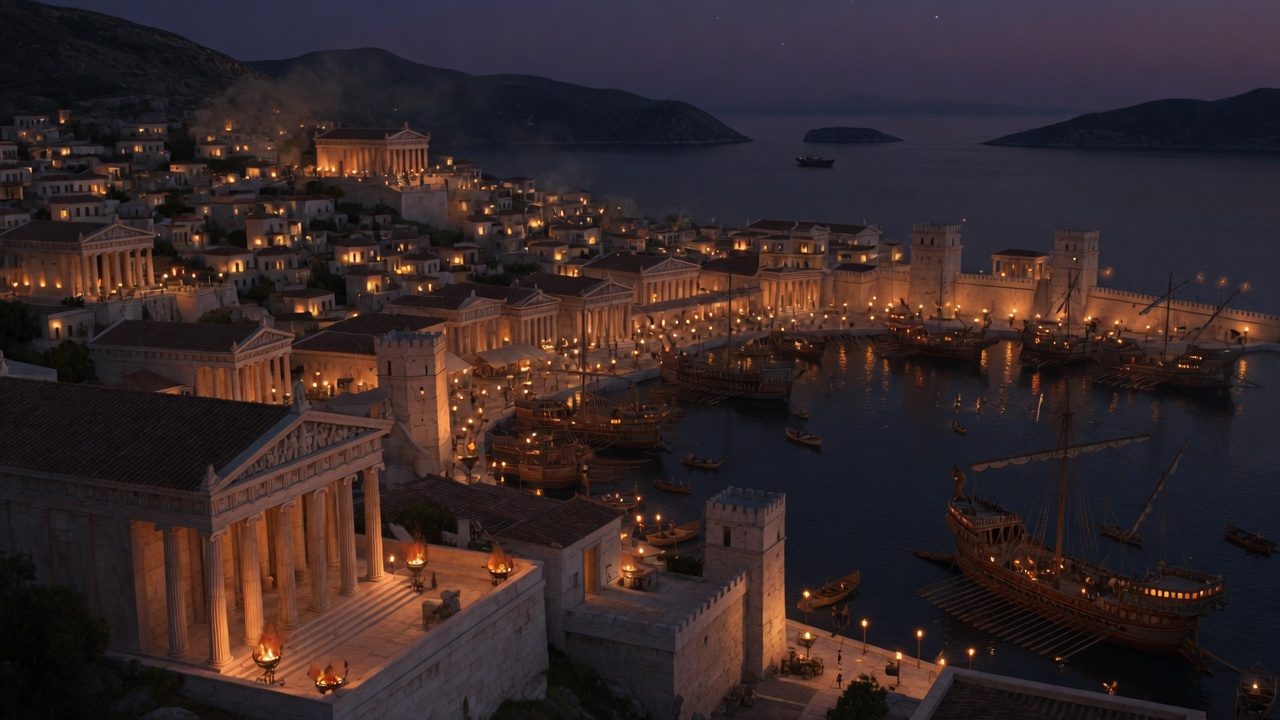
She does the job. She moves between the brothers-in-law. In 37 she is part of why Tarentum happens at all: ships for Octavian’s Sicilian war, troops for Antony’s eastern one, a sister walking the gangplank so neither man has to be the first to blink. She brings men and money east when the Parthian file is open. She keeps a Roman household in Athens, which is the right city if you want to say: this is still a Roman command, only stationed in the Greek world. Two daughters — Antonia Major, Antonia Minor — make the marriage more than a press release.
Plutarch, who likes a saint when he can find one, makes her almost too good. Discount the halo. Keep the logistics. She is a convoy with a face.
The limit arrives when she is no longer useful in the room where Antony actually decides.
In 37–35 she comes east again with supplies. He tells her, from a distance, to go no farther than Corcyra, or Athens, and to send the men and the money on. He does not come to meet her. He is with Cleopatra, or with the wreck of the Parthian year, or with both. Octavian takes the slight and puts it on a billboard. The good Roman wife, refused. The good Roman sister, insulted. The eastern woman, in possession.
Octavia goes back to Rome and does a more dangerous thing than making a scene. She stays in Antony’s house. She raises his children, including the ones that are not hers. After his death she will raise more of them. This is pietas as a public performance and, as far as we can tell, as a habit. It makes Antony look worse with every quiet year she survives him. It also folds his blood into the new dynasty on the winner’s terms.
Antonia Minor will marry Drusus, Augustus’s stepson. Her sons will be Germanicus and Claudius. Her daughter will be Livilla. The woman who was a treaty clause becomes the grandmother of an emperor. Antony’s face, which could not become Augustus, gets into the palace through a sister-in-law’s patience.
That is not consolation. It is how Roman families actually work when the men have finished killing each other.
INSERT BEFORE THE DONATIONS / or BEFORE ACTIUM
There is an old Roman story about the East.
A good man goes out in a toga. He learns the language of kings. He puts on a longer garment. He is seen with a cup. He forgets the Tiber. He comes back wrong, or he does not come back.
You can find versions of this story before Antony is born. You can find it in the fear around Scipio. Around generals who winter in Asia. Around anyone who likes Greek luxury too visibly. It is a file in the culture. When you need to destroy a Roman who has been stationed too long at Alexandria, you open the file and put his name at the top.
Cicero begins the work in 44 and 43. The Philippics are not only policy. They are a costume drama. Antony vomits. Antony staggers. Antony keeps dancers. Antony is a gladiator, a brigand, a man who has already ceased to be a consul in his body. Some of that is personal hatred. Some of it is a method. If you can make the audience see a man as un-Roman, you do not have to win every argument about provinces.
Octavian finishes the file after 36, and especially after 34.
Dress: Antony as the new Dionysus, ivy and a robe, a god the eastern cities already know how to cheer.
Religion: a pair with Cleopatra-Isis, a sacred drama that looks, from the Palatine, like a man kneeling.
Ceremony: a triumph in the wrong city.
Paper: a will that wants burial in the wrong soil.
Sex: a Roman stripped of his Roman wife and kept by a foreigner.
Drink: the old charge, reheated, because a drunk cannot have a policy.
How much of it is true?
He did use Hellenistic royal language. He was governing a Hellenistic world. Kings in the East do not take instructions from a man who insists on looking like a bored praetor. He did live in Alexandria. He did stage the Donations. He did appear, on eastern coinage and in eastern ritual, as something thicker than a proconsul.
He did not forget how to command a Roman column. The retreat from Phraaspa is a Roman piece of work. The army that sits at Actium is a Roman army with allies, not a fancy-dress party. The letters and the dispositions we can still trace are the letters of a magistrate under strain, not a man who has misplaced Latin.
“Going native” is what the western rival says when the eastern settlement becomes a competing capital. It is also what the Senate says when it cannot admit that the Republic has already become a set of courts. Syme, in the last century, put the whole age under that kind of light: the revolution is a struggle over who gets to describe it. Antony lost the description before he lost the last harbor.
If you take the file as sociology, you will miss the war. If you throw the file out, you will miss why Italy swore an oath in 32 without needing to meet Cleopatra. The propaganda works because it sits on a real Roman nerve. A magistrate who can give Armenia to a child in a gymnasium is already a different species than a consul who has to come home and explain himself.
Antony became that species on purpose. He thought it was how you hold the East. Octavian proved you hold the empire by holding the West and calling the East a temptation.
D4b — INSERT WITH D4 (how the file is built)
After 30, the file gets a staff.
Horace’s Epode 9 and the Actium Ode give you a queen and a eunuch court and a Roman who cannot come home. Virgil’s shield in Aeneid 8 turns a civil-war naval action into a theogony: Caesar’s star on one side, barking gods on the other. Propertius walks the same road. None of them are lying in the simple sense. They are doing the thing poetry does for a new regime. They make a battle feel like weather, and weather feel like justice.
The Res Gestae is colder. It does not bother to hate Antony. It erases the peer. “I drove the pirates from the sea.” “Egypt I added to the empire of the Roman people.” “The whole of Italy swore an oath to me.” If you did not know the other name, you would not learn it there.
This is why “going native” cannot be treated as a lifestyle note. It is the official reason a colleague became a foreign war. Once that reason is installed, every earlier fact is available for reuse: the cup in 47, the Lupercalia crown, the lists, the Alexandrian triumph, the children with royal names. A life becomes a dossier.
The counter-dossier is not a rehabilitation. It is a sequence of days. Mutina. The Alps. Philippi. Phraaspa. Actium as a blockade before it is a flight. A man can fail all of those days and still not be the pamphlet.
INSERT WITH D4, or AS A COIN PLATE
If you want Antony without Cicero’s adjectives, look at the metal.
In the late 30s his mints strike the famous legionary denarii. A galley on one side. An eagle and standards on the other. A legend that is basically a unit number: LEG II, LEG III, LEG IV, up through the teens and beyond. It is one of the largest issues of the dying Republic. It is also a sentence: the state is the army, and the army is numbered, and the man paying it is the government.
There is no Senate on those coins in any way that matters. There is no modest magistrate. There is a fleet and a standard. Compare that with Octavian’s cleaner western types — the young Caesar, the civic wreath, the claim to a filial piety that is also a brand. One man advertises a fighting establishment. The other advertises a right.
In the East the types change climate. Cleopatra’s profile. Antony’s. Greek legends. The pair as a joint fact. To a Syrian or an Egyptian who takes silver in a market, this is ordinary royal communication. To a Roman senator who sees the same silver described in a speech, it is a divorce from the city.
Coins do not argue. They circulate. That is why they are more dangerous than pamphlets. A Philippic you can refuse to copy. A denarius you take because you are buying grain.
There are other types worth a second of screen. Antony as a priest of Caesar, head veiled, trying to own the new cult before the adopted son does. Antony and Octavia facing each other on a gold piece from the Brundisium years — the treaty you can hold. Then the later eastern silver where Octavia’s place has been taken. You can teach the last decade of the Republic with five coins and no narrator, if you are willing to let the metal talk.
When the war is over, Antony’s silver is still out there, worn, a little shameful, still good. The legionary issues become a collector’s series two thousand years later, which would have pleased him more than the poets. They are the most honest self-portrait he left: not a lover, not a drunk. A paymaster with a fleet.
A few names, said the same way every time, will keep this film from wobbling.
Marcus Antonius — MAR-kus an-TOH-nee-us. After the first time, Antony is fine.
Antonii — an-TOH-nee-ee. The family.
Julia — YOO-lee-uh. His mother. Not Caesar’s daughter.
Lentulus Sura — LEN-tyoo-lus SOO-ruh. The stepfather.
Fulvia — FUL-vee-uh.
Octavia — ok-TAY-vee-uh.
Cleopatra — klee-oh-PAT-ruh. Seven, if you need the number.
Caesarion — suh-ZAR-ee-on. Also Ptolemy Fifteen.
Antyllus — an-TILL-us. The son killed in 30.
Iullus — YOO-lus. The son who lives into the dynasty.
Ventidius — ven-TID-ee-us. The man who actually beat the Parthians.
Canidius — kuh-NID-ee-us. The officer left on the beach.
Ahenobarbus — ah-hay-no-BAR-bus. Red-beard. The consul who walks away.
Sosius — SOH-see-us. The other Antonian consul of 32.
Artavasdes — ar-tuh-VAZ-deez. Armenia.
Phraaspa — FRAY-as-puh. The wall that did not open.
Mutina — MOO-tih-nuh.
Perusia — peh-ROO-zhuh. Pick that or peh-ROO-see-uh and stay.
Brundisium — brun-DIZ-ee-um.
Philippi — fih-LIP-eye.
Actium — AK-tee-um. Not AK-shum if you can help it.
Tarsus — TAR-sus.
Alexandria — al-ig-ZAN-dree-uh.
Latin in this episode is scarce on purpose. When it comes, leave air.
Magister equitum. Master of the horse.
Tresviri rei publicae constituendae. Three men for the settling of the Republic.
Clementia. The mercy Caesar advertised and the triumvirs sold.
83 BC — Born. Grandson of the orator. Son of Creticus and Julia.
71 — Father dead in the East.
63 — Stepfather Lentulus Sura executed in the Catiline year. Antony about twenty.
57–55 — Cavalry under Gabinius. Judaea. The restoration of Ptolemy XII.
54 — Joins Caesar in Gaul.
52 — Quaestor.
49 — Tribune. Flees to Caesar. The legal costume of the civil war.
48 — Left wing at Pharsalus. Master of the horse. Italy in Caesar’s absence.
44 — Consul with Caesar. Lupercalia, 15 February. Ides, 15 March. Funeral.
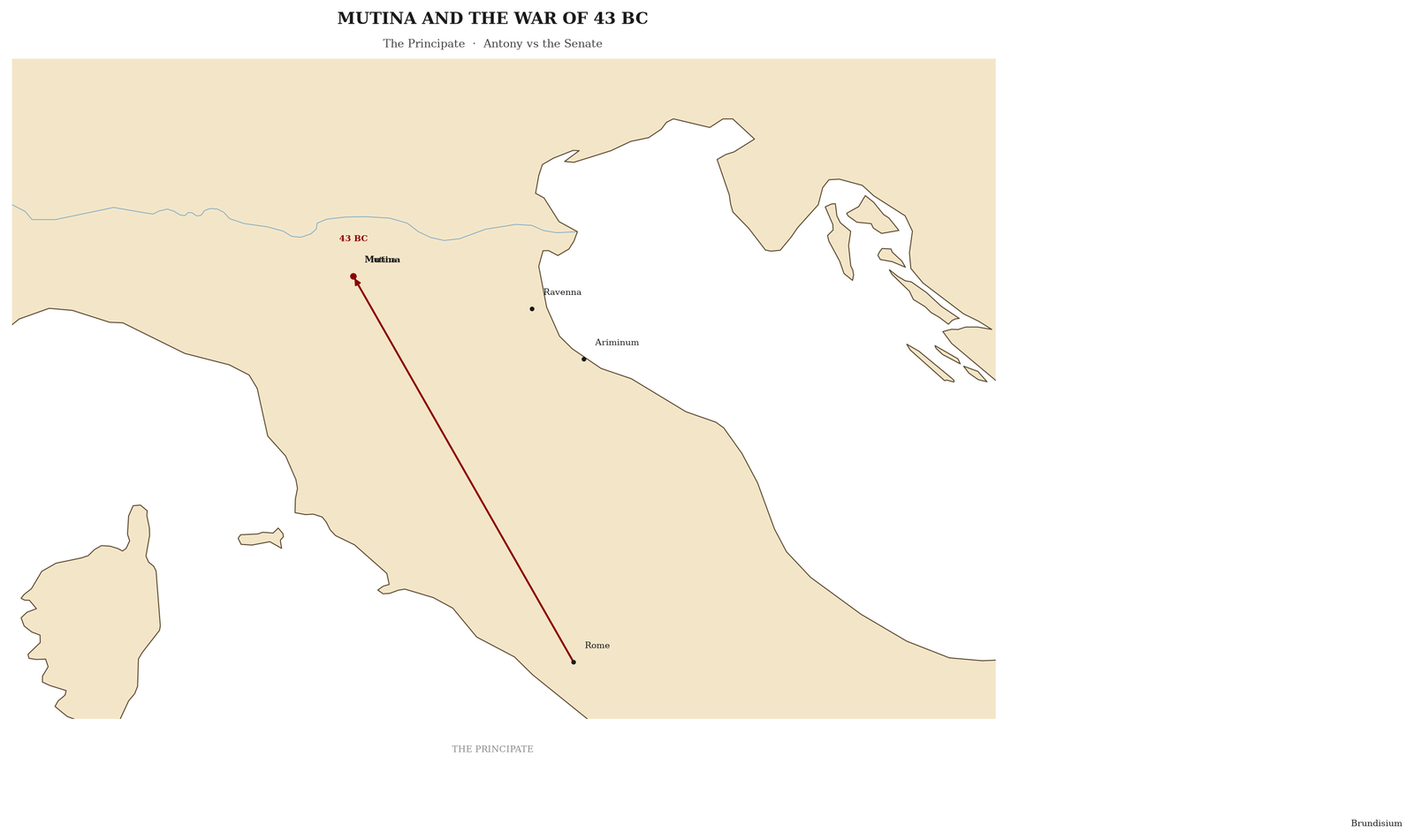
43 — Mutina. Retreat over the Alps. Triumvirate, November. Proscriptions. Cicero killed, 7 December.
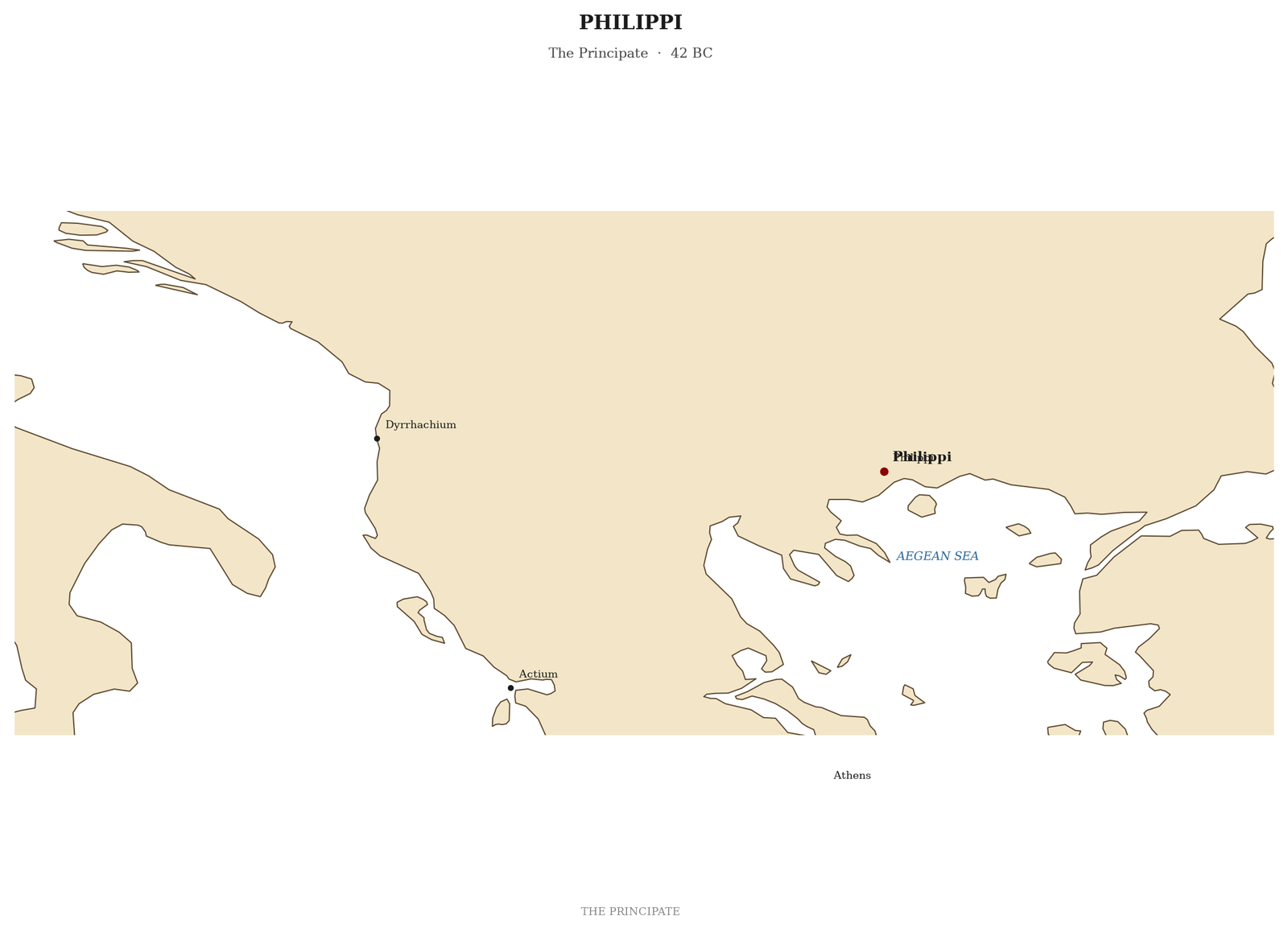
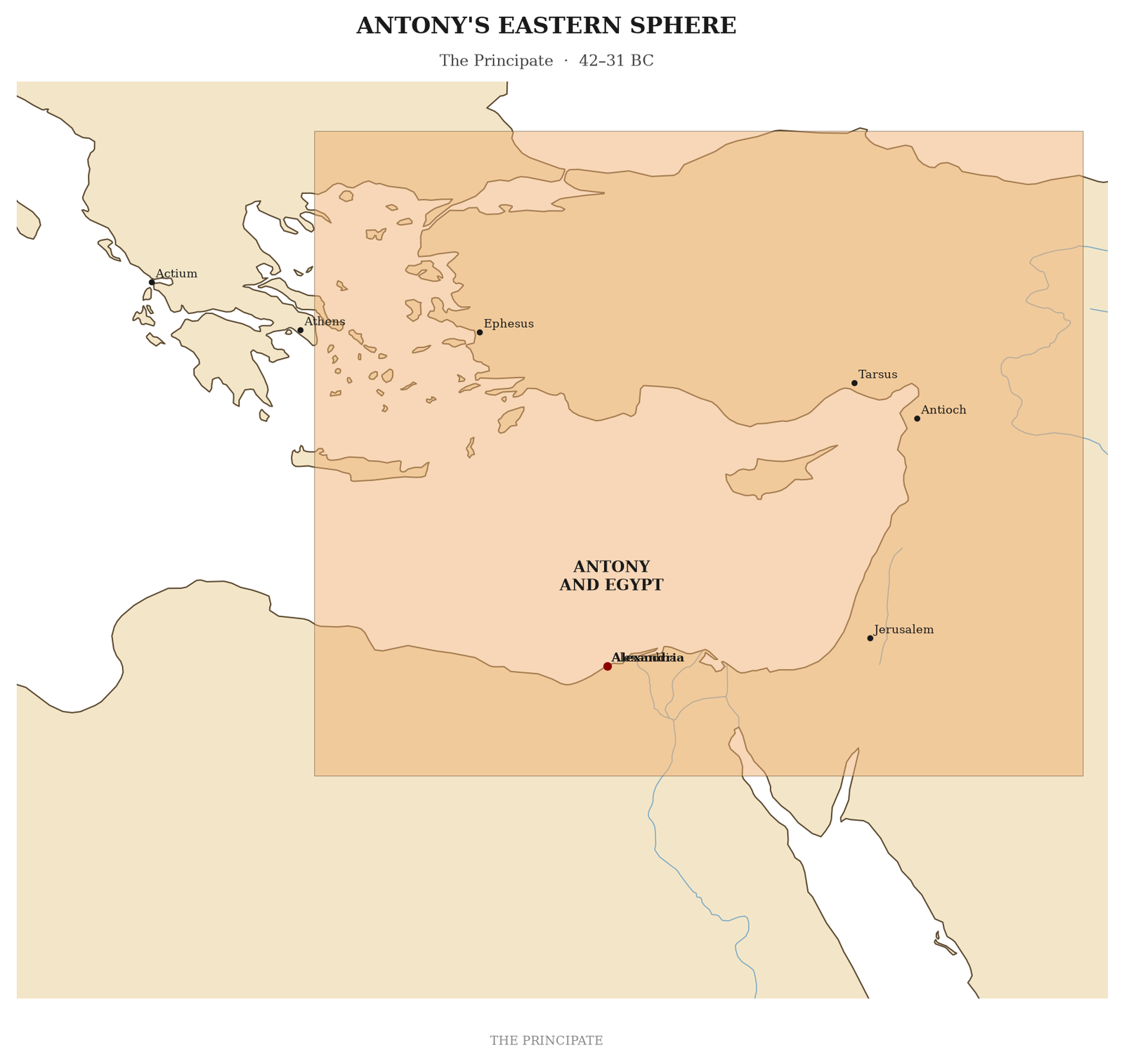
42 — Philippi. Two battles. Brutus and Cassius dead. Antony takes the East.
41–40 — Perusine War. Fulvia dies at Sicyon. Treaty of Brundisium. Marriage to Octavia.
41 — Tarsus. The alliance with Cleopatra as a state.
39 — Misenum with Sextus. Ventidius beating Parthians in Syria.
37 — Tarentum. Triumvirate renewed.
36 — Parthian campaign fails at Phraaspa. In the west, Sextus broken; Lepidus retired.
34 — Armenia seized. Donations of Alexandria.
32 — Break. The will. Italy’s oath. War on Cleopatra.
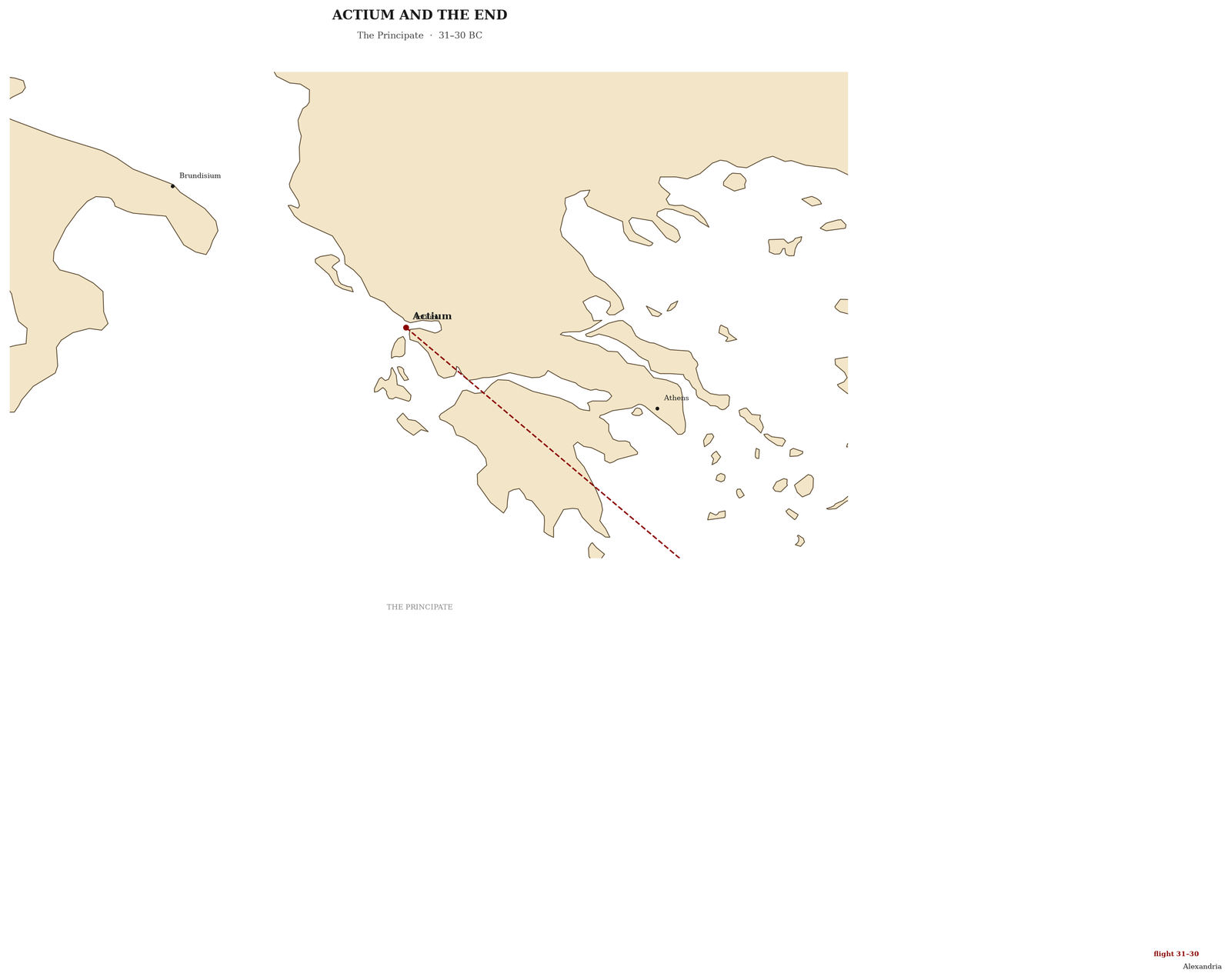
31 — Actium, 2 September.
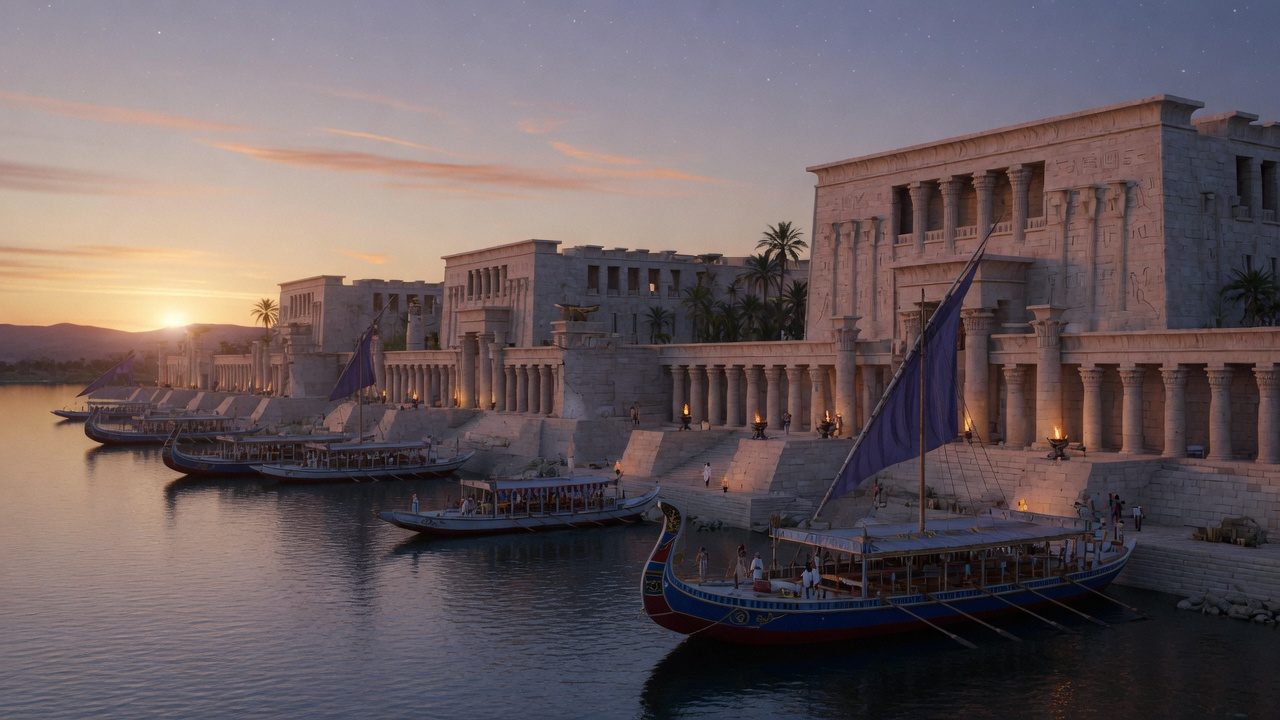
30 — Alexandria. Antony’s death. Cleopatra’s death. Caesarion and Antyllus killed. Egypt a province.
If you want the same spine in four beats: Caesar’s man. The Forum after the knives. The soldier of Philippi. The eastern magistrate who could not come home.
Fourteen years from the Ides to the mausoleum. If you need the life in one breath, that is the breath.
Say the dates slowly. A lower-third can carry the year. The voice should carry the fact that none of this felt like a chapter while he was in it. A career this fast is a man answering the last letter on the table. The table is in a different city every autumn.
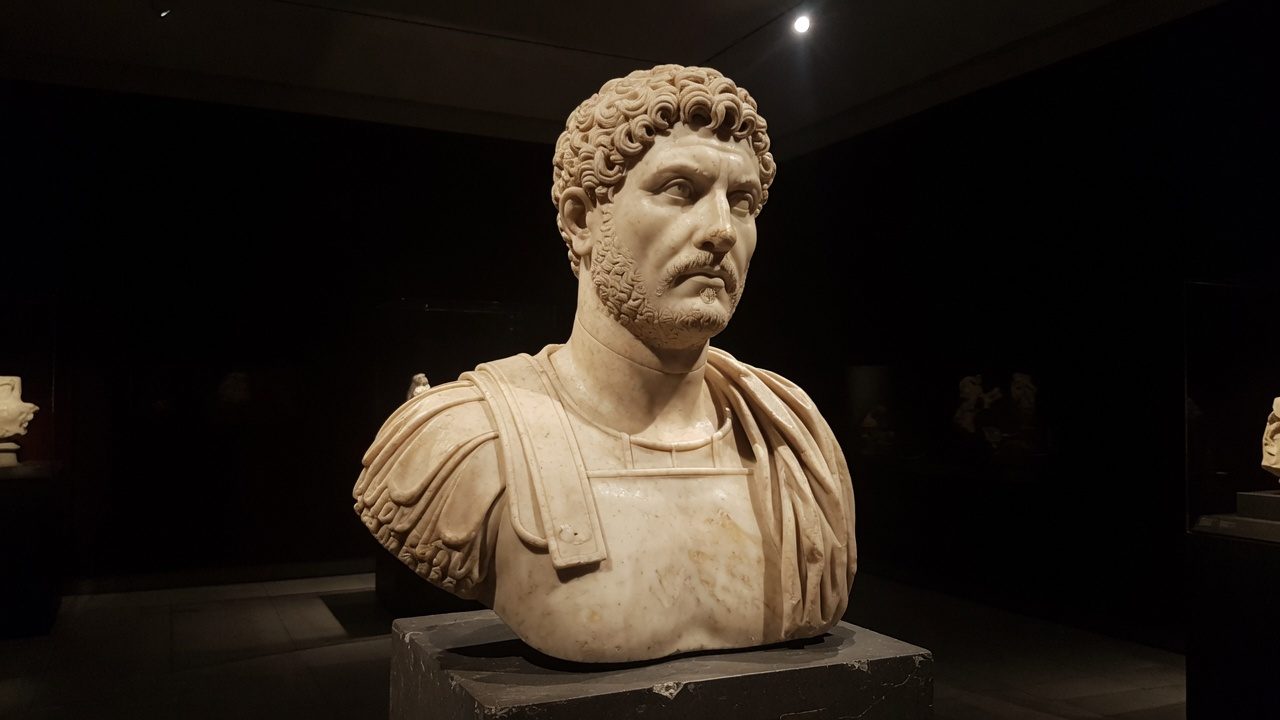
The portraits we call Antony are a problem, like most late-republican faces. Some are him. Some are a type: the thick neck, the low brow, the look of a man who can shout. Later copyists like the type because it matches the pamphlet.
The written man is more useful than the marble.
He writes, when we can hear him through other people, like an officer: short, practical, occasionally funny. He is not a stylist. He does not need to be. He is physically brave in a way even enemies grant. He is careless with money in a way even friends grant. He can be generous to a defeated Roman, which costs him little and buys him a reputation he likes. He can be absolute with a name on a list, which costs other people everything.
He is not stupid. The Bononia negotiation, the Brundisium settlement, the long attempt to make Egypt a partner instead of a loot-sack — these are policies. They are not the policies of a man who has lost his head in a bedroom. They are the policies of a man who thinks the empire’s center of gravity can sit in more than one harbor.
That thought is the one Octavian cannot permit. Not because it is drunk. Because it is a different map.
A body count at the end of a Roman civil war always includes the next household.
Dead in 30: Antyllus, in his mid-teens, old enough to have been given the toga and a future. Caesarion, seventeen or so, old enough to be a slogan.
Alive because they are usefully small, or usefully female: Alexander Helios, Cleopatra Selene, Ptolemy Philadelphus. Selene will later marry Juba of Mauretania and become a queen in the western sense Octavian can tolerate — client, decorative, far. The boys fade in the sources. Fading is a kind of policy.
Alive because they are Roman: Iullus Antonius, consul in 10 BC, poet enough to be mentioned, lover, if the official story is true, of the emperor’s daughter Julia. He dies in 2 BC, forced to suicide in a scandal that is also a purge. Antonia Major, grandmother of Nero. Antonia Minor, mother of Claudius, grandmother of Caligula. The dynasty that called Antony a warning is made, in part, of his daughters.
He does not get the last word in his own house. That is what losing to Augustus means.
SOURCES, IF THE CUT CAN BEAR THIRTY SECONDS OF HONESTY
Plutarch’s Antony is a moral life with excellent scenes. He had Dellius, and other memoirs, and a taste for a fall. Use him for weather. Check him for numbers.
Appian is the best narrative historian of the civil wars we have, and he is better on the 40s than on Actium, where his text fails us.
Dio is later, senatorial, useful, and already living in the world Antony lost.
Cicero’s Philippics are primary and poisoned. They are evidence of what a great writer can do to a reputation before the man is even dead. They are not a biography.
The poets of the 20s BC are not witnesses. They are the ministry of the winner.
When two of these disagree, this film has tried to say so and move. We do not have CCTV from 32 BC. We have a corpse, a province, and a very successful story about why the corpse deserved it.
OPTIONAL BRIDGE BACK TO THE CICERO FILM
If you watched the Cicero episode, you have already sat in the Philippics and on the Formiae road. You have seen Antony as the addressee of another man’s last year.
That was the right camera for that film. This one turns it.
The orator needed Antony to be a tyrant-in-waiting, because that is the only enemy a speech can still hope to kill. The lieutenant needed the orator dead, because a speech had just made him a public enemy and had nearly succeeded. Both needs are real. Neither is the whole man.
You do not have to like Antony to take him out of Cicero’s frame. You only have to watch what he does when the frame is gone: Mutina, the lists, Philippi, the East, the long failure to become a founder. The speeches did not invent his limit. They advertised it early.
LAST INSERT, IF THE CLOSE NEEDS ONE MORE BEAT
Caesar collected men who could do a piece of his work. Labienus, until he wasn’t. Antony. Hirtius. The boy he barely knew he was adopting.
The piece Antony could do was the human piece of an army. The hour. The wing. The speech over a body. The march that should have dissolved and did not.
The piece he could not do was the one Caesar was just inventing and Octavian would finish: a way for one man to leave the room and have the room stay his.
That is why this is not a romance, and not a temperance lecture, and not a story about a crown offered at a festival. It is a Roman political life that ends in a Hellenistic court because that is where the last lieutenant went when Italy had already chosen the other heir.
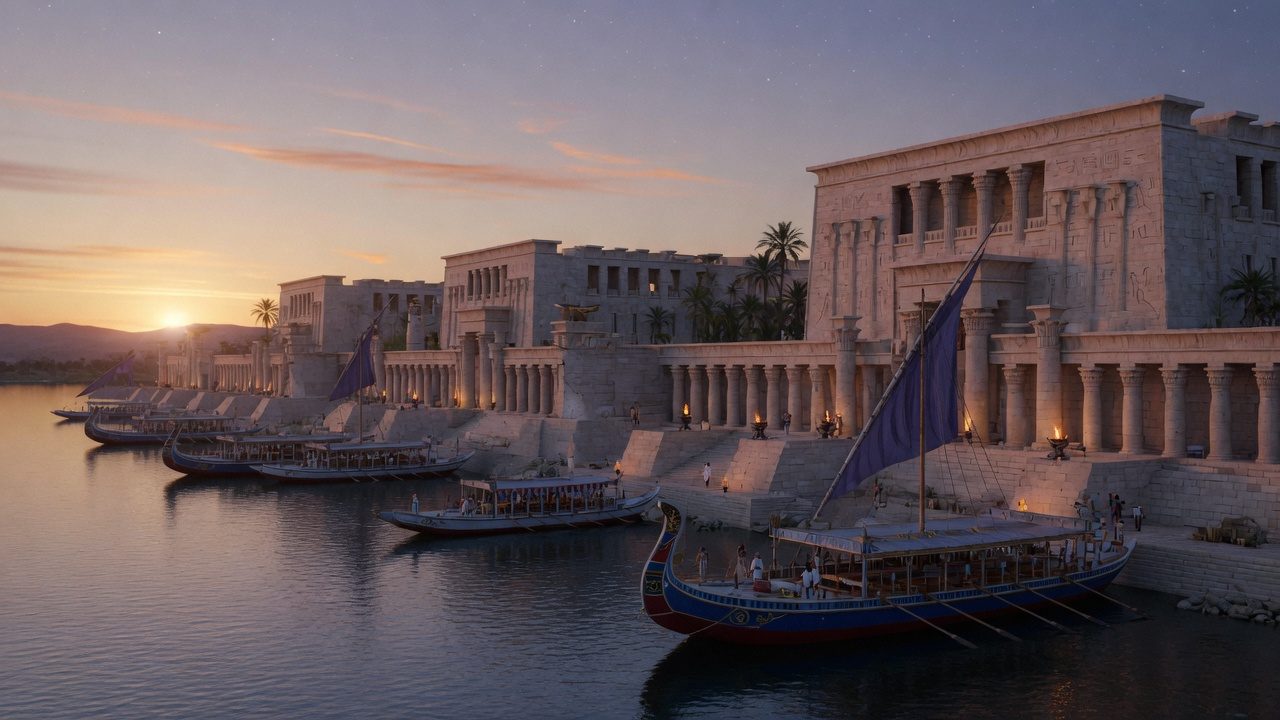
The ropes creak. The harbor works. The province begins.
One more thing, if there is still air.
Octavian will take a new name in 27 and make the emergency look like furniture. The furniture is called the Principate. It needs a founder who restored the Republic and a rival who could not be allowed to have been a Roman in full. Antony is drafted into that job after he is dead. He does it better than he did any of his living offices. He becomes the explanation.
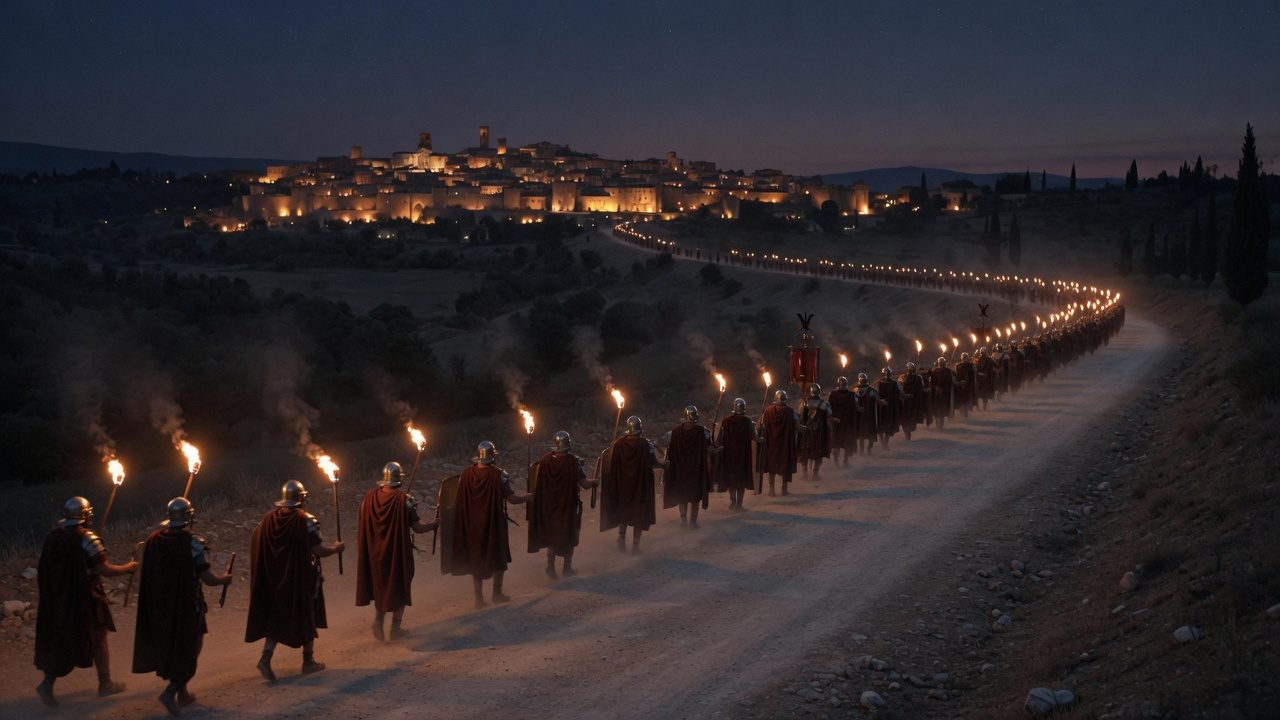
You do not have to rescue him from it. You only have to see the living man first: the wing at Pharsalus, the toga on the spear, the Alpine column, the ditch at Cassius’s camp, the retreat from Phraaspa, the bad decision in a strait, the unfinished tomb. A soldier-politician. Not a cartoon. Not a lover who misplaced an empire. A Roman who could do the hour, and not the decade, and ran out of hours in a city that was never going to forgive him for dying there.
End Block D — package complete