Insert these segments where marked · spoken ~22–28 min @ 130–140 wpm
Marius is easy to get wrong in opposite directions.
One version makes him a democratic hero: the new man who opened the legions to the poor and saved Italy. The other makes him a proto-dictator: the man who invented the private army and taught Sulla how to march.
He is not a democrat. The poor do not get a philosophy from him. They get a pack, a wage, and a rumor of land.
He is not a king. He dies in a Republic that still elects consuls, still has a Senate, still tells itself a story about annual office. He never publishes a charter. He never says, out loud, that the Senate is obsolete.
What he does is more durable than a speech.
He shows, in sequence, that a war can be moved by a street vote, that a legion can be filled without a farm, that a savior can be re-elected until custom looks optional, and that veterans will show up for the man who paid them when the Forum will not.
Then he shows the last thing, by accident: if you build that machine and lose your nerve in 100, someone colder will drive it in 88.
Sulla is not a demonic opposite. He is a student with better timing and fewer illusions about being loved.
Keep that in your ear and the battles stay battles. The politics stay politics. The death in 86 stops being a sad coda and becomes the bill.
A consul is not a president.
Stop translating.
Rome elects two consuls every year. They take office on January 1st in this period. They give the year its name. You date a contract in the consulship of X and Y. That is not stationery. That is how a Republic without a single executive remembers who held the knife.
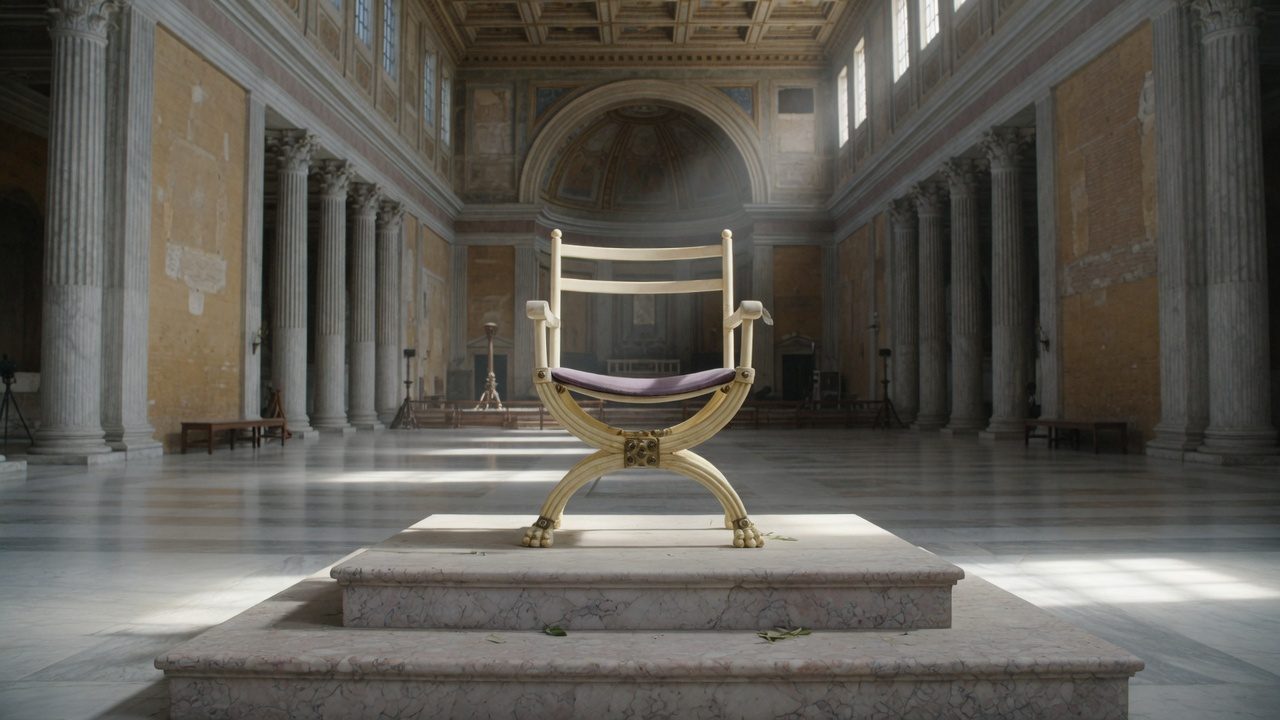
Each consul has imperium — lawful command. The word is older and heavier than “authority.” It is the right to command citizens in war, to be preceded by twelve lictors with fasces, to sit on that ivory folding stool, the sella curulis. In the city, a colleague and a tribune can get in your way. In the field, imperium is closer to a loaded weapon.
The job is annual on purpose. One year. Then you become a private man again, a consular, a voice in the Senate with a prestige that is supposed to be enough.
You are not supposed to run again next year. A law and a thick crust of custom said: wait ten years. The idea was rotation. Many families at the trough, no one man becoming the weather.
There are other rules stacked on the stool. You are supposed to have been praetor first. You are supposed to be forty-two or so. You are supposed to have a name the voting centuries recognize as furniture.
Marius breaks the social rule first: novus homo, no consular fathers. Then he breaks the command-assignment rule: the people give him Numidia. Then, after Arausio, he breaks the rotation rule so thoroughly the city stops counting it as a break and starts calling it survival.
104, 103, 102, 101, 100. Five consulships in a row after the first. Then, sixteen years later, a seventh.
Hear what that does to the stool.
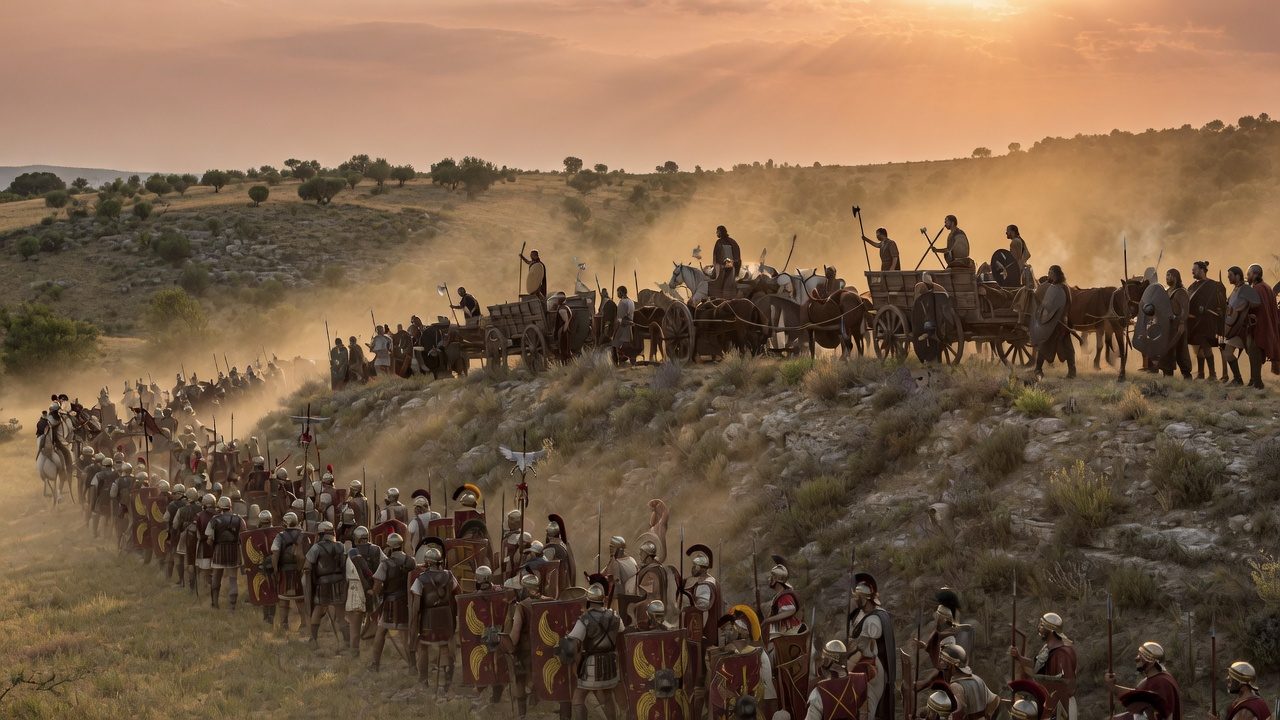
If the consulship is an annual shared knife, consecutive consulships are a man who never puts the knife down. The emergency is real — the Cimbri are not a metaphor. The precedent is also real. Once Rome has lived through a savior who is consul as a habit, the next savior does not need wagons from Jutland. He needs an army and a story about why this year is also an emergency.
Caesar will be consul, then a proconsul who will not come home to be prosecuted, then dictator. The chain is not mystical. It runs through this chair.
One more practical piece, because the word “command” gets sloppy.
A consul does not automatically receive the war he wants. The Senate usually assigns provinces and consular theaters — provinciae — in a way that looks traditional and is often just friendship. The people can intervene. They intervene for Marius in 107. They intervene for him again, through Sulpicius, in 88. The second time, the other consul has an army already in the field.
That is the structural joke of the late Republic. The assembly can reassign a war. It cannot reassign the loyalty of the men already under eagles. Marius uses the first fact. Sulla answers with the second. Both facts are now in the constitution, whether anyone wrote them down or not.
When you see the empty chair at the end of this film, you are not looking at a throne waiting for an emperor. You are looking at an annual office that a hill-town new man stretched until the wood showed.
Loyalty sounds like a feeling. In Rome it is an address.
The old legionary, in the story Rome tells about itself, has a farm. The farm may be small. It may be in debt. It is still a place. He is enrolled in a census class because of it. He serves a campaign, or two, or a horrible stretch in Spain, and then he goes back to the same tribe, the same neighbors, the same Senate that — in theory — is a room full of men who also have land and sons.
His grievance, if he has one, is agrarian and civic. The Gracchi spoke to that man: restore the plots, limit the great estates, make the citizen-soldier possible again.
Marius’s volunteer is a different animal, even if he grew up in the same Italian hills.
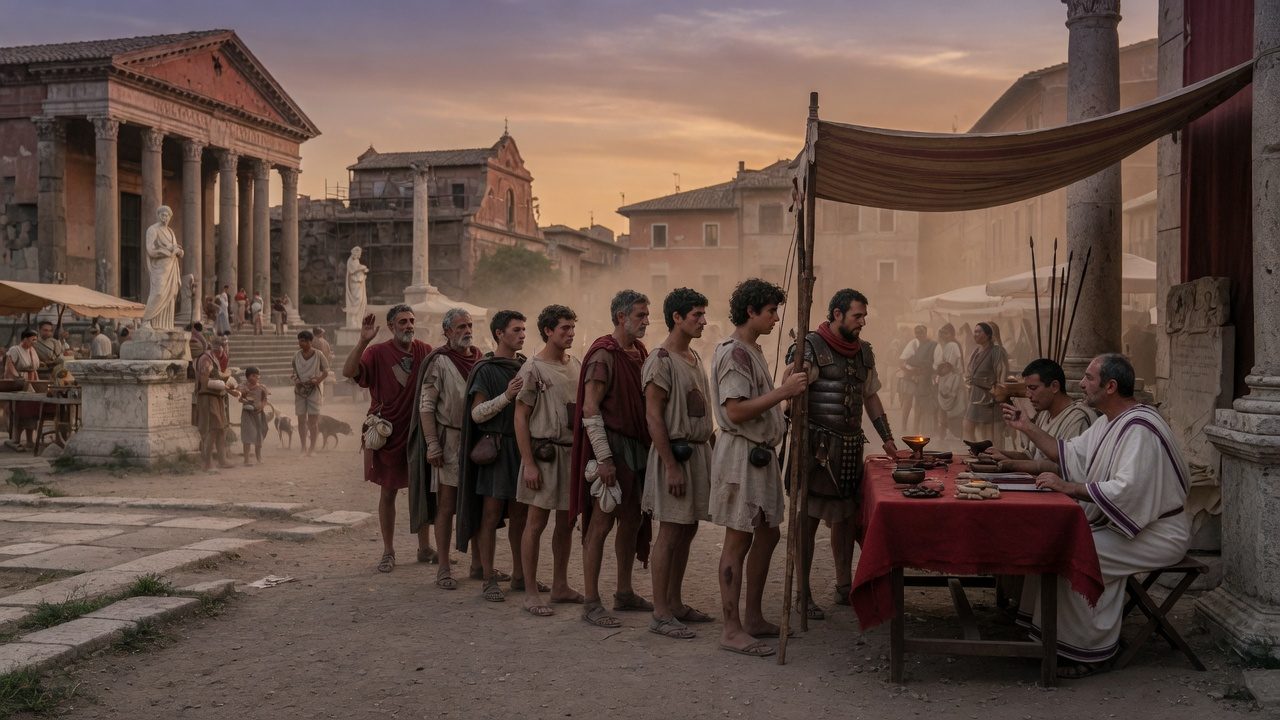
He may have lost the plot already. He may never have had one. He is counted by the head. He enlists because a consul is raising an army now, and the alternative is day labor, debt-bondage’s cousins, or watching other men’s wars from a gate.
Who feeds him? The general.
Who can get him a discharge bonus, a plot in Africa, a colony in Gaul, a piece of land confiscated from an enemy of the Roman people? The general, through a tribune, through an assembly, through a law that the Senate will call a robbery.
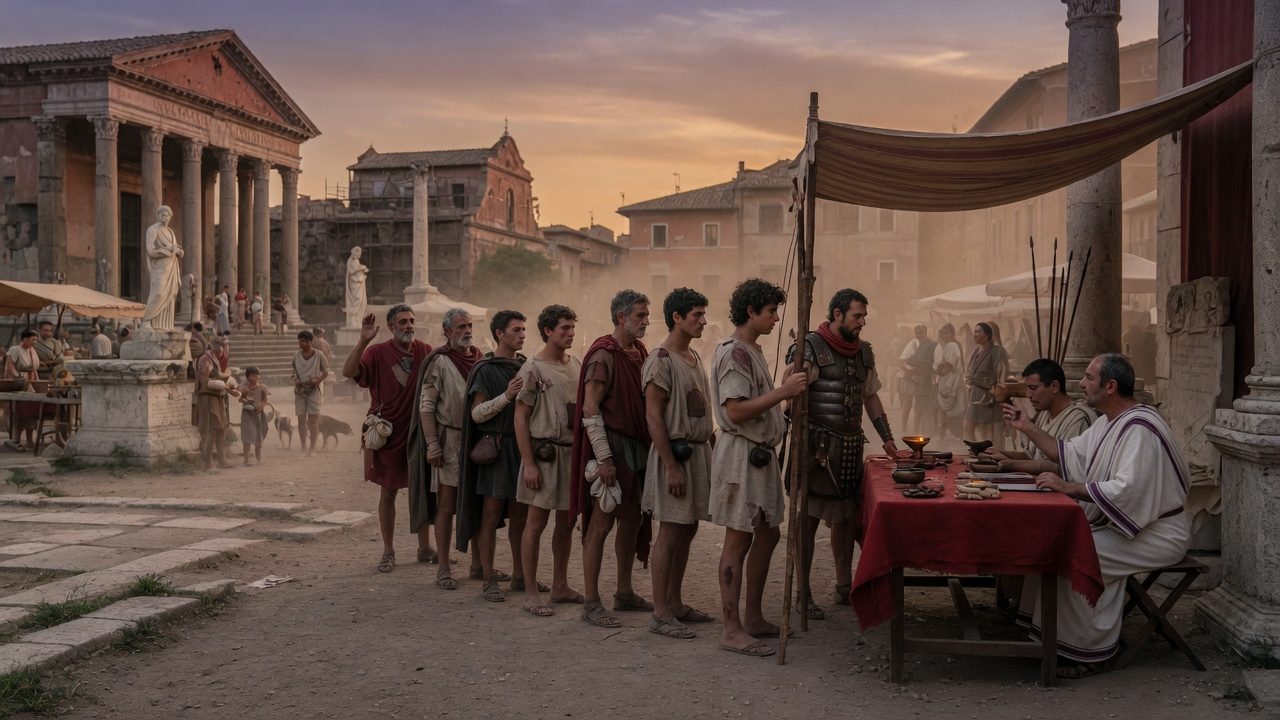
So when that man’s year is over, he does not dissolve back into a census class. He waits. He writes his name on a petition. He shows up at a vote. He stands in a street with a tool that used to be a stake for a palisade.
This is the constituency.
It is not yet the professional standing army of the emperors. Terms are still messy. Commanders still change. The state still pretends the legion is a civic levy. But the center of gravity has moved from “I serve the Republic that contains my farm” to “I serve the man who is the Republic for me.”
Veteran settlement is the hinge.
Every land law after 107 that smells like Marian politics is a payroll in legal dress. Saturninus in 103 and 100 is not a random radical. He is the cashier. When Marius lets the cashier die in the Curia, the veterans learn a second lesson: the general may not stand the heat. Find a general who will.
Sulla’s men in 88 know the East is the bonus. They march on Rome not as theorists of imperium but as employees protecting a contract.
Caesar’s men in Gaul will serve a decade and then look at the Senate’s attempt to take their commander away as a threat to their farms-in-waiting. That is Marius’s ghost in a better cloak.
If you want the moral in one picture: a property qualification made the army a function of the census. Abolishing the qualification in practice made the census a function of the army. Who you are, politically, becomes who you followed and who paid you off.
That is a bigger change than a bent pilum.
And it is why “Marian mules” as a cute nickname is a schoolroom distraction. The mule carried a pack. The man who was no longer a farmer carried a new idea of who owed him a life.
INSERT BEFORE THE SOCIAL WAR TURN (end of Block B / open of Block C)
Rome did not conquer Italy in one summer and then hand out togas.
For centuries the peninsula is a stack of deals. Latin colonies. Allied treaties. Municipalities with half-rights. Towns that can trade and marry with Romans and still cannot vote in the Campus Martius. Towns that furnish a cohort every time a consul snaps his fingers and get a mention in a triumph if they are lucky.
This system built the empire. Italian manpower is why Hannibal eventually loses. Italian manpower is why Greece and Africa and Spain can be held at once.
The bill comes due in the late second century.
Allied soldiers look at Roman veterans getting land and ask why the blood was the same and the plot is not. Allied elites look at Roman senators and ask why a man from a famous Italian town is still a foreigner in the only assembly that matters. Roman politicians discover that “give the allies the vote” is a way to multiply your clients — or a way to drown theirs.
That is why the issue is never only justice. It is arithmetic.
New citizens have to be placed in tribes. Rome’s thirty-five tribes are not ethnic costumes. They are the pipes the vote runs through. Dump all the new Italians into a few tribes and you have given them citizenship as a souvenir. Spread them through all the tribes and you have rewritten the electorate.
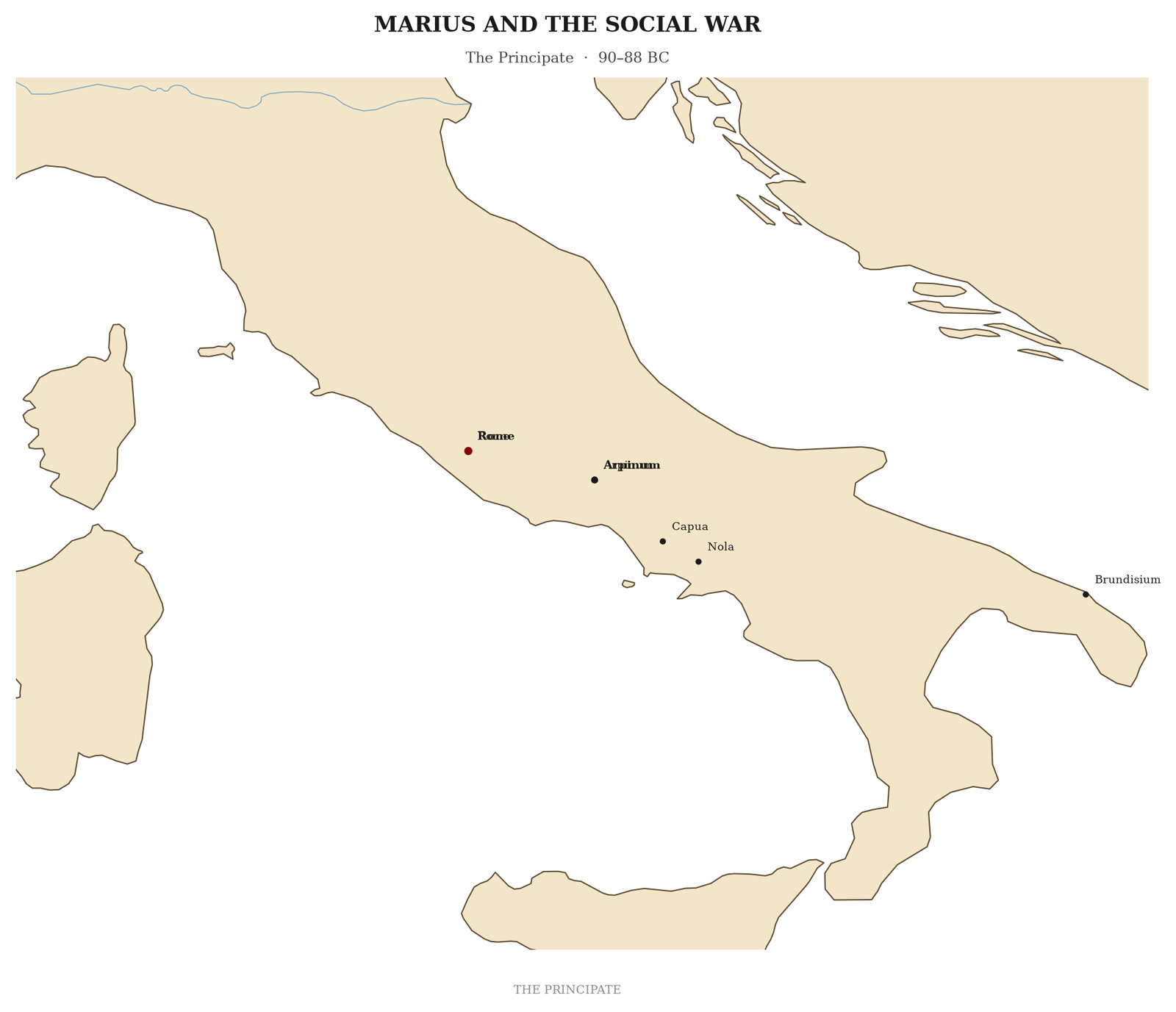
Livius Drusus in 91 tries a package that includes the allies. He dies. The allies build Italia at Corfinium. The Social War starts.
Watch Marius’s position. It is not simple, and the sources do not make it simpler.
He is from Arpinum. Arpinum already has the citizenship — it has had it since the 180s. He is not an allied outsider banging on the gate. He is a Roman from a town that still feels municipal. That double location is the whole late Republic: legally in, socially not quite.
His veterans include Italians who fought the Cimbri under his eagles. Saturninus’s land schemes in 100 already flirt with wider settlement, wider reward. Marius benefits from allied muscle and does not become the philosopher of allied rights.
In the Social War he commands for Rome against men who are, in many cases, the cousins of the men he marched with. That is not unique to him. It is the war. Brother against the next valley.
When the citizenship laws finally pass — 90 and 89, the lex Iulia, the lex Plautia Papiria, a mess of statutes — they pass as a bribe to stop the killing. Even then the enrollment fight continues. Which tribes? When? Cinna in 87 picks up that fight, and the city bleeds again, and Marius comes home on that wave.
So if you hear “Social War” as a side quest between the Cimbri and Sulla, you are missing the spine.
The Italian question is the question of who the Roman people are. Marius’s career sits on it twice: once as a municipal new man using the Roman people against the Senate, once as an old general using Italian chaos as a road back from Carthage.
Sulla will try, after he wins, to lock the lid down. The lid does not lock. Caesar will use Transpadane Gaul the way earlier men used the Italians — another ring of almost-Romans waiting to be made into a constituency.
The peninsula is not background. It is the electorate being born.
Arpinum is a small town with a long echo.
It sits in the Volscian hills, inland from the Latin coast, on a spur of rock above a river. The modern town is Arpino. You can still walk a circuit of walls and understand why a boy from here would know stone, weather, and distance.
In 188 BC the town received full Roman citizenship. By Marius’s birth it has been legally Roman for a generation and change. That is enough time to learn the law. It is not enough time for the great houses in Rome to pretend you were always in the room.
Two novi homines come out of this place and reach the consulship.
Marius, about 157 to 86.
Cicero, 106 to 43.
They do not overlap as colleagues. Cicero is a child when Marius dies — born the year after Vercellae, in 106, into a town that has just watched its most famous son save Italy and then begin the long souring. Cicero’s grandfather and father are local gentry of the kind the Marii were. The town is not large enough for those families to be strangers.
Cicero will spend a public life managing the inheritance.
On the one hand, Marius is the proof. A man from Arpinum can be first in Rome. When nobles sniff at Cicero’s name, the hill town is already on the fasti. That matters in a culture where precedent is a weapon.
On the other hand, Marius is the warning. Consecutive consulships. Veterans in the street. 87. The heads. The seventh chair. If you are a new man who wants to be accepted by the boni, the good men, you cannot smell like the Marian blood.
So Cicero’s Marius is edited.
In the speeches you get the savior of the Cimbri, the tough old Roman, the municipal virtue that shames decadent nobles. You get praise when it is useful — and in the 60s, when Caesar is restoring Marian trophies, “useful” is a live wire. You do not get, from Cicero, a full accounting of the return with Cinna. That silence is the point. A later Arpinate who lives by law cannot afford an earlier Arpinate who lived by lists.
There is a lost poem, too — Cicero wrote verses on Marius. We have fragments and later comments, not a book you can hold. Even the poem is a tell. The town’s son writing the town’s other son into literature, polishing the statue, leaving the stain in the marble’s pores.
If you have already watched our Cicero film, do not flatten them into twins.
Cicero’s weapon is a sentence. Marius’s weapon is a recruiting table. Both are new men. Both marry, in different ways, above their municipal station. Both end badly in a Rome that used them. Only one of them taught the army to vote with its feet.
The town is the rhyme. The careers are the argument.
Walk Arpinum in your head at the end of this film and you can see both ghosts. One carrying a pack. One carrying a scroll. The Republic needed both kinds of outsider. It survived neither.
PRONUNCIATION GUIDE (record as a calm appendix, or cut into first uses)
A few names, said plainly, so we do not flinch every time they return.
Pick one version of each and stay there for the whole film. Classical reconstructed Latin is not more moral than a clear English-classroom voice. Clarity is moral.
Gaius Marius — GUY-us MAR-ee-us. If you prefer GAH-ee-us, fine. Do not switch.
Arpinum — ar-PEE-num. Modern Arpino: ar-PEE-no.
Novus homo — NOH-vus HO-moh. New man. Not “novice homo.” Leave a beat after it.
Numantia — noo-MAN-shee-uh.
Scipio Aemilianus — SKIP-ee-oh eye-mill-ee-AH-nus.
Jugurtha — joo-GUR-thuh. Numidian king.
Metellus Numidicus — meh-TELL-us noo-MID-ih-kus. The noble who lost the African command.
Capite censi — KAP-ih-tay KEN-see. The head count.
Muli Mariani — MOO-lee mar-ee-AH-nee. Marian mules. Later nickname.
Aquae Sextiae — AH-kwhy SEX-tee-eye. Aix-en-Provence.
Teutones — TOO-toh-neez. Ambrones — AM-broh-neez. Cimbri — SIM-bry.
Arausio — ah-ROW-see-oh. Orange, in France.
Vercellae — ver-KELL-eye. Site debated; say the name we have.
Catulus — KAT-yoo-lus. Colleague at Vercellae.
Saturninus — sat-ur-NY-nus. Glaucia — GLOW-sha.
Senatus consultum ultimum — sen-AH-tus kon-SUL-tum UL-tih-mum. The last decree.
Mithridates — mith-rih-DAY-teez. Of Pontus.
Sulpicius Rufus — sul-PISH-ee-us ROO-fus.
Sulla — SUL-uh. Lucius Cornelius.
Cinna — SIN-uh.
Minturnae — min-TUR-nye.
Bocchus — BOK-us. King of Mauretania.
Sertorius — ser-TOR-ee-us.
Corfinium / Italia — kor-FIN-ee-um.
Imperium — im-PEH-ree-um. Sella curulis — SELL-ah koo-ROO-liss.
Bellum sociale — BELL-um so-kee-AH-leh. The Social War.
Pontes — PON-tays. The voting boards.
If a name only appears once, do not make the viewer pass a test. Say it, translate it in the next breath, move.
TIMELINE (record as a clear spine; may be split into lower-thirds)
c. 157 BC. Birth, Arpinum.
134–133. Serves at Numantia under Scipio Aemilianus.
119. Tribune of the plebs. Voting-passage law. Fight with the consuls.
115. Praetor, barely. Extortion trial, acquitted. Then Further Spain as propraetor.
c. 110s. Marries Julia of the Julii Caesares — Caesar’s aunt. Date is not nailed to a single summer; the match is in place before the great wars.
109–108. Legate under Metellus in Numidia.
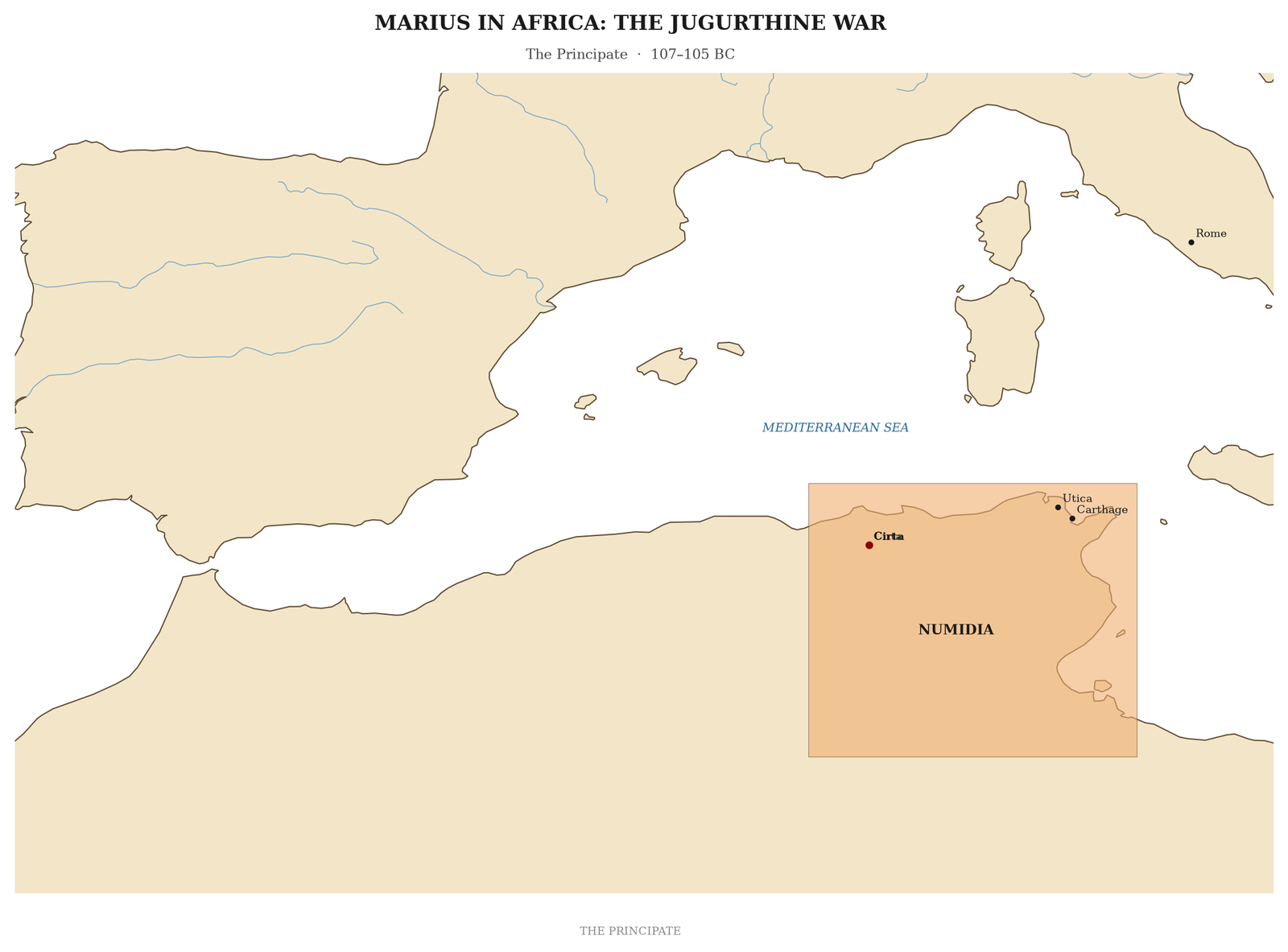
107. Consul I. People transfer the Jugurthine command. Recruits volunteers, including capite censi. Sulla arrives as quaestor.
105. October 6. Arausio. Roman disaster on the Rhone. Marius is still finishing Africa.
104. January 1. Triumph over Jugurtha. Consul II the same morning. Jugurtha dies in the Tullianum.
104–101. Consul II–V. Training in Gaul. Fossae Marianae. Consecutive offices under the Cimbric emergency.
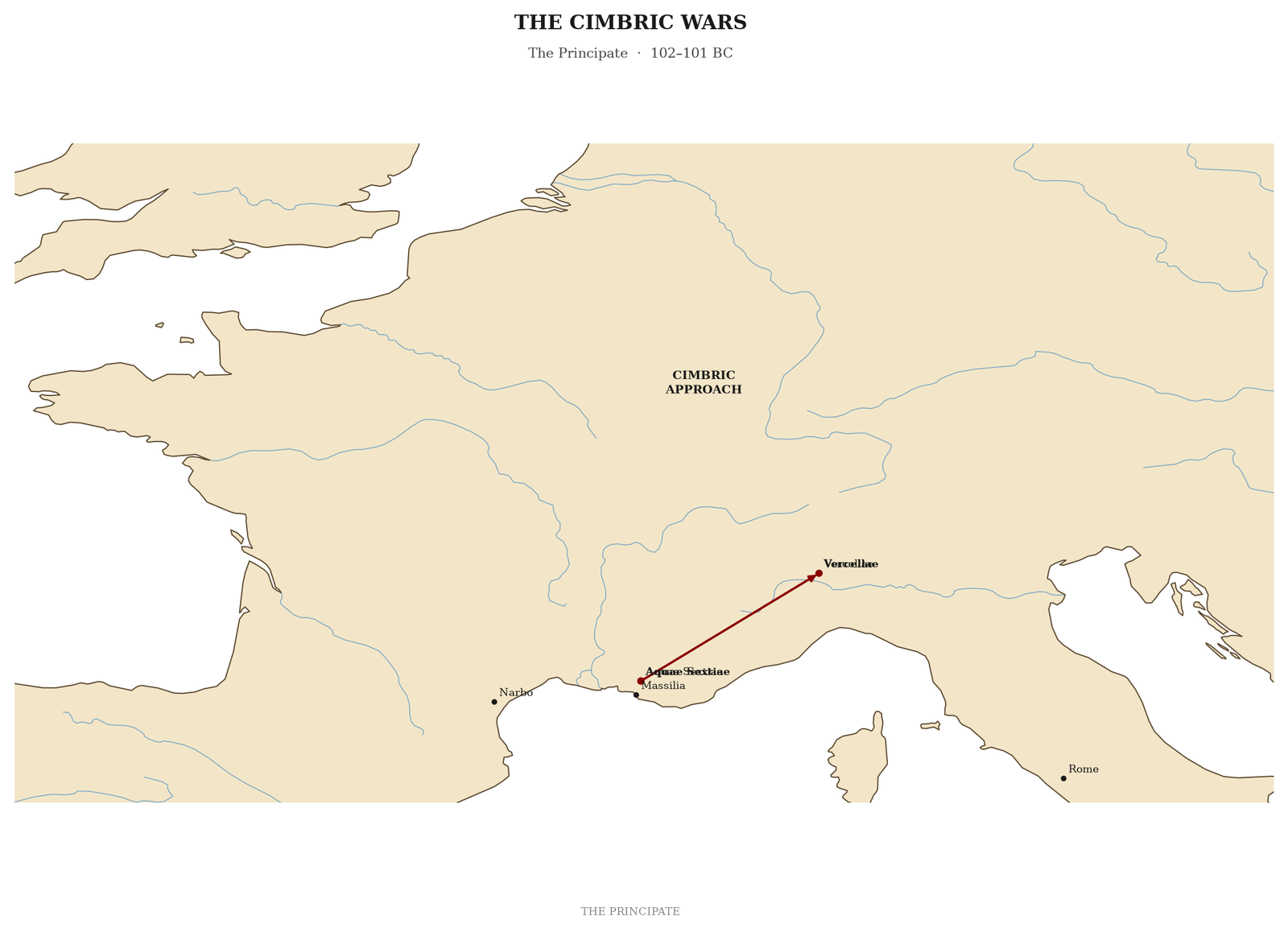
102. Consul IV. Aquae Sextiae. Teutones and Ambrones destroyed.
101. Consul V. Vercellae, with Catulus. Cimbri destroyed. Joint triumph. “Third founder.”
100. Consul VI. Saturninus and Glaucia. Land laws, oath, exile of Metellus Numidicus. Murder of Memmius. Last decree. Saturninus killed in the Curia. Marius’s popularity breaks.
90s. Political eclipse. Journey east. Audience with Mithridates. The son comes of age as a name.
91–88. Social War. Drusus murdered. Italia at Corfinium. Marius commands; Sulla shines. Citizenship statutes begin to buy the peace.
88. Sulla consul; Mithridatic command assigned to him. Sulpicius, allied with Marius, has the people reassign it. Sulla marches on Rome. Sulpicius killed. Marius flees.
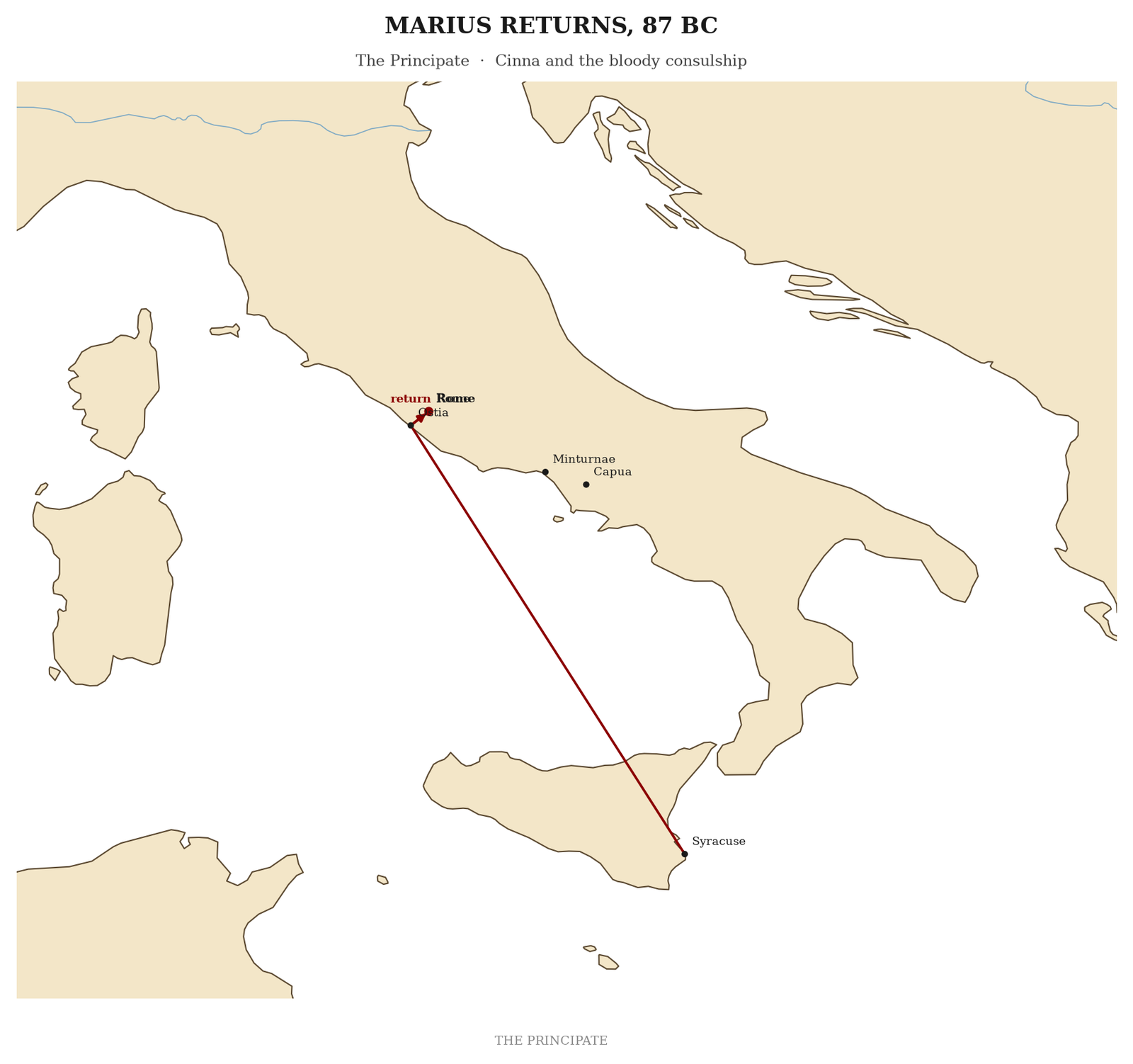
88–87. Flight. Minturnae marsh — tradition. Sicily. Africa. Carthage ruins. Cinna expelled from Rome.
87. Return with Cinna. Siege. City falls. Killings of opponents. Octavius dead.
86. Consul VII with Cinna. Dies January 13, seventeen days in.
82. Marius the Younger, consul, dies at Praeneste. Sulla wins the civil war. That is the son’s end, not the father’s. Mention it once so the name does not float.
Do not put a consulship in 105 or 99. The seven are: 107, 104, 103, 102, 101, 100, 86.
SOURCES AND DISAGREEMENTS (end card chapter)
We do not have Marius’s memoirs.
We have other men’s uses of him.
Sallust, Bellum Jugurthinum — written a generation later, after Sallust’s own ugly career. He needs Jugurtha as a story about a Senate that can be bought and a new man who can fight. The African campaign, the speech of the consul-elect, the enrollment of the poor: this is the closest thing we have to a contemporary-feeling narrative of the rise. Sallust is not a fan club. He is a moralist with a taste for decay. Use his scenes. Do not use his sermons as CCTV.
Plutarch, Life of Marius — a Greek writing under the Empire, pairing Greek and Roman lives, hunting character. He is why you have the marsh, the Cimbrian executioner, the ruins of Carthage, the untying of the surgeon, the fever-dreams of Pontus. When a scene is too rounded, say so. When a scene is all we have, say that too. Plutarch also used Sulla’s memoirs, now lost, which means some of the dirt on late Marius has a victor’s fingerprints.
Appian, Civil Wars and the Mithridatic material — later, structural, useful for 88 and 87, for the Social War’s map, for the logic of commands. He is not a novelist. He will skip the reed-bed.
Velleius, Livy’s epitomes, Cicero’s speeches, a few fragments of Diodorus — nails, not timber.
Sulla’s own Commentaries are gone. That absence matters. A whole tradition about Marius’s cruelty, vanity, and incompetence in old age ran through a man who had every reason to make the teacher look like a warning.
On the other side, Marian families and Italian towns had every reason to keep the savior of 101 polished.
So: Arausio is real. Aquae Sextiae and Vercellae are real. The seven consulships are real. The enrollment of the head count is real. The march of 88 is real. The deaths of 87 are real, even when the individual anecdotes are too neat. The marsh, the executioner’s panic, the exact words at Carthage, the un-anaesthetized vein: tradition. Say the word on screen and keep walking.
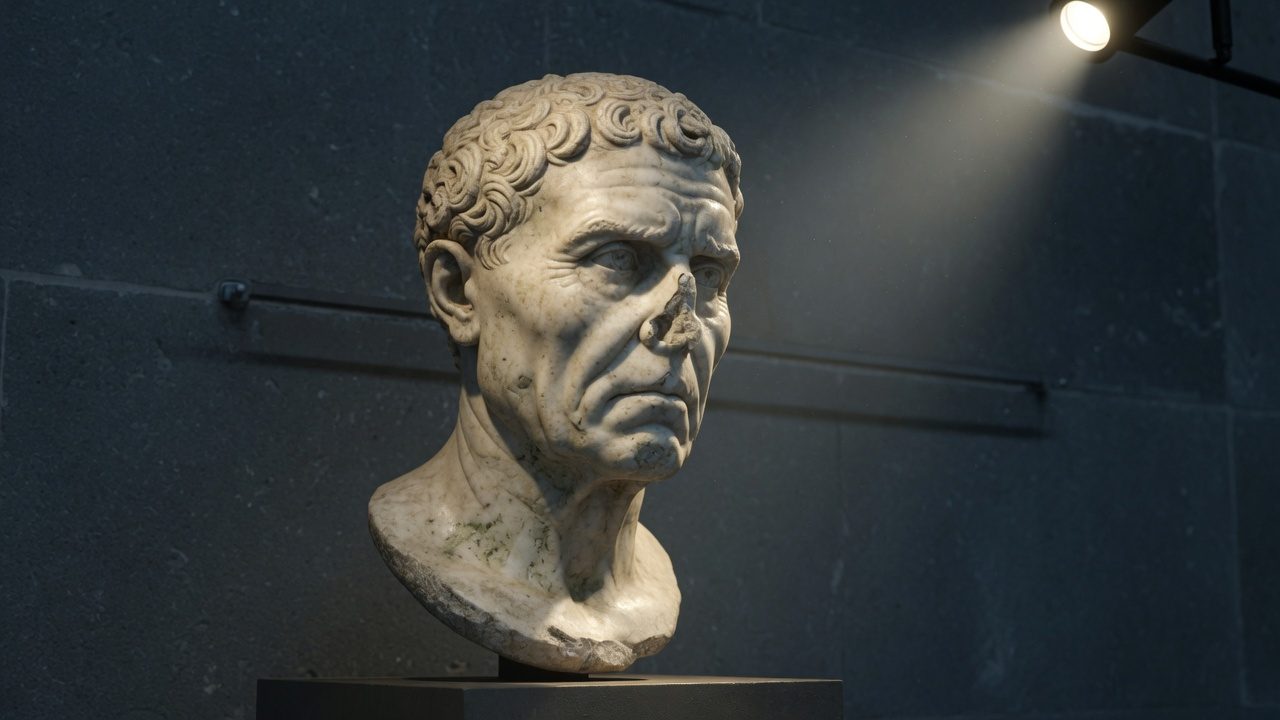
The busts labeled “Marius” in European museums are mostly “traditionally identified.” Put that in a caption. The face you want is a type — camp, age, no Julio-Claudian polish — not a forensic reconstruction.
If a modern historian is worth a nod, nod once. Ernst Badian on the client army. Erich Gruen on the Social War’s politics. Ronald Syme on the late Republic as a revolution of outsiders and soldiers. Then go back to the year and the road.
The job is not to own a theory. The job is to leave the viewer able to tell a nickname from a law, a fever dream from a consulship, and a savior from the method he left on the table.
D8b — SULLA AS STUDENT, NOT AS HERO (optional, if the cut starts to drift)
If this film starts to feel like a Sulla preview, you have lost the assignment.
Sulla enters in Africa as a quaestor with a good brain and a bad reputation. He closes the Jugurthine war with a negotiation and then advertises the close on a ring. He serves in the north with Catulus, not in Marius’s pocket. He becomes the Senate’s southern star in the Social War. In 88 he is consul, legally given the East, then legally stripped by a tribune working for Marius.
What he does next — march — is his invention as a method. The ingredients are Marius’s: a volunteer army that expects a bonus, a popular assembly that can move a command, a city that has already learned to call a man indispensable.
After 88 the camera stays on the marsh, the African shore, Cinna’s road, the seventh chair. Sulla’s eastern victories are a pressure on Marius’s mind, not a second plot. Sulla’s later proscriptions are a coda about the method, not a new movie.
The younger rival learns. The teacher dies first. That is the shape.
That method is the film.
The man is the price.
End Block D — end of package