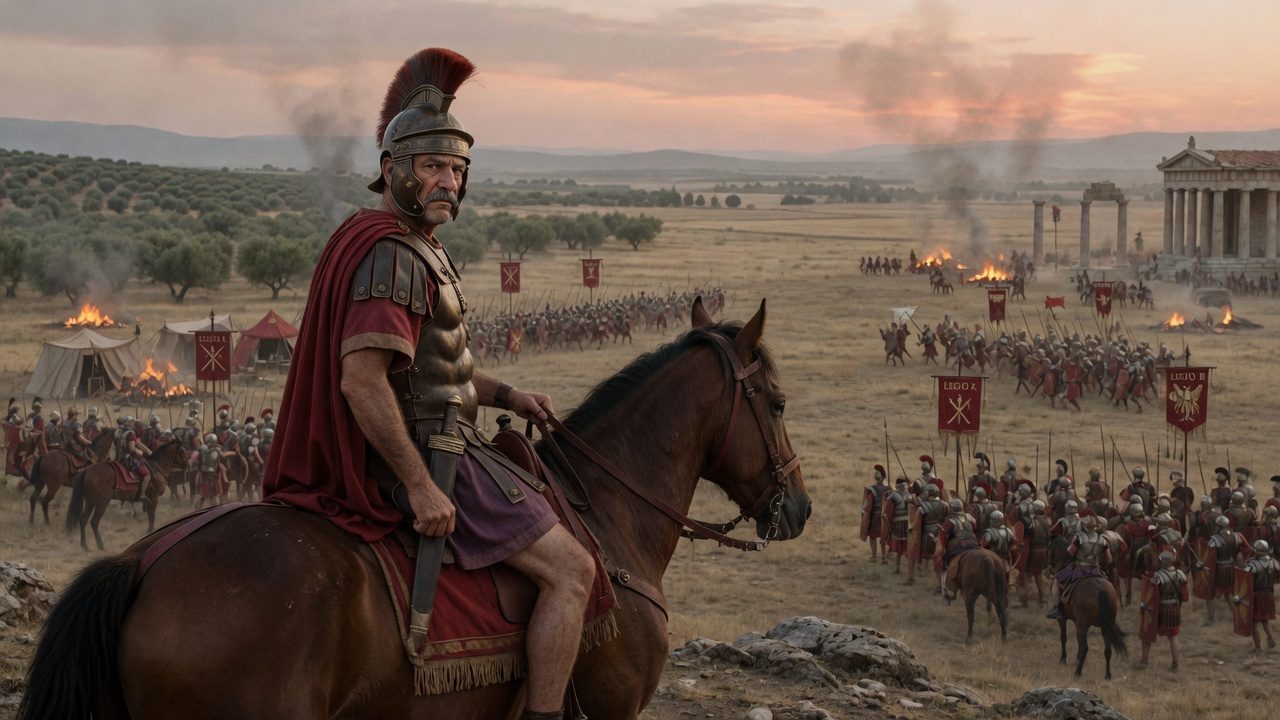
GNAEUS POMPEIUS MAGNUS — BLOCK G: MAXIMUM EXPANSION REEL
Use fully for 90–120+ min final · ~45–55 min @ 130 wpm
G1 — OPENING EXPANDED
Pompey is easy to miscast as Caesar's weaker twin.
That flattens him into a foil and steals his actual size. Before Caesar crossed the Rubicon, Pompey had already been the face of Roman victory for a generation. Three triumphs. The sea cleared. The East redrawn. Consul in irregular ways that trained the public to accept super-legal greatness as normal.
Caesar does not invent the super-general. Pompey popularizes him. Caesar perfects him.
If your series includes Cicero and Caesar, Pompey is the missing hinge: the man who proves the Republic can survive one extraordinary commander — until it meets two at once.
G2 — SOCIAL WAR GENERATION
Rome's Italian allies fight for citizenship and dignity. Commanders like Pompeius Strabo operate in a world where loyalty, plunder, and political survival fuse. Young Pompey absorbs a lesson his aristocratic critics never fully unlearn: armies are arguments.
When civil war between Sulla and the Marians detonates, Pompey does not wait for a tidy magistracy. He raises men. He chooses Sulla. He wins usefulness. Usefulness becomes a career.
The Social War generation leaves Italy full of new citizens and old wounds. Pompey's regional base in Picenum understands clientage as oxygen. That machine of dependents is ready before he ever needs a formal title to run it.
G3 — THE PSYCHOLOGY OF EARLY TRIUMPH
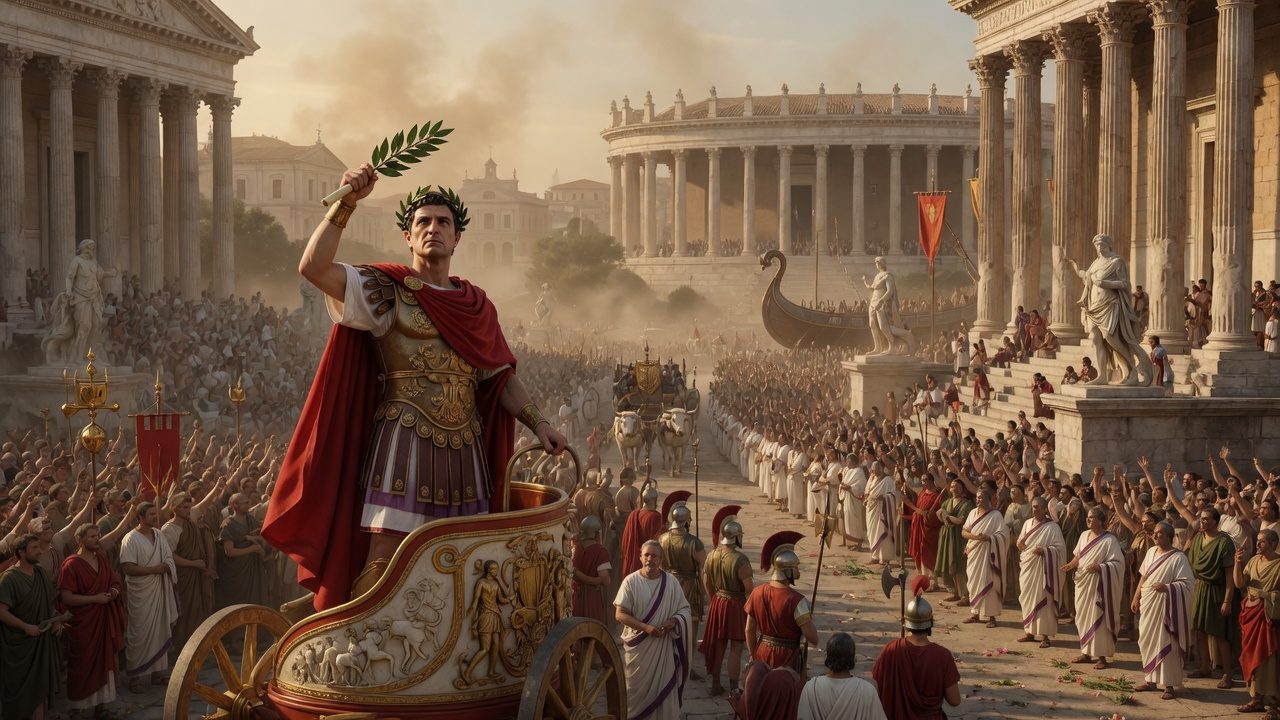
A triumph is Rome's highest military sacrament. The city pauses to watch a man become almost a god for a day.
Pompey demands this while young, before the traditional sequence says he has earned the full adult career. The Senate's discomfort is part of the point. Every exception becomes a precedent. Every precedent becomes a ladder for the next ambitious man.
Pompey thinks he is collecting honors. He is also teaching Caesar's generation what is possible. Cheer an irregular career long enough, and irregular starts to look like the new normal.
G4 — SERTORIUS AS WORTHY ENEMY
Sertorius is not a bandit. He is a Roman professional running a breakaway system with Spanish alliances and Roman institutional memory. Fighting him is like fighting a mirror that refuses to break.
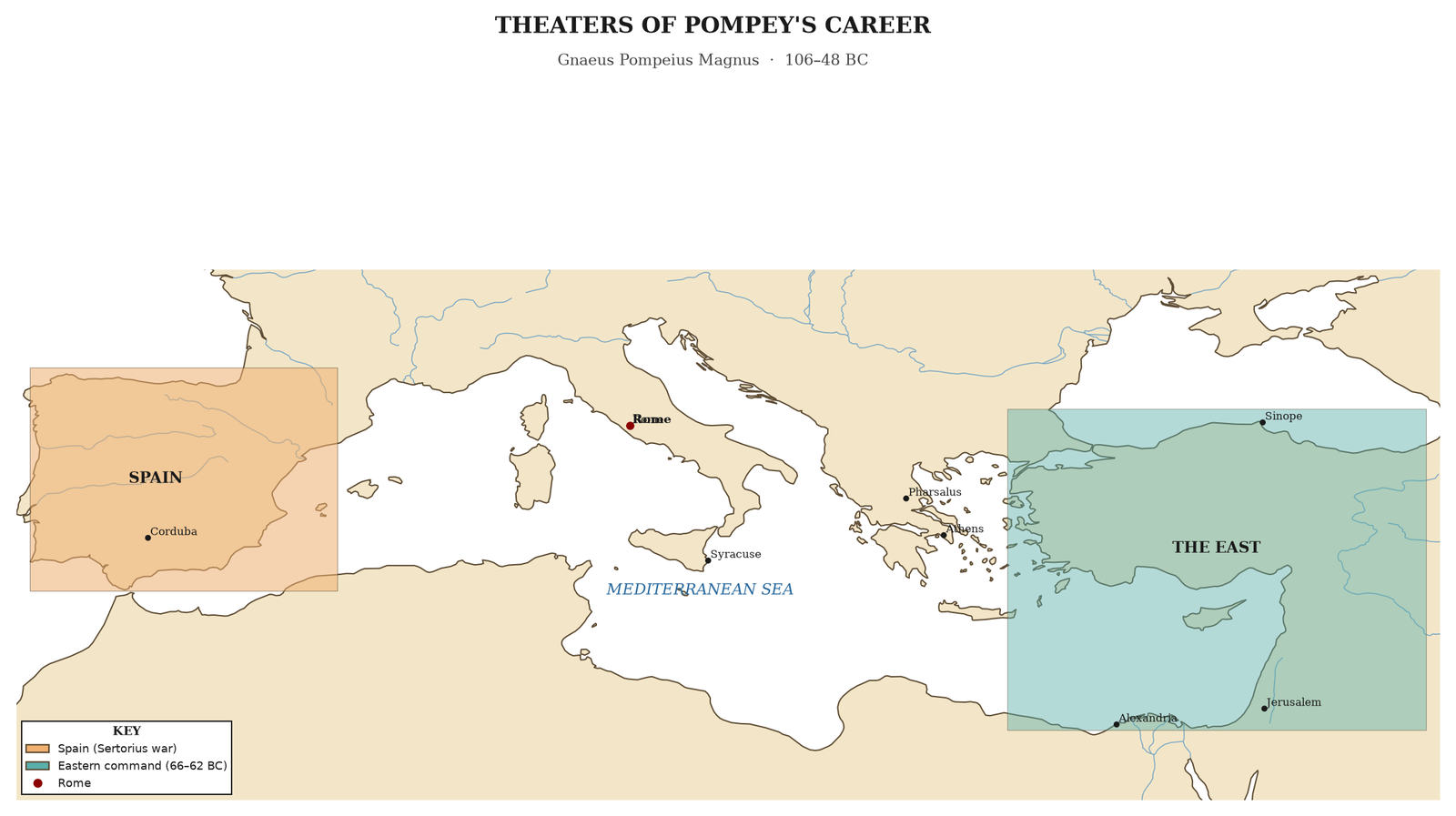
Pompey's Spanish years matter because they complicate the prodigy myth. He struggles. He adapts. He benefits from enemy disunity and assassination politics. Victory arrives with moral residue — as Roman victories often do.
When he returns, he is harder, richer in clients, and ready to convert western success into Italian political capital. The asterisk remains for careful historians: the hardest opponent fell partly by betrayal. Pompey still turns the outcome into fuel. That conversion skill — messy war into clean prestige — sits at the center of his life.
G5 — CRASSUS: MONEY AS RIVAL RELIGION
Crassus buys influence the way Pompey wins battles. Their clash over Spartacus credit is petty and prophetic. Rome has room for multiple aristocrats. It has less room for multiple monopolies of prestige.
Their joint consulship of 70 BC restores tribunician power and advertises reconciliation. Underneath is competition deferred. When Caesar later binds them in the triumvirate, he is managing two older jealousies as much as creating a new alliance.
Money and glory are different religions. Neither man converts. They share a temple until the roof falls in.
G6 — PIRATE WAR AS SYSTEMS THINKING
Slow down here for viewers who think ancient war is only clashing swords.
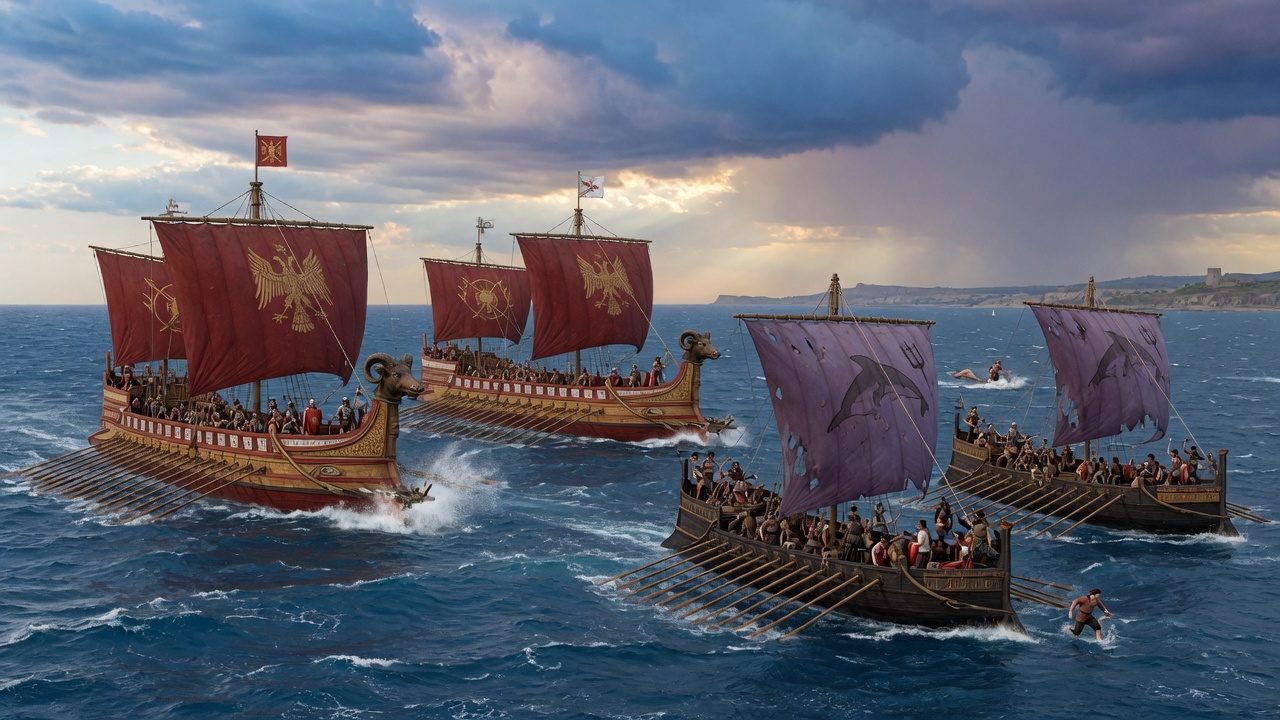
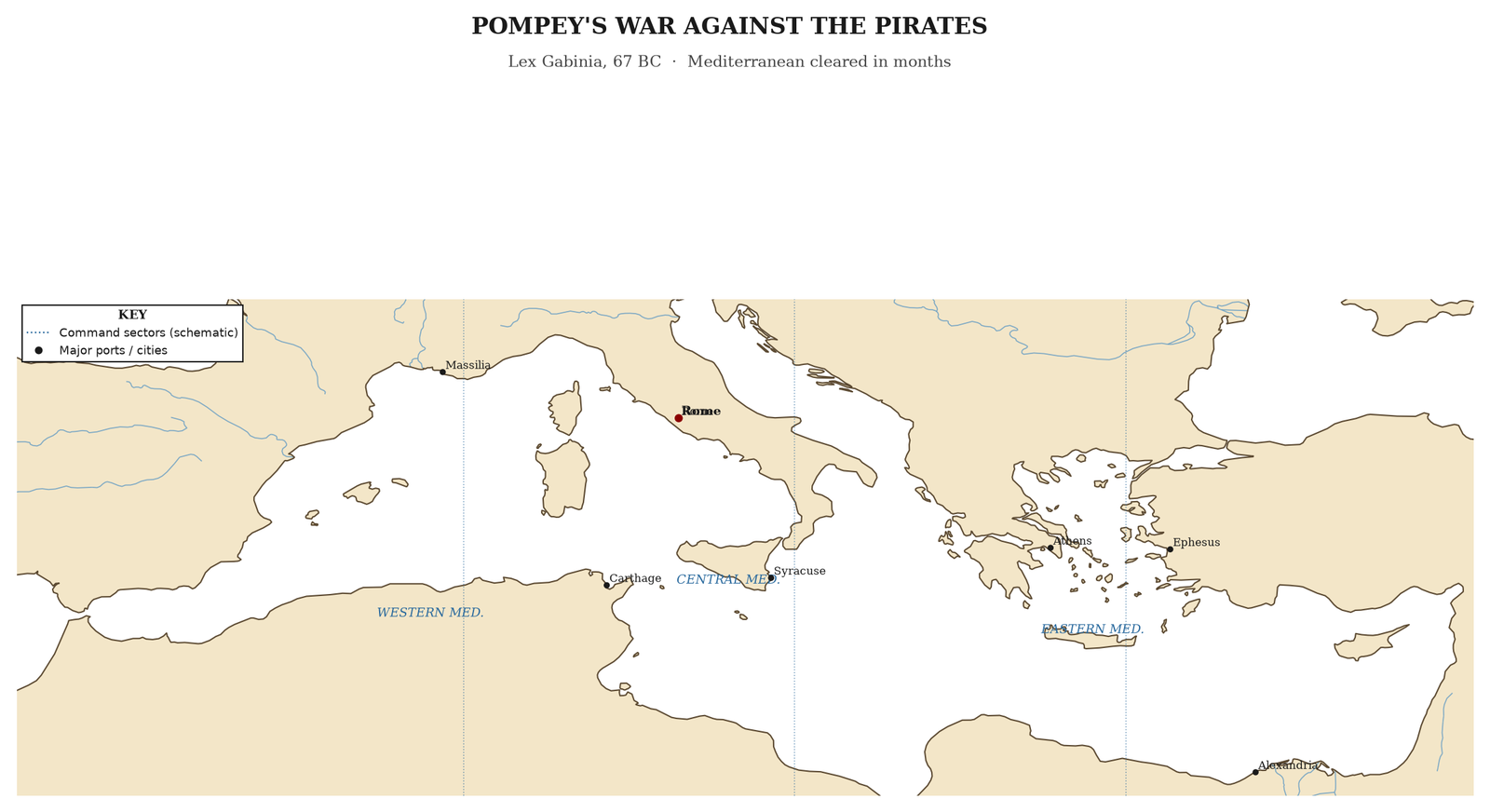
Pompey's pirate campaign is logistics, sector command, simultaneous pressure, and political communication. He treats the Mediterranean like a network. Legates become node managers. Speed becomes legitimacy. Mercy in resettlement becomes a tool to prevent outlaw communities from regenerating overnight.
Rome feels the result as bread. That is why the people love him. Stomachs vote.
Traditionalists fear him for the same reason. Any man who can feed the city by personal command can also starve the old rules of meaning. Clear the sea in three months, and "just follow the mos maiorum" starts to sound like nostalgia for a smaller world.
G7 — MITHRIDATES AND THE LONG WAR
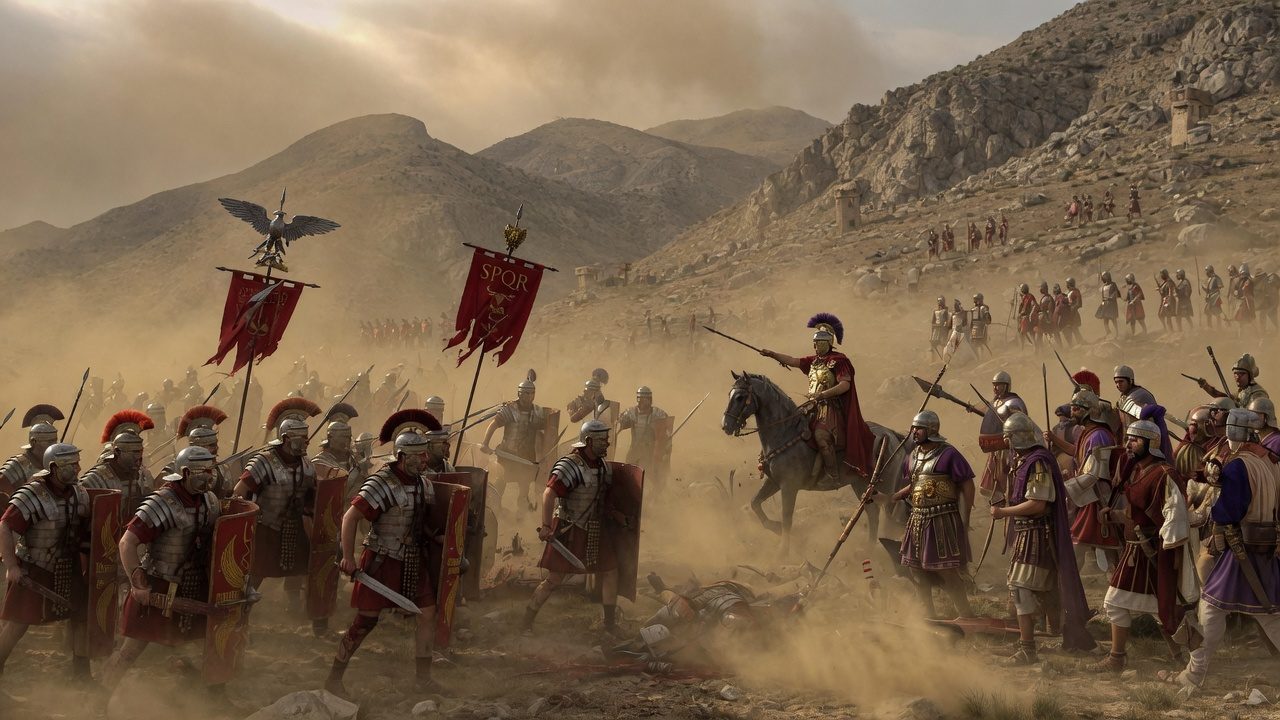
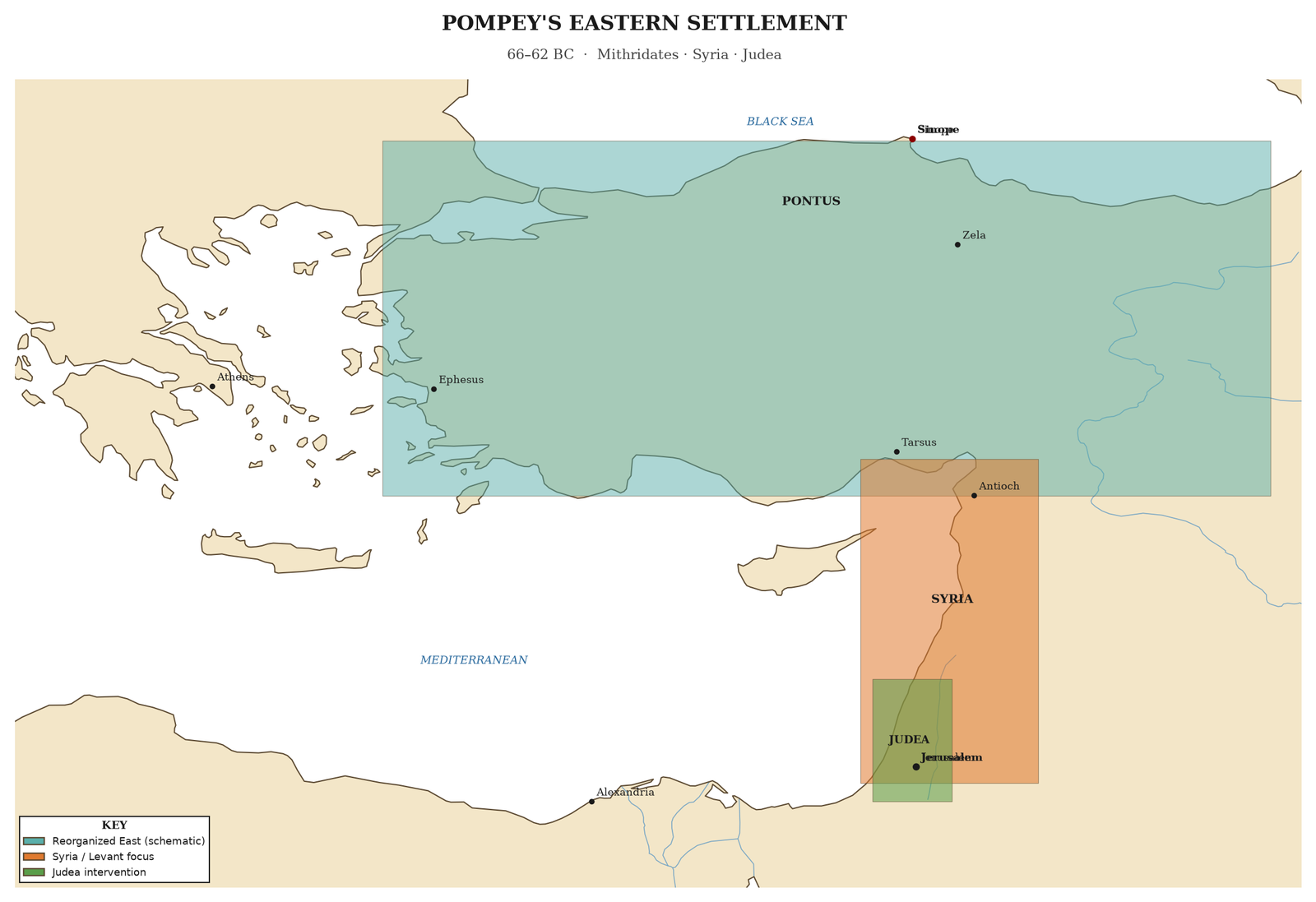
Mithridates VI is a saga unto himself: poison lore, massacres of Romans in Asia, alliances, recoveries — the nightmare of a Hellenistic king who will not stay defeated. Lucullus fights with skill and is undercut by politics and troop weariness. Pompey's takeover is a transfer of unfinished glory.
Finishing Mithridates makes Pompey the closer of a multi-decade Roman anxiety. Then the settlement work begins — less cinematic than battle, more historically durable. Provinces. Client kings. Tax arrangements. The quiet architecture of empire.
Battle wins the headline. Settlement wins the century.
G8 — JERUSALEM AND THE ETHICS OF ENTRY
Pompey's involvement in Judea during Hasmonean conflict ends with siege and his entry into the Temple's inner sanctum. Roman sources treat it as curious dominance. Jewish memory treats it as desecration and catastrophe.
A responsible documentary names both frames. Imperial "order" is someone else's trauma. Pompey is not uniquely evil for acting as Roman conquerors act. He is exemplary of how Roman glory lands on subject peoples — two archives, one day, no single story that flatters everyone.
G9 — THE RETURN WITHOUT A COUP
62 BC. Pompey lands in Italy and dismisses his armies.
Admirers call it republican virtue. Realists call it a bet on gratitude. He wants ratification of eastern acts, land for veterans, honor without terror. He wants to be first without becoming Sulla.
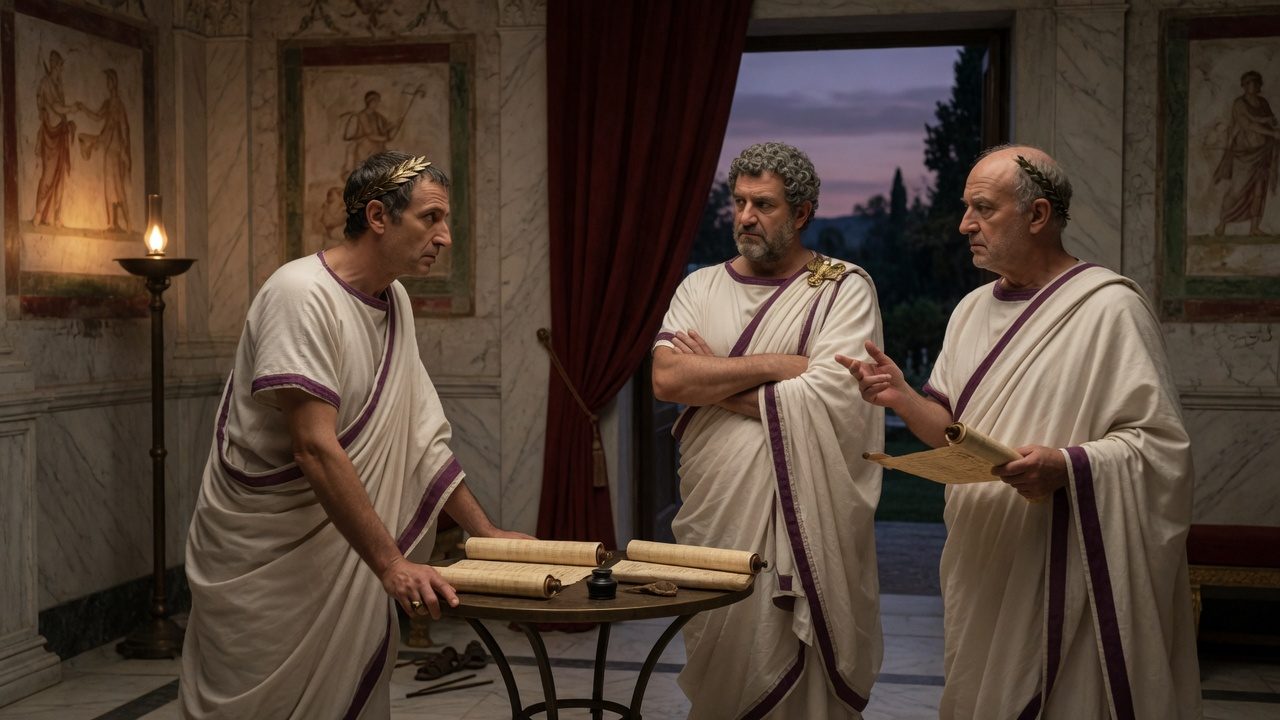
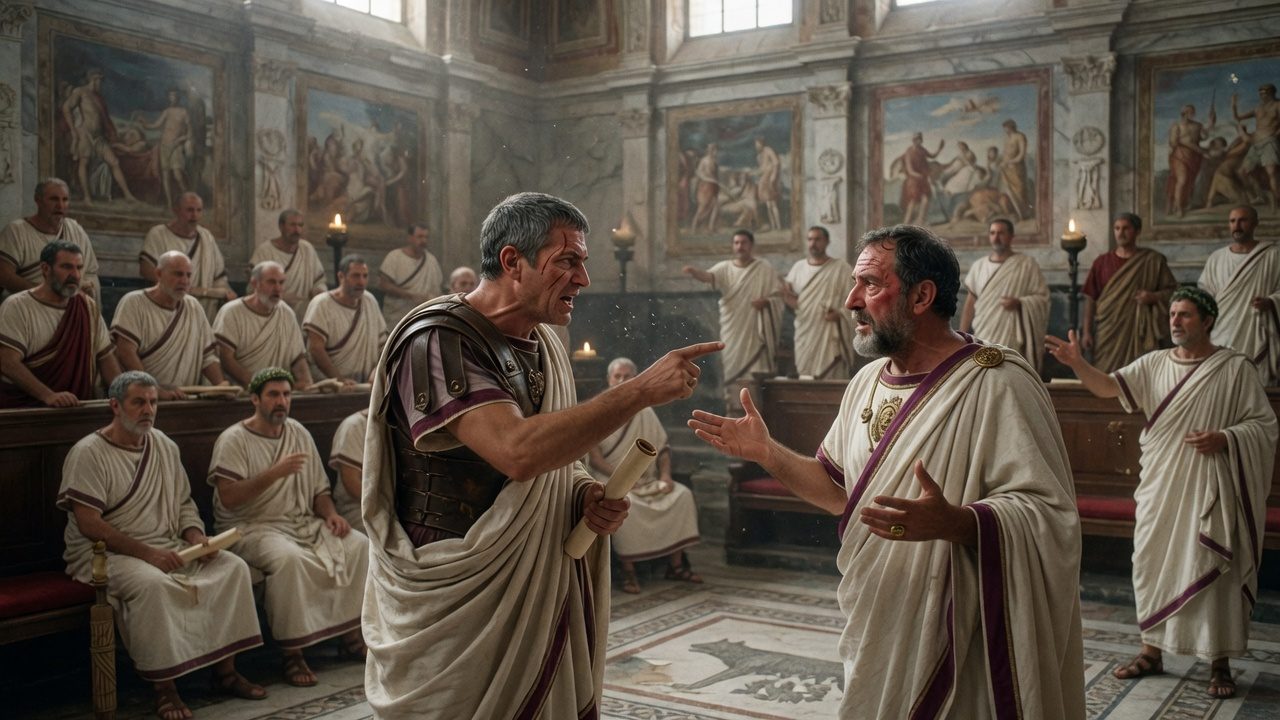
The Senate, led in spirit by men like Cato, withholds easy grace. They fear him more than they honor him. They also misread him. A Pompey forced into partnership with Caesar becomes more dangerous to their world than a Pompey gracefully integrated.
Obstruction manufactures the triumvirate. Delay is not neutral. Delay is a choice with consequences.
G10 — JULIA AS POLITICS AND PERSON
Julia's marriage to Pompey is alliance hardware. Her death is alliance failure.
Ancient writers emphasize Pompey's affection. Modern viewers can hold both love and realpolitik without forcing a false choice. Without Julia, every slight between Pompey and Caesar lacks a human shock absorber. Grief is real. So is the political vacuum. Marriage alliances were foreign policy by other means. When the person dies, the policy dies with her.
G11 — CARRHAE'S AFTERSHOCK
Crassus dies seeking a triumph of his own against Parthia. Carrhae is a Roman disaster and a political earthquake.
His death removes the balancer. Two-man systems polarize. Pompey drifts toward the senatorial aristocracy. Caesar becomes the indispensable enemy of that aristocracy. The civil war's social shape hardens before the first javelin of 49 BC.
Triangles need three points. After Carrhae, the geometry is a wire between two poles — and wires snap.
G12 — SOLE CONSUL AS CONFESSION
When Rome makes Pompey consul without a colleague in 52 BC, it admits that collective magistracy has failed to keep order. He is the emergency monarchy the Republic will not name.
He restores streets. He passes laws. He also becomes, more than ever, the man Caesar must measure himself against. Special forms for Pompey. Special fears for Caesar. The vocabulary stays republican. The reality is one man holding the city together while another man holds Gaul.
G13 — THE BOAST AND THE EVACUATION
Pompey's reported confidence that he can raise armies in Italy by stamping his foot becomes a historical punchline after Caesar's lightning seizure of the peninsula. Whether the line is exact matters less than the mismatch it symbolizes: Pompey believes in his brand; Caesar believes in tempo.
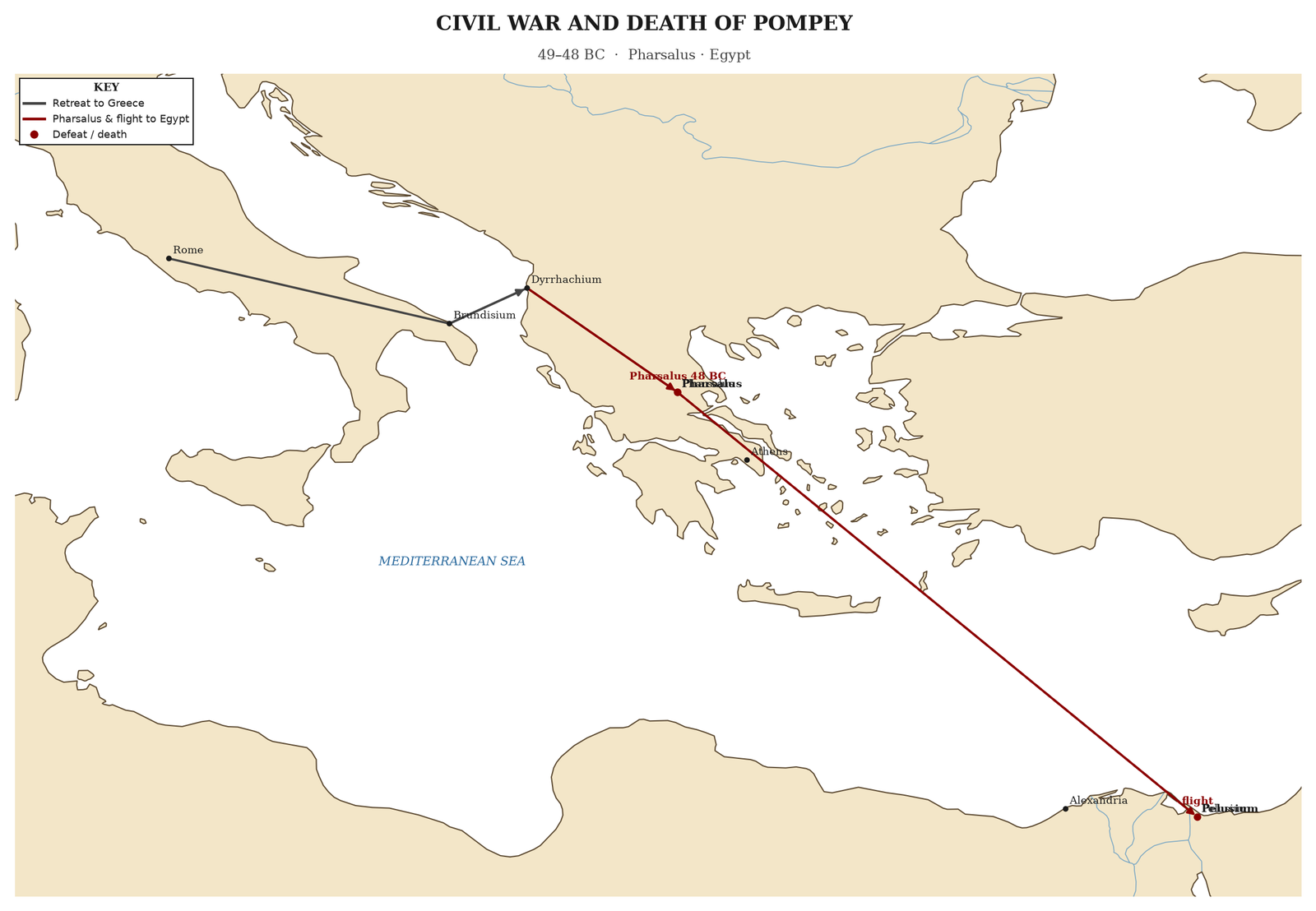
Evacuating Rome cedes symbolism. Fighting from the East is rational for a long war. It is fatal if the war becomes a single decisive day in Thessaly. Strategy and confession arrive in the same ships: eastern resources, yes — and an admission that Italian ground is not reliably Pompeian against Caesar's speed.
G14 — PHARSALUS DEBRIEF
Numbers favor Pompey. Cohesion favors Caesar.
Cavalry threat is neutralized by Caesarian tactical placement. Senatorial amateurs of glory pressure a set battle. Pompey's command presence does not equal Caesar's veteran telepathy — years of Gaul distilled into one army that thinks together.
After defeat, flight is not unique. Many Romans flee lost fields. What is unique is how far the fall travels: from first man of Rome to supplicant of an Egyptian court in weeks. The East that once obeyed him recalculates. Client kings update their spreadsheets. Obligation becomes arithmetic.
G15 — DEATH, HEAD, AND CAESAR'S TEARS
Caesar's reaction to Pompey's head is a scene Romans never stop reinterpreting. Pity? Propaganda? Genuine grief for a former son-in-law and partner? All can coexist.
The political function is clear: Caesar must not look like a man who delights in Roman blood, even as he benefits from it. Pompey's murderers do not buy safety. They buy a cameo in someone else's war — and discover that gifting a head does not make you a partner. It makes you useful once.
G16 — THEATER IRONY
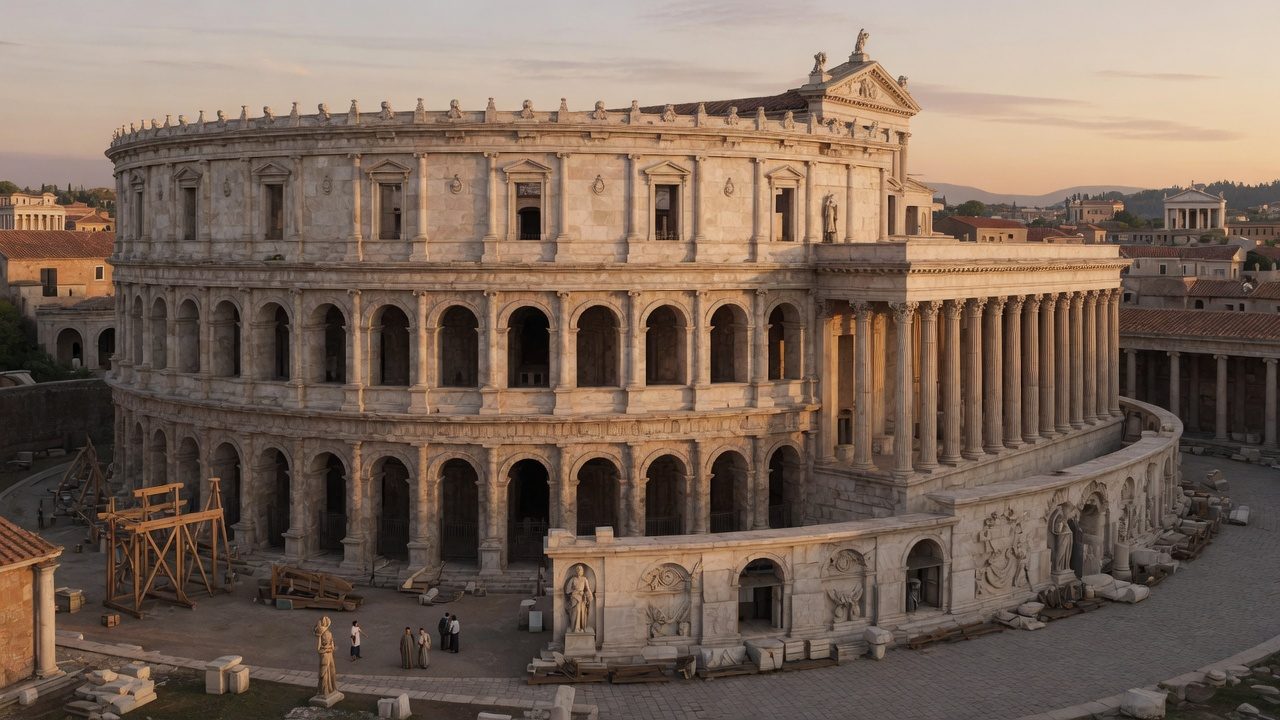
Years later, Caesar dies in the Curia attached to Pompey's theater complex. The stone of Pompey's self-memorialization hosts the assassination of his destroyer.
History rarely offers cleaner poetic justice — or crueler proof that marble cannot control meaning. Pompey built for gratitude and permanence. The complex outlives him, outlives Caesar, and keeps collecting new stories neither man ordered.
G17 — SONS AND THE LONG ECHO
The Pompeian name becomes a rebel standard. Sextus Pompeius as naval warlord shows how incompletely Pharsalus ended the story. Octavian and Antony must still exorcise Pompey's ghost from the sea lanes.
Gnaeus dies in the Spanish aftermath. Sextus keeps the brand dangerous on the water. The father's three triumphs become the sons' long insurgency. Names outlive bodies. Sometimes that is a blessing. Sometimes it is a curse that keeps recruiting.
G18 — FINAL COMPARISON (host may paraphrase)
Cicero: words, law, failed rescue of republican form.
Pompey: commands, popularity, failed management of peer rivalry.
Caesar: speed, narrative, successful conversion of crisis into personal rule.
Augustus: patience, branding, permanent system after the blood.
Pompey stands second in that chain — essential, spectacular, and ultimately transitional. Not the man who invents the methods. Not the man who finishes the job. The man who makes the job look normal enough for someone colder to complete.
G19 — LONG CLOSER
[08] → [00] → [07] → black
Gnaeus Pompeius Magnus was born into a Republic already learning to love generals more than rules.
He became the best argument for that love: the pirate-cleaner, the eastern settler, the thrice-triumphator, the man called Great while alive enough to enjoy it.
He died proving the argument's limit. Greatness without a final monopoly is only a waiting room for someone colder.
Pompey cleared the sea. He could not clear the future of Caesar.
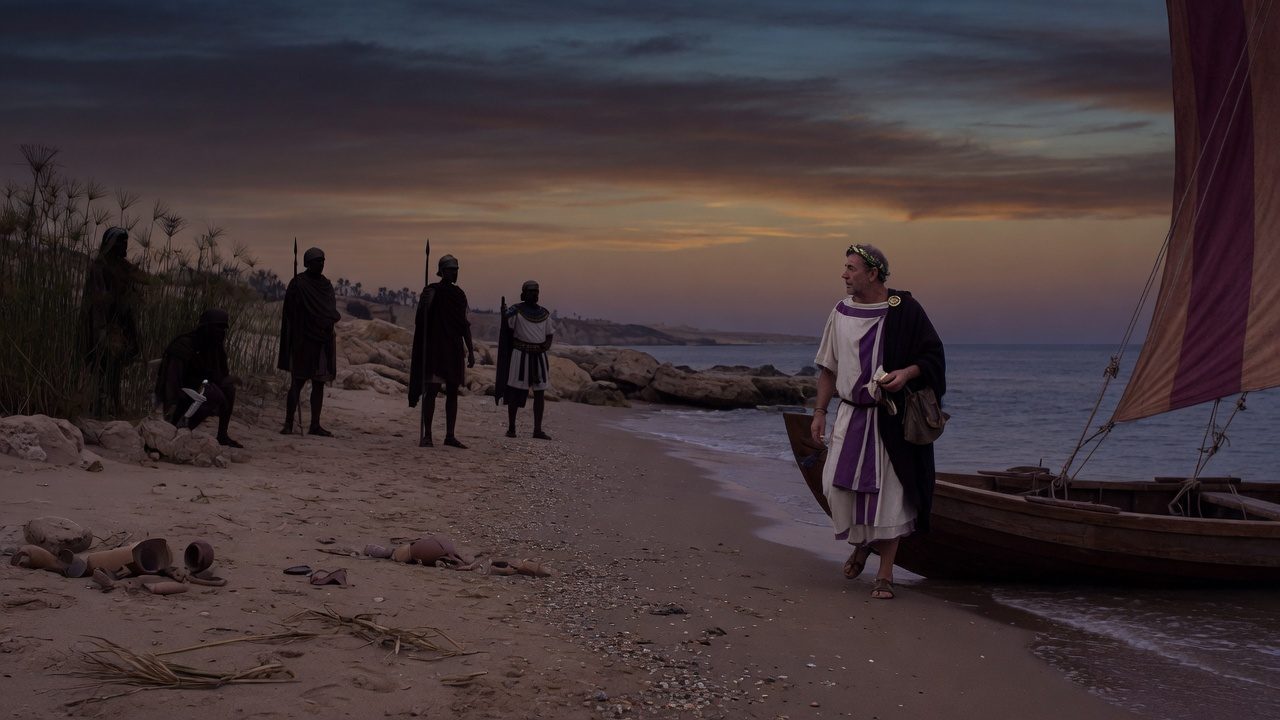
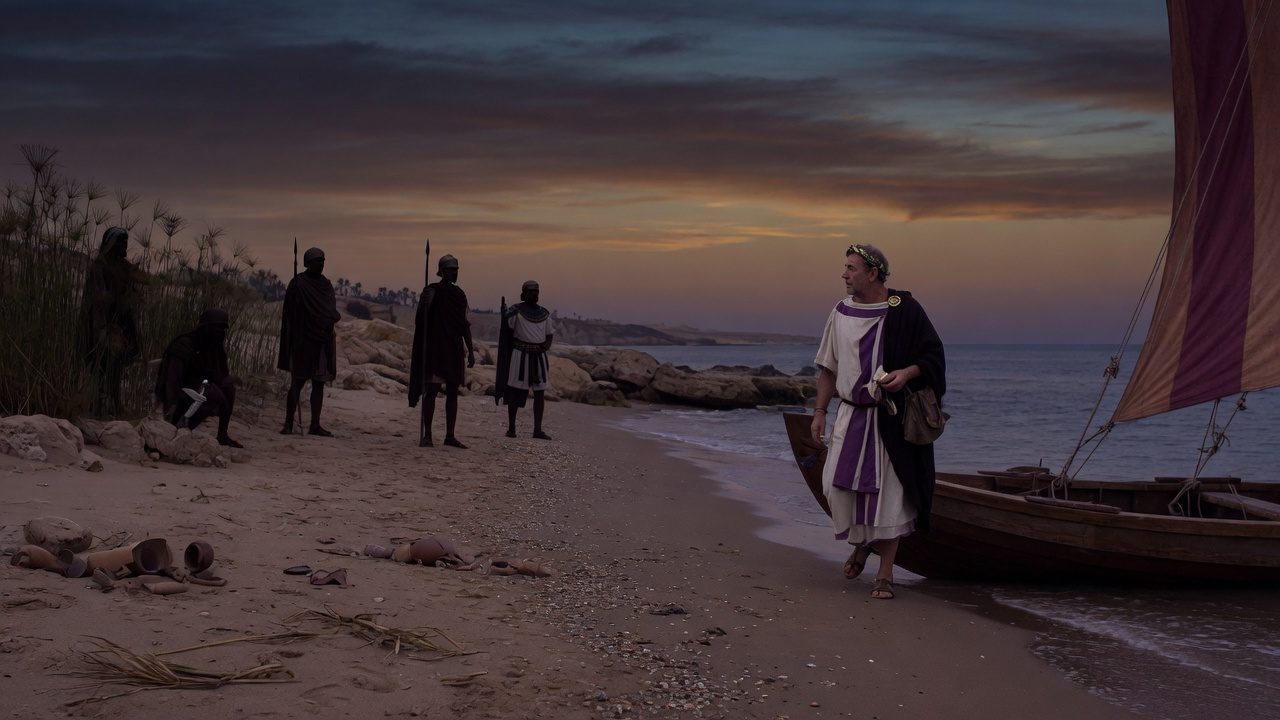
And so the Republic's superstar exits on a beach, while the Republic's sequel is written by other hands — in the theater that still bears his name.
End Block G — Maximum Expansion