The army
If you say “Hannibal’s army” and picture a nation in arms, you will misunderstand every decision from the Rhône to Bruttium.
He does not command Carthage. He commands a coalition that has to be re-argued every season.
Start with the Africans, because they are the core the paintings skip.
Libyan infantry — men from the hinterland of Carthage, levied from subject communities that do not sit in the merchant council. By the time they have been in Spain they are professionals in the only sense that matters in this century: they have been paid, drilled, and kept together long enough to hold a line when Gauls are giving ground on purpose. At Cannae some of them are wearing kit stripped off Roman dead from the Trebia and Trasimene. That is not a costume joke. It is a supply service. Good armor is heavy and expensive and already made.
Then the Iberians.
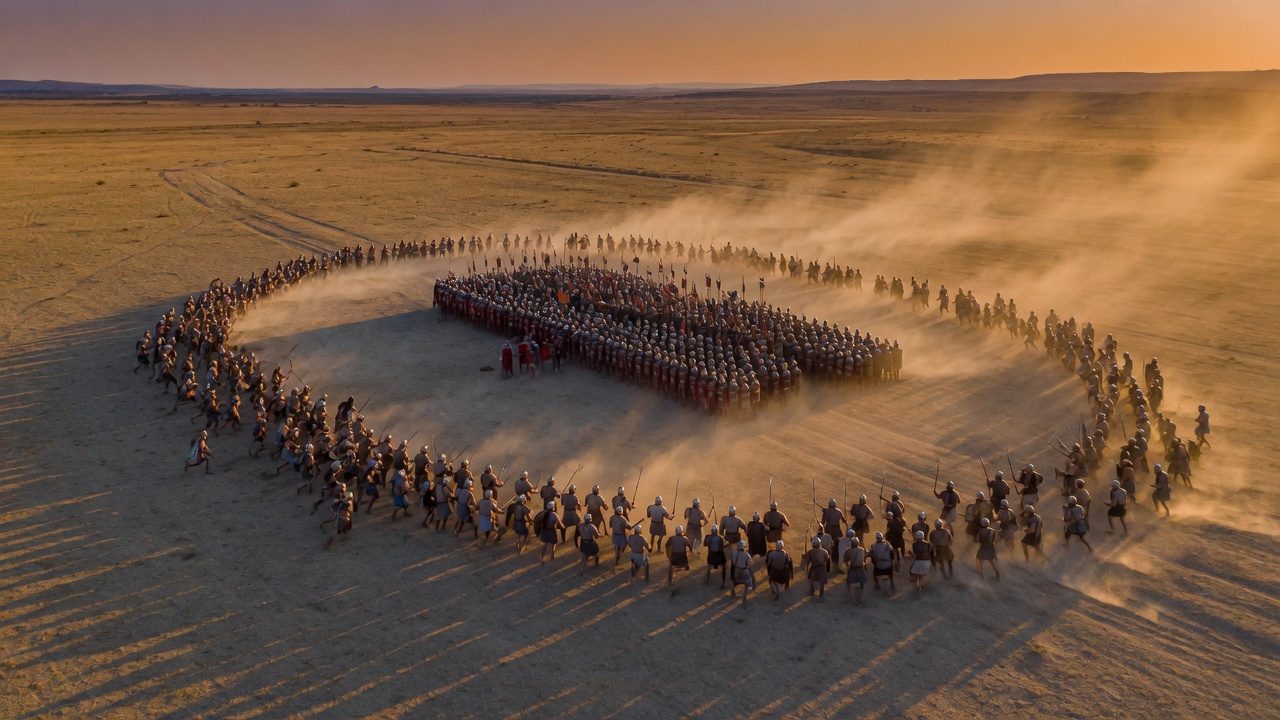
Spain is not a single people waiting to be led. It is a pile of communities — Ilergetes, Celtiberians, Turdetani, the men of the coast and the men of the plateau — some of whom have been with the Barcids since Hamilcar, some of whom are here because their leading families are hostages in New Carthage, some of whom will go home the first winter they are allowed to. They fight, on the whole, as the sources say they fight: short swords, ferocity in the first hour, a habit of serving a successful general rather than a distant constitution. Hannibal’s center at Cannae is built out of their willingness to step backward without turning into a rout. That is a trained thing. It is also a trust thing. You do not give that order to men who think you will leave them in the pocket.
The Gauls are the renewable resource and the political headache.
Insubres, Boii, later other northerners, later still Italians from the south who have made a similar calculation. They come because he wins and because they hate Roman colonies on land they still count as theirs. They leave because it is harvest, or because a chief is dead, or because a rumor has come from the Po. Polybius’s arrival numbers after the Alps are small partly because the walk was murder and partly because a Gallic contingent is not a legion. It is a set of relationships. Hannibal’s first Italian battles are recruitment posters. His later Italian years are what happens when the poster fades and you are asking the same men to die for a camp in Bruttium.
The Numidians are the arm Rome does not know how to answer until it buys its own.
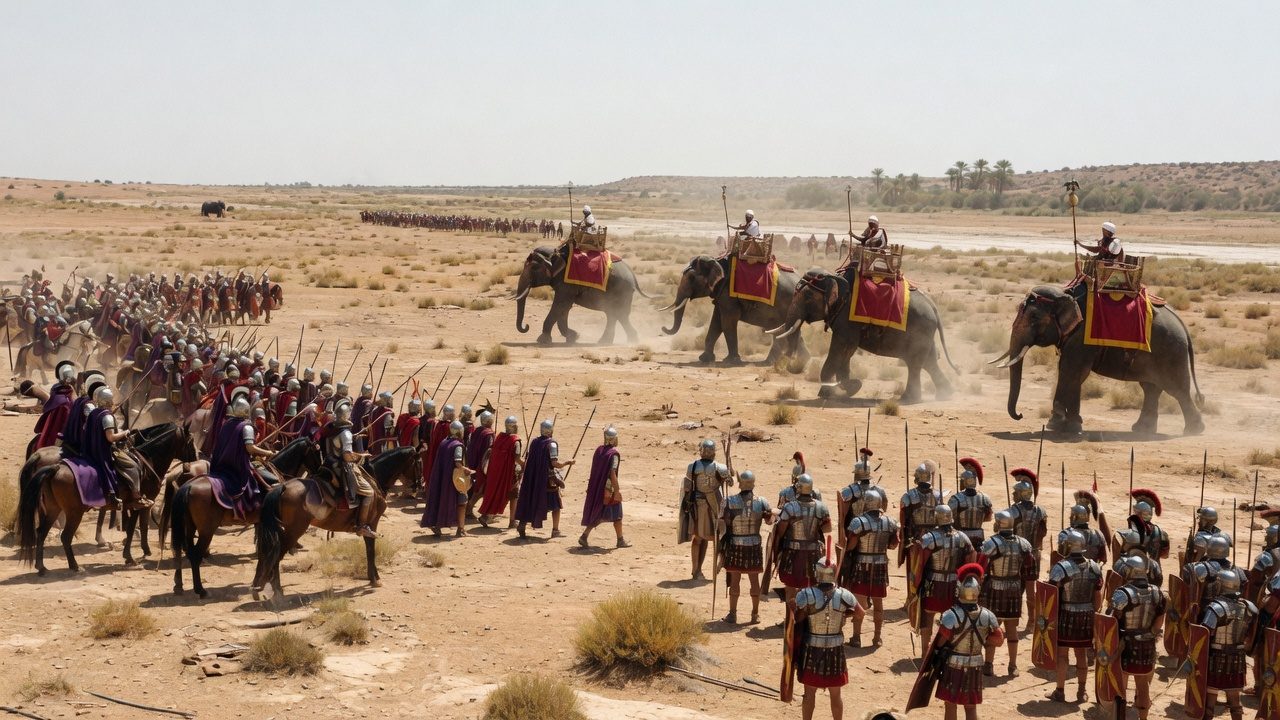
Light horse from the Maghreb kingdoms — Masinissa’s people, Syphax’s people, the mass of riders who do not crash a line so much as unmake it. They screen, they raid, they refuse a firm engagement, they appear in a foraging party’s afternoon and ruin it. At Cannae they hold Varro’s allied cavalry in a state of uselessness until Hasdrubal can hit that cavalry from behind. When Masinissa takes that tradition over to Scipio, Zama becomes a different afternoon. Hannibal does not “lose his magic.” He loses a recruiting ground.
Elephants.
Say what they could do, then say what they could not.
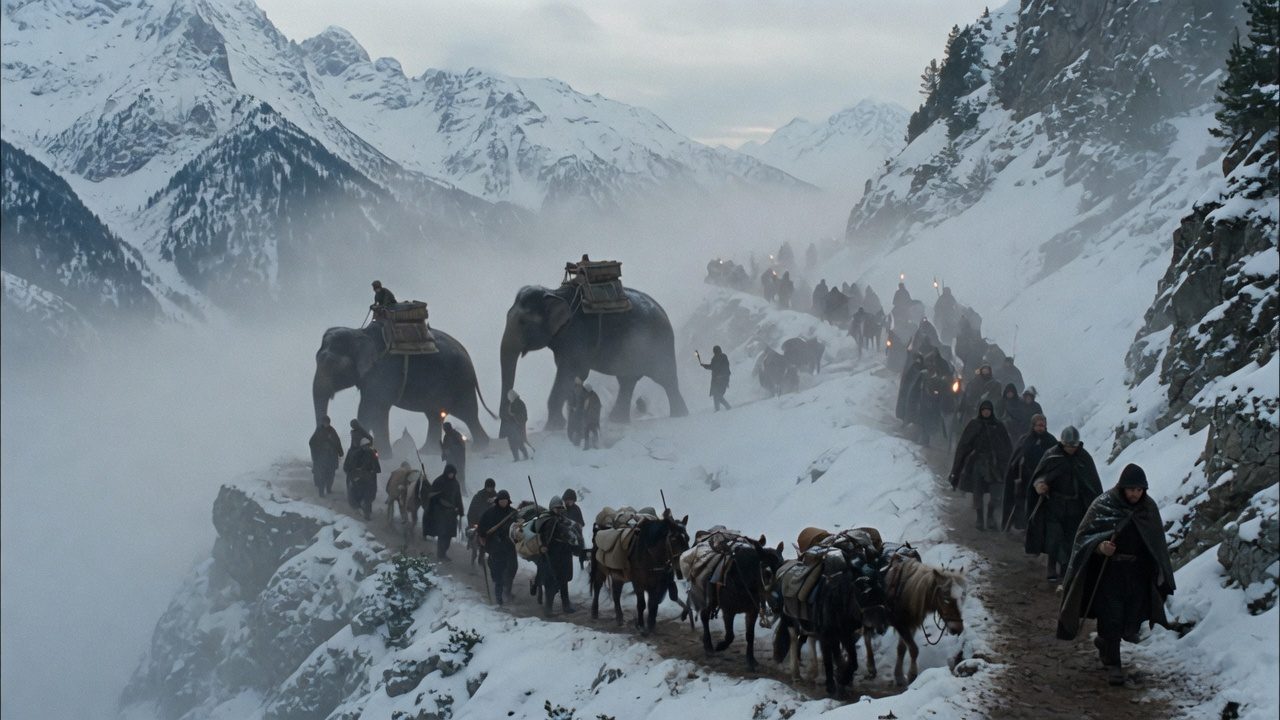
They could break unprepared infantry, especially in 218, when a man in a Roman line might never have stood near one. They could scare horses that had not been trained around the smell. They could, on a parade day, make a council in Carthage feel like a great power.
They could not climb an Alpine track without dying. They could not be replaced from Italian villages. They could not be fed casually in a peninsula that is already feeding forty thousand men. They could not be steered, once panicked, by a speech. At the Trebia they matter. By the next summer most of them are gone, dead in the wet or used up. At Zama they are numerous again, and Scipio treats them as a problem in traffic: open the lanes, let the fear go through, kill what you can at the sides.
A documentary that parks an elephant in every frame is not talking about this army. It is talking about a poster.
There are also Balearic slingers, Ligurians at times, Italian defectors after 216, Bruttian levies, a handful of specialists who know how to build a raft or a tower. The staff is a family firm: brothers Hasdrubal and Mago, officers like Maharbal and Hanno whose names repeat until you have to check which Hanno. Orders have to travel through Punic, Greek, and whatever is being spoken at the Gallic fire.
Pay is the quiet mechanism under all of this.
A Roman consular army, in this period, is still a citizen and allied levy with a season in mind. It expects to go home. Hannibal’s men expect a chest, a share of a town, a future in Spain or Africa, land if the war ever ends in their favor. Spanish silver is not a backdrop. It is the reason the Libyans are still in the line in year twelve. When the silver route dies — New Carthage taken, Hasdrubal gone, the sea unfriendly — the promises get thinner. That is why the late Italian years look like a man defending a shrinking magazine. He is. The magazine is loyalty.
Language is the other quiet mechanism.
Orders have to move from Punic into Greek, into Iberian, into whatever Gallic a liaison actually speaks, into the Oscan and Greek of the southern towns. A commander who can be understood at a river crossing is not showing off. He is keeping the column from becoming five columns. Polybius’s praise of Hannibal’s endurance is also, if you turn it sideways, praise of a man who can sit at four campfires and not be a tourist at any of them.
This is why he cannot “just march on Rome,” and why he cannot “just go home,” and why fifteen years is both a miracle and a trap. A coalition army is not a sword you put in a scabbard. It is a set of promises. The day the promises look worse than a Roman amnesty, the army is a rumor.
Polybius versus Livy
You have been listening to two men who did not like each other, and one of them had been dead a long time before the other started.
Polybius first.
A Greek from Megalopolis, born around 200, which means he is a child while Hannibal is still alive and a man when Carthage is destroyed. He is brought to Rome as a hostage after Pydna, in 167, and he lives in the household of the Scipios. He rides with Scipio Aemilianus. He is intelligent, snobbish about other historians, obsessed with causes, and close enough to the family that beat Hannibal’s city to have every reason to flatter them.
He does not, on the whole, write a cartoon.
He goes to places. He talks about talking to men who were there. He wants numbers that a staff officer could use. He will spend a page on how you get an elephant onto a raft because he thinks the world is made of such pages. When he does not know a pass in the Alps, he still walks a route and argues. When he gives you Cannae, he gives you a diagram.
He also walks.
Not every hill, not every year, but he is the rare ancient historian who will tell you he looked at a pass, or a battlefield, or a harbor, and then argue from the ground. That is why, when this film has to choose a number or a piece of machinery, it starts with him. He is still a man. He is still sitting at a Scipio table. Starting with him is not the same as ending with him.
His vice is the vice of the intelligent guest. He believes in the Roman constitution as a machine that explains success. He believes in tyche, fortune, but he prefers a cause you can point at. He is in a Scipio house, so Scipio Africanus will never be a lucky fool in his pages. Take the diagrams. Watch the halo.
Livy.
Titus Livius, from Patavium, writing under Augustus, two centuries after the Trebia. He has Polybius on the desk for the Punic War books — you can see the grain — and he also has a Roman moral project. He is building an origin story for a city that has just crawled out of its own civil wars and would like to be told that it used to be better.
Livy’s vice is the vice of the great storyteller. He needs characters. Flaminius must be rash in a way that teaches. Varro must be a popular type. Fabius must be wisdom in a cloak. Hannibal must be brilliant and, at the decisive hour, somehow incomplete, so that Rome’s survival is not only a census. He will give you oxen with torches, vinegar on Alpine rock, Maharbal’s five days to the Capitol, a head thrown into a camp, speeches in tents that read like a tragedy chorus.
His virtue is the same as the vice. Without Livy you would have a cleaner war and a thinner human being. He preserves names, motions of the Senate, the texture of a city receiving a disaster. He is late and patriotic and better at rooms than Polybius is.
Then the smaller lamps.
Cornelius Nepos, a biographer, short, fond of a neat ending, our best single ancient Life of Hannibal, which is not the same as the best history. Appian, later, useful when he is following someone better, dangerous when he is alone. Plutarch, who does not give Hannibal his own full pairing in the way you want, but who writes Fabius, Marcellus, Flamininus, and will hand you a moral scene if you let him.
When they disagree, this film’s rule is simple.
Numbers and machinery: prefer Polybius, and still say he may be rounding. Atmosphere, Senate business, the line someone should have said: Livy, labeled. Last words, hidden gold, snakes in jars: Nepos and company, labeled. Do not average two lies to make a fact. Do not pretend we have a camera in the mist at Trasimene.
The mist is in both. The speeches are in Livy.
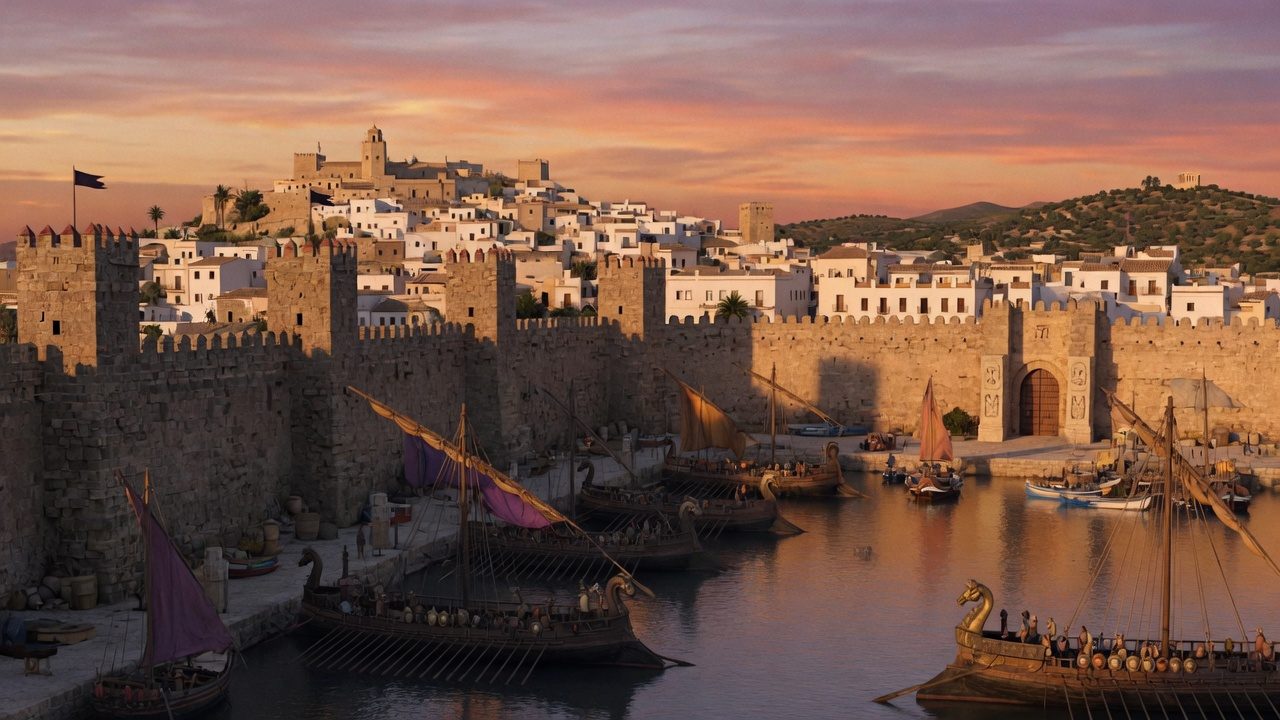
Carthage as a state, not a movie set
Carthage is not a throne room with a villain in earrings.
It is a city of perhaps a couple of hundred thousand in its wider circuit, Phoenician in language and habit, sitting on a harbor that made the western sea a living. Its ruling class is a set of rich families who think in cargoes, hinterland taxes, and overseas commands. There are two chief annual magistrates, the suffetes. There is a council. There is a smaller inner council that later Greeks compare, lazily, to a senate. There is a popular assembly that matters more when the families are split. There are no kings in Hannibal’s lifetime, which is why calling him a prince is a children’s book.
There is also, in the Greek accounts, a court of one hundred and four — a board that can try generals. Aristotle, earlier, had already treated Carthage as a constitution worth comparing to Greek ones, mixed, oligarchic, stable. That should puncture the movie. This is a state with offices, terms, and a fear of men who stay in the field too long. The Barcids stay in the field too long. That tension is the Spanish command in one sentence: the city needs the silver and does not love the house that gathers it.
The army is not, as a rule, a citizen levy in the Roman style. Carthage hires, levies subjects, and lets great houses raise forces in the west. That fact is used against it in every Roman sermon about mercenaries. The sermon misses the point. Rome’s Italian alliance is also a machine for making other people die in Roman wars. Carthage’s version is more cash and less franchise. Both are empires. One of them writes the surviving literature.
The Barcids are a house inside that state, not the state itself.
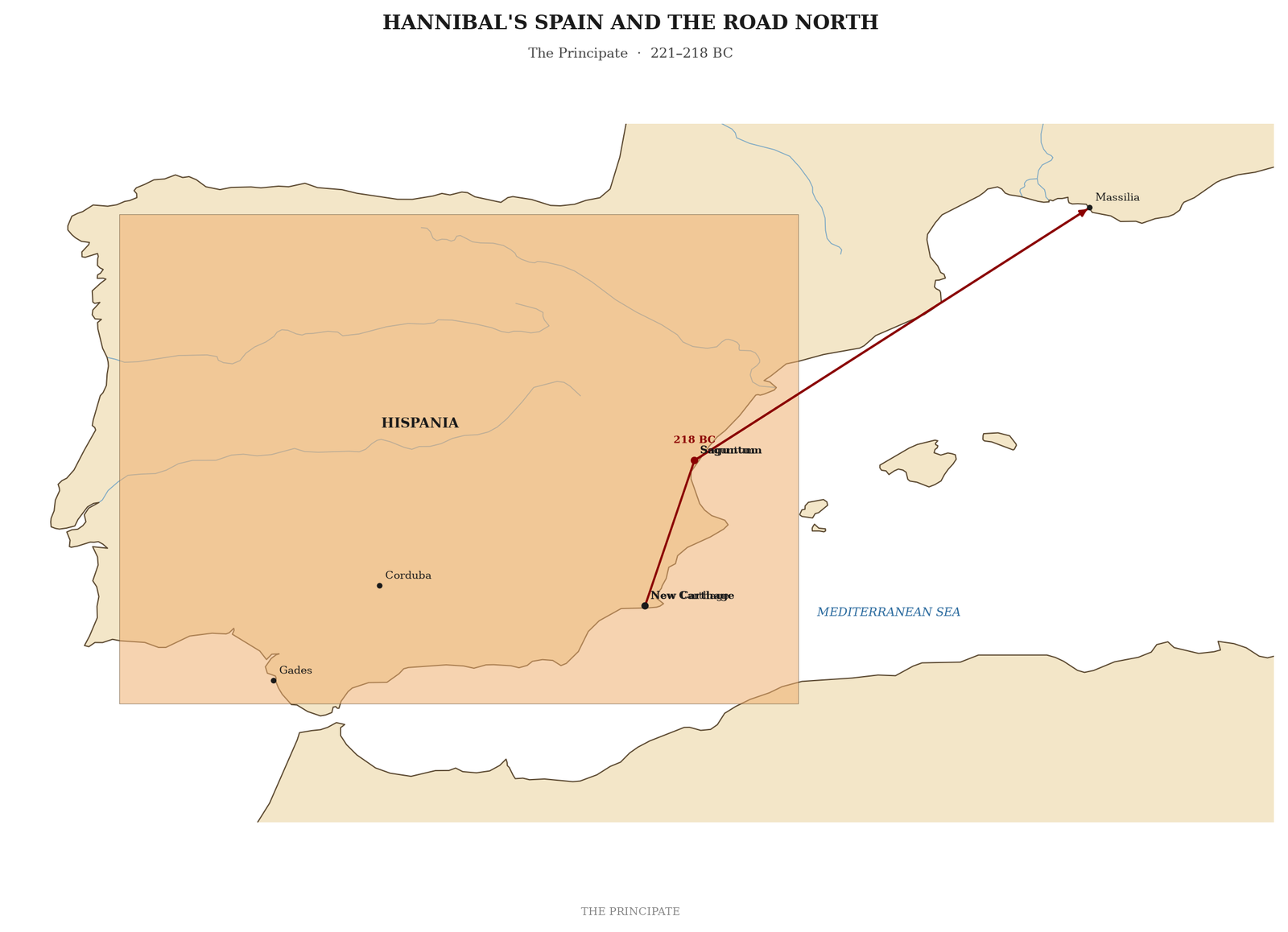
Hamilcar, Hasdrubal the Fair, Hannibal, the brothers — they build in Spain a private-public empire. Silver goes home so that the council confirms the command. Hostages and marriages stitch Iberian elites to the house. New Carthage is a capital that is not Carthage. When Hannibal attacks Saguntum he is not only making foreign policy. He is making a family policy that the city on the Gulf of Tunis can only ratify or disown, and disowning it would mean admitting they do not own Spain.
This is why help to Italy is always late and always less than a highlight reel wants.
A merchant council looks at a war the way a merchant council looks at a voyage. Is the ship still afloat. Are the returns coming. Is there a risk to the home harbor. Sending a second great army to join Hannibal means stripping Spain or Africa. After Cannae they send money, troops in packets, a hope of Syracuse, a hope of Macedon. They do not send the state. The state is the harbor, the hinterland, the books.
When the war comes home, the same people will hand Rome a peace and then resent the man who tries to make them pay for it.
Hannibal as suffete, auditing the indemnity, is the most Carthaginian scene in his life. Not an elephant. A ledger. The oligarchs who invite Roman commissioners to rid them of an honest magistrate are not “betraying a hero.” They are being a certain kind of city. Rome, when it answers that invitation, is being a certain kind of city too.
If you keep Carthage as a movie set — incense, a priest, a cartoon cruelty — you will not understand the peace, the exile, or the fact that the man who frightened Rome spent his last African years on tax reform.
Why “why didn’t he take Rome?” is the wrong first question
The question assumes the war is a board with a capital on it, and the first player to sit on the capital wins.
That is how some later wars work. It is not how 216 works.
Rome is not a palace. It is a citizen body, a set of Latin colonies, an alliance net, and a religious circuit of walls. Taking the city by storm after Cannae would have required a siege train Hannibal does not have, time his new allies will not give him, and a political story in which a foreign army murdering its way through the gates makes Capua feel safe. He is trying to peel Italy off Rome, not to become the new king of the Romans. Kings are a Roman nightmare they pin on other people.
Even the logistics are a first question that should precede the tourist one.
An army that has just fought Cannae is not a fresh instrument. It has wounded. It has dead officers. It has animals that need the grain of Apulia and Campania, not the picked fields inside a five-mile radius of a walled city that is not going to open the granaries. Sit down under those walls and you become the person being besieged, as soon as the Latin colonies and the surviving forces decide to cut the roads.
The Italian question is the real one.
After Cannae, a dozen communities have to decide whether this man is a liberator or a weather event. If he disappears north to sit around a circuit he may not crack, they learn that their revolt is a sideshow. If he stays in the south, winters in Capua, shows himself in Samnium and Lucania, he is a government. A bad, improvised, underfunded government — but present.
So the first questions are not about a missing afternoon on the Via Latina.
They are: how do you replace Libyans. How do you keep Gauls in a southern summer. How do you take a harbor when the citadel still has a Roman garrison and a sea. How do you make Carthage send you a second army when Carthage can see Spain starting to wobble. How do you fight a state that will not ransom its prisoners and will enlist its slaves.
Livy himself, when he is not writing Maharbal’s joke, knows this. He fills the books after 216 with towns, not with capitals. Nola holds under Marcellus. Casinum, Luceria, the Latin places on the roads, stay shut. The war becomes a question of which gates still recognize a Roman magistrate. That is not a sideshow to a missed siege. That is the war.
The 211 ride is useful here, because it is the control experiment.
He can point a column at Rome when pointing is a tool — to yank consuls off Capua. He does it. The tool fails. Capua falls anyway. That is the lesson, and it is the opposite of Maharbal’s joke. The problem was never that Hannibal did not know where the Capitol was. The problem was that the war he was actually fighting did not end at the Capitol.
Later Romans prefer Maharbal’s joke because it flatters them. We were only one bold ride from death, and the man who beat us had a flaw. A flaw is comforting. A system that can lose fifty thousand citizens and then take your richest ally apart by siege is not comforting.
Ask, if you want a better first question: why did the Latin colonies hold.
Or: why did Carthage never put a fleet and a second field army into the same year.
Or: what does a commander do when he has won the battles that were supposed to end the war, and the war has not ended.
That last one is the fifteen years.
Pronunciation
Say it one way and stay there. This is a general-audience pass, not a seminar fight.
Hannibal — HAN-ih-bul. The Punic name is Ḥannibaʿal, “Baal has been gracious.” You may say that once. Do not perform it every time.
Barca — BAR-kuh. A family name the Greeks and Romans write as Barcas. Related, probably, to a word for lightning, which later writers cannot resist. You can resist it after one mention.
Hamilcar — huh-MIL-kar.
Hasdrubal — HAZ-droo-bul. There are several. On first mention, add “the Fair” or “the brother.”
Mago — MAY-go.
Baal — BAHL. Not a comic-book syllable.
Cannae — KAN-ee. You will hear KAN-eye. Pick KAN-ee and do not flinch.
Trebia — TREB-ee-uh. The river is the Trebbia now.
Trasimene — TRAZ-ih-meen. Lake Trasimeno on a modern sign.
Aufidus — AW-fih-dus. The Ofanto.
Saguntum — suh-GUN-tum.
Capua — KAP-yoo-uh.
Metaurus — meh-TOR-us.
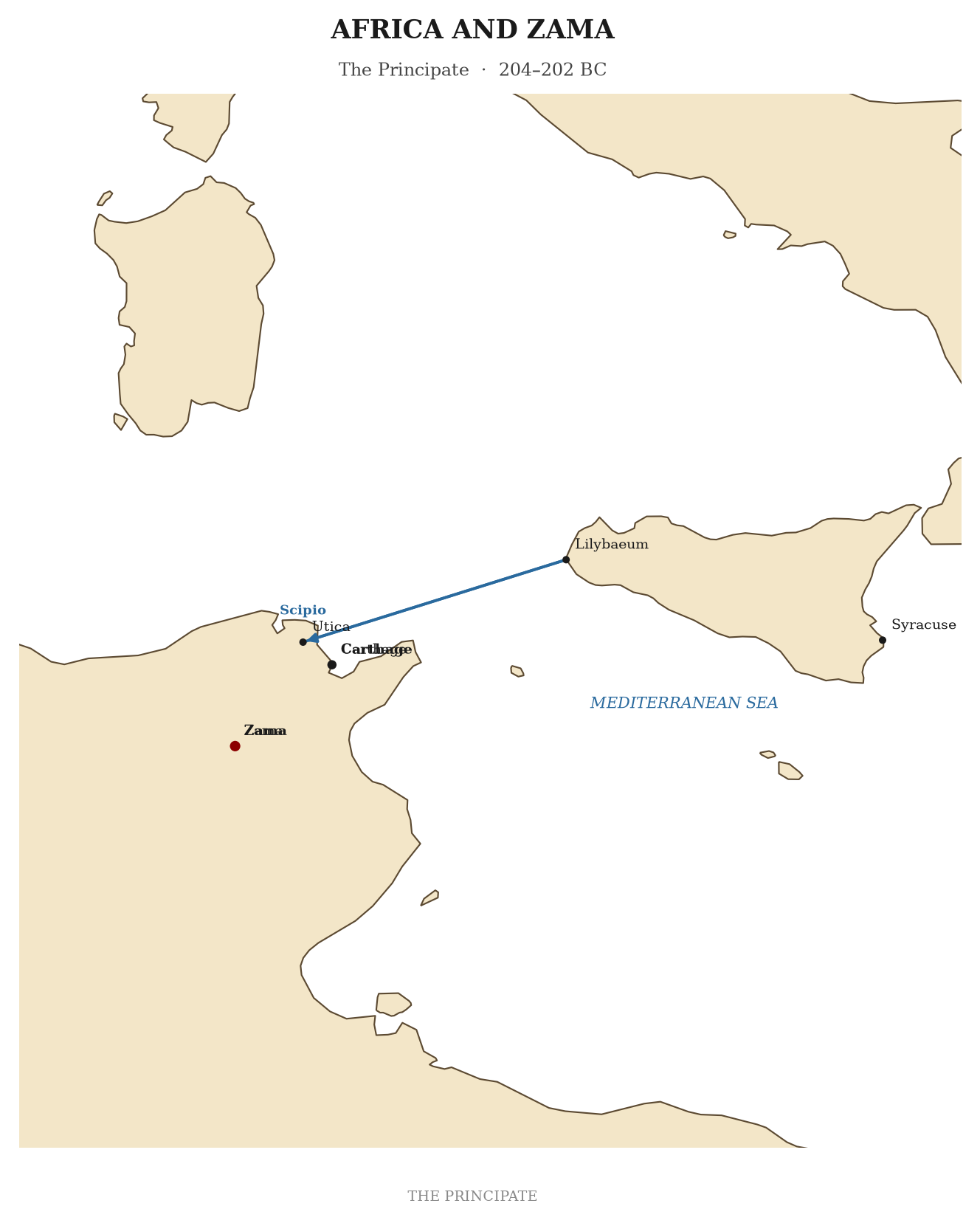
Zama — ZAY-muh. Some say ZAH-muh. Stay with ZAY-muh.
Utica — YOO-tih-kuh.
Numidia — noo-MID-ee-uh.
Masinissa — mass-ih-NISS-uh.
Syphax — SY-fax.
Antiochus — an-TY-uh-kus.
Prusias — PROO-zhuss, or PROO-see-as if you want the extra syllable.
Bithynia — bih-THIN-ee-uh.
Libyssa — lih-BISS-uh.
Fabius Maximus — FAY-bee-us MACK-sih-mus. Cunctator — kunk-TAH-tor.
Aemilius Paullus — eye-MILL-ee-us PAW-lus.
Terentius Varro — teh-REN-shuss VAIR-oh.
Scipio Africanus — SKIP-ee-oh aff-rih-KAH-nus. Or SIP-ee-oh if that is already your series habit. Match Caesar and Cicero packages: SKIP-ee-oh.
Maharbal — muh-HAR-bal.
Flaminius — fluh-MIN-ee-us.
Marcellus — mar-SELL-us.
suffete — SUFF-eet.
Punica fides — POO-nih-kah FEE-dace. Carthaginian faith. Said as an insult.
casus belli — KAH-soos BELL-ee. Leave a beat after it.
socii — SOH-kee-ee. The Italian allies.
legiones Cannenses — leh-gee-OH-nays kan-NEN-says. The disgraced survivors.
volones — woh-LOH-nays. The slave volunteers after Cannae.
Qart-ḥadašt — kart-HAH-dasht. The New City. Once, then New Carthage.
Leave air after the Latin. Do not smile at it.
Timeline closer
Put the years in a line, not as a chant, as a set of doors.
247. A boy born in Carthage while the first war with Rome is still chewing Sicily.
241. That war ends. Indemnity. Sicily gone.
238–237. Rome takes Sardinia in the mess of the mercenary revolt. Hamilcar goes to Spain. The oath, if you want it, sits on this threshold.
228. Hamilcar dead. Hasdrubal the Fair builds New Carthage and a line at the Ebro.
221. The Fair is murdered. The army in Spain names Hannibal. He is twenty-six.
219. Saguntum. Eight months. Rome’s cause for war.
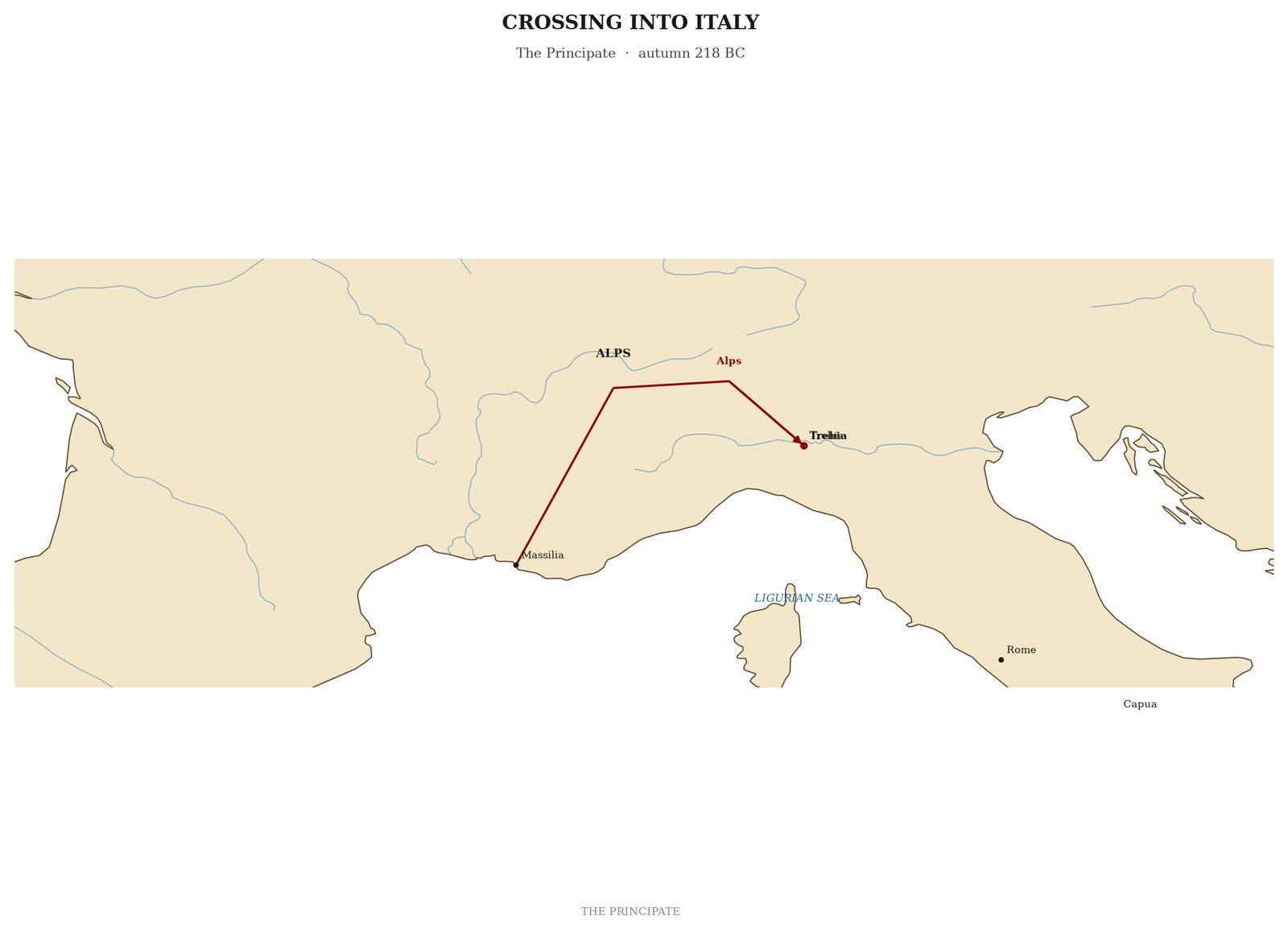
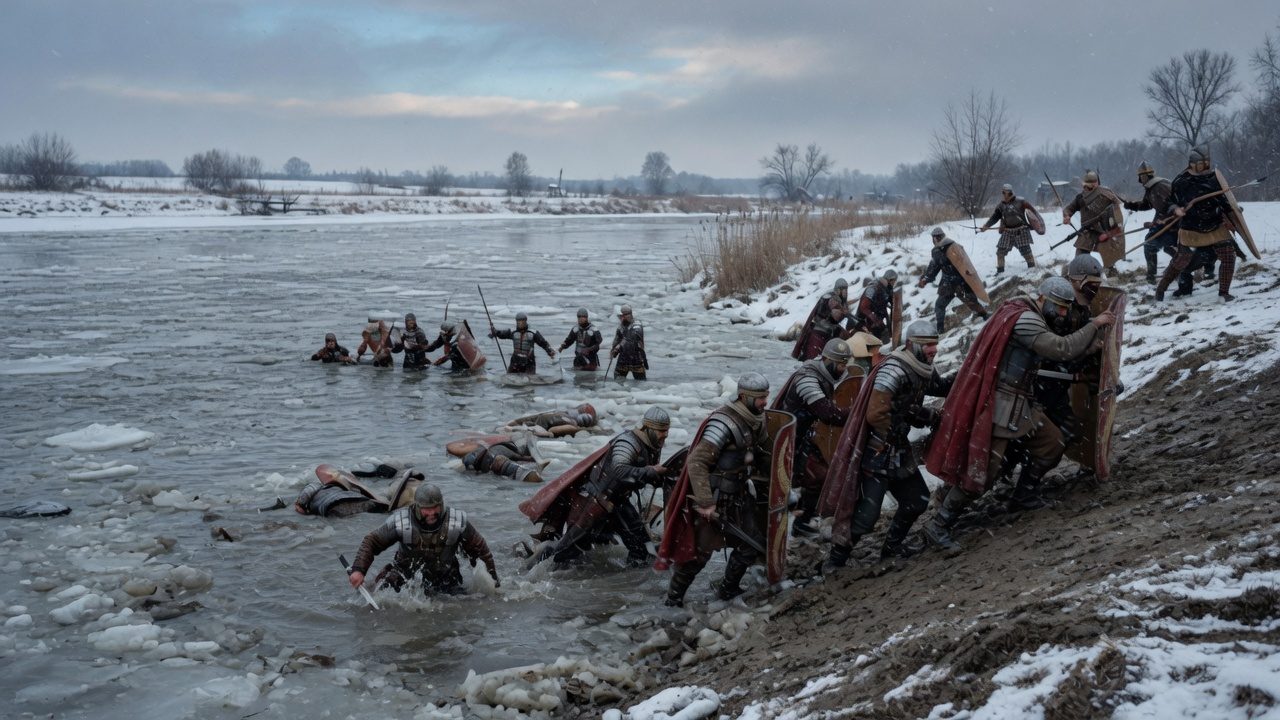
218. New Carthage in the spring. The Rhône. The Alps in autumn. The Ticinus. The Trebia in December.
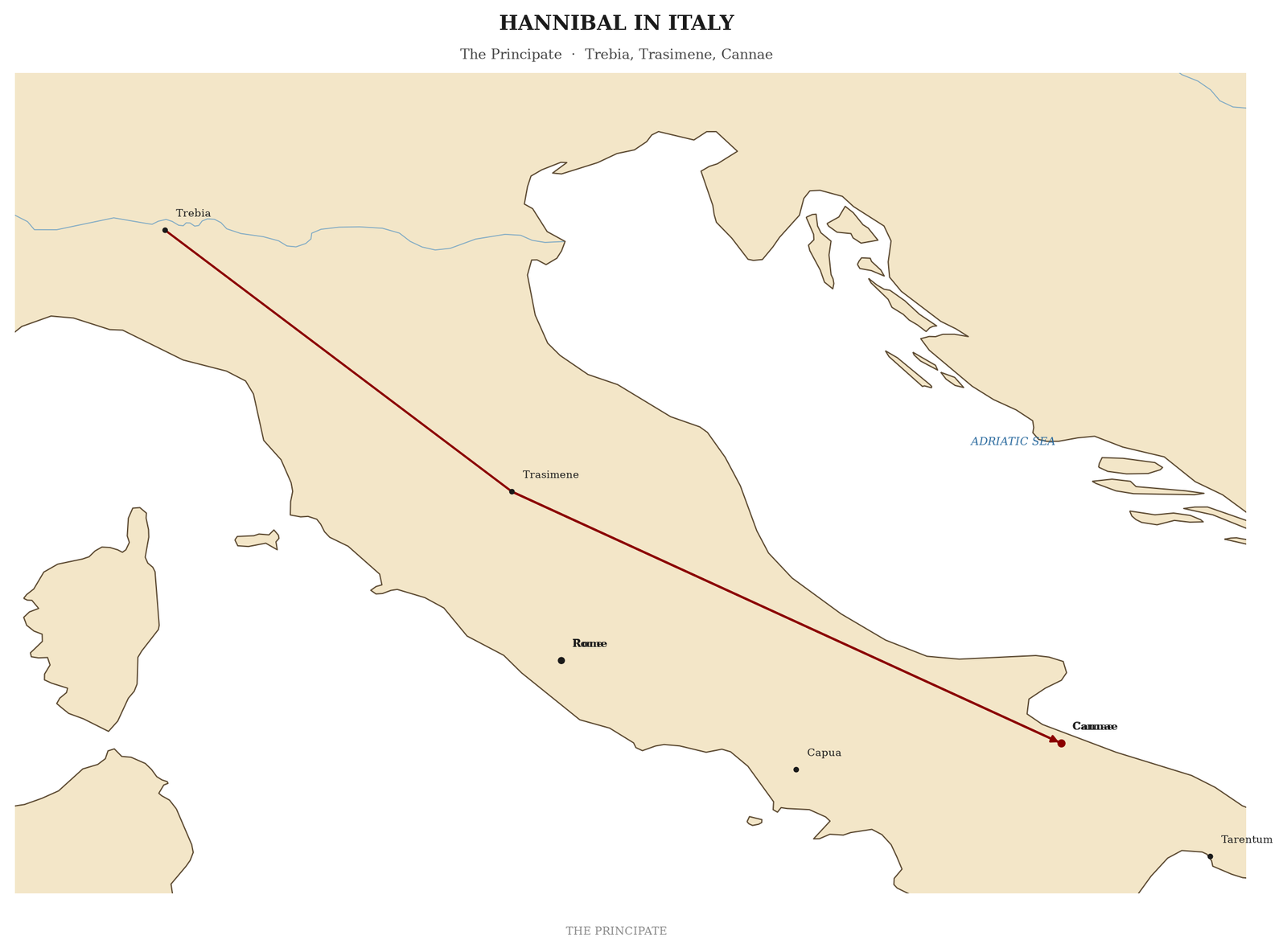
217. A marsh, an eye. Trasimene in June. Fabius and the hated delay.
216. Cannae, the second of August. Capua. The war that was supposed to end does not end.
215 to 211. Macedon on paper. Syracuse dying slowly. Tarentum’s city without its citadel. Capua taken back. A ride at Rome that is a tool, not a conquest.
209 to 207. Scipio takes New Carthage. Hasdrubal comes over the mountains and dies on the Metaurus. Livy’s head, if you allow Livy.
206 to 202. Ilipa. Africa. A recall. Zama. A peace that leaves the city standing and the empire gone.
196. A suffete with a ledger.
195. A quay, and the East.
190. Someone else’s defeat at Magnesia.
183, or near it. A house in Bithynia with too few doors that still open. A cup, in the tradition. A Republic that cannot stop being afraid.
Now look at what this series usually films.
Marius is born about fifty years after that cup. He inherits an army problem that Cannae taught Rome to solve with more men, more flexibility, more loyalty to the general who can find both. Sulla inherits the habit of treating the city as a place an army may enter. Pompey inherits commands that are wars-as-careers. Caesar inherits a peninsula that knows, in its grandparents’ stories, that a single commander in the north of Italy is an emergency. Augustus inherits a state that has learned to survive disasters by becoming a machine, and then uses the machine on itself until only one man is left holding the off switch.
They do not dress like Hannibal. They do not pray to Baal. They do not need to.
They live in the world this war made: a Rome that believes annihilation is possible, that believes a professional army is the only adult in the room, that believes mercy and memory are both weapons. Cato the Elder, who is a young soldier in the last years of the war, will grow up to end every speech with Carthage, until a third war turns the city into a field.
This episode is a prequel because the late Republic is, among other things, a set of men using tools that were forged to kill one Carthaginian house.
The tools outlived the house.
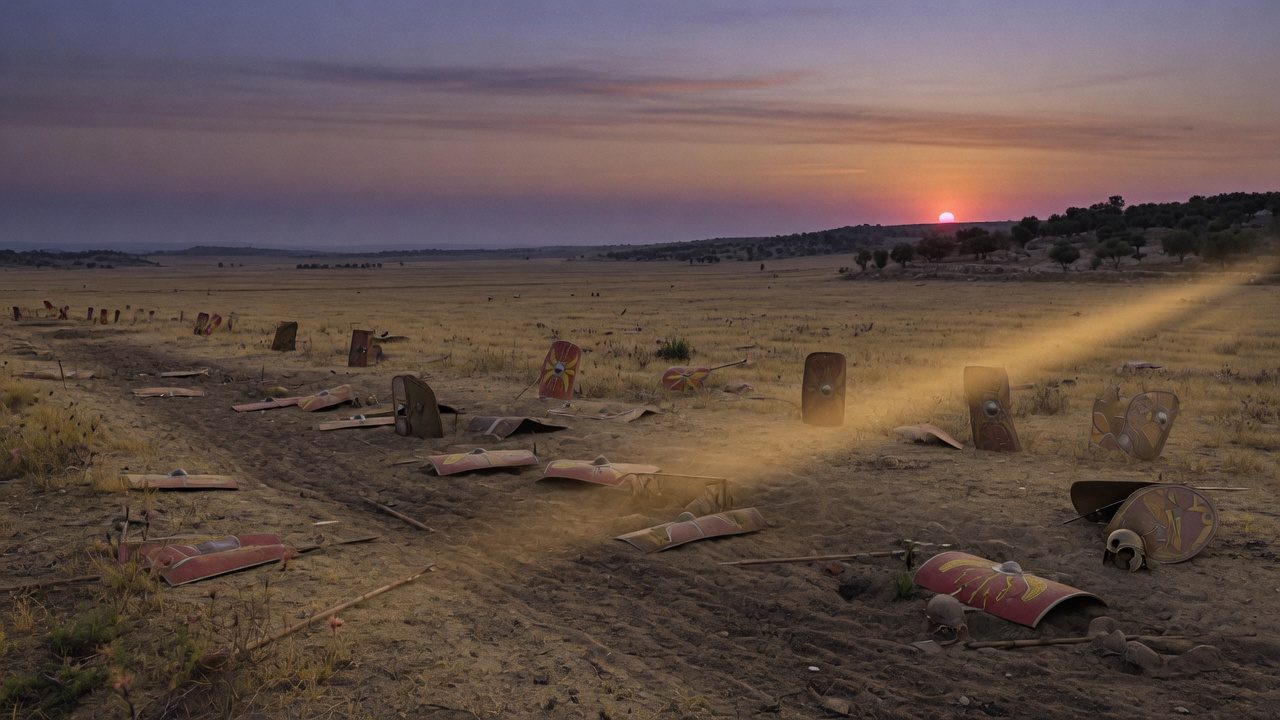
The road is empty now.
It was not empty for fifteen years.
A coalition army walked it — Libyans, Iberians, Gauls, Numidians, a few elephants that were never the point — and a city that refused to die learned how to make war as a habit instead of a season.
That habit is the Principate’s inheritance, whether the Principate says the name or not.
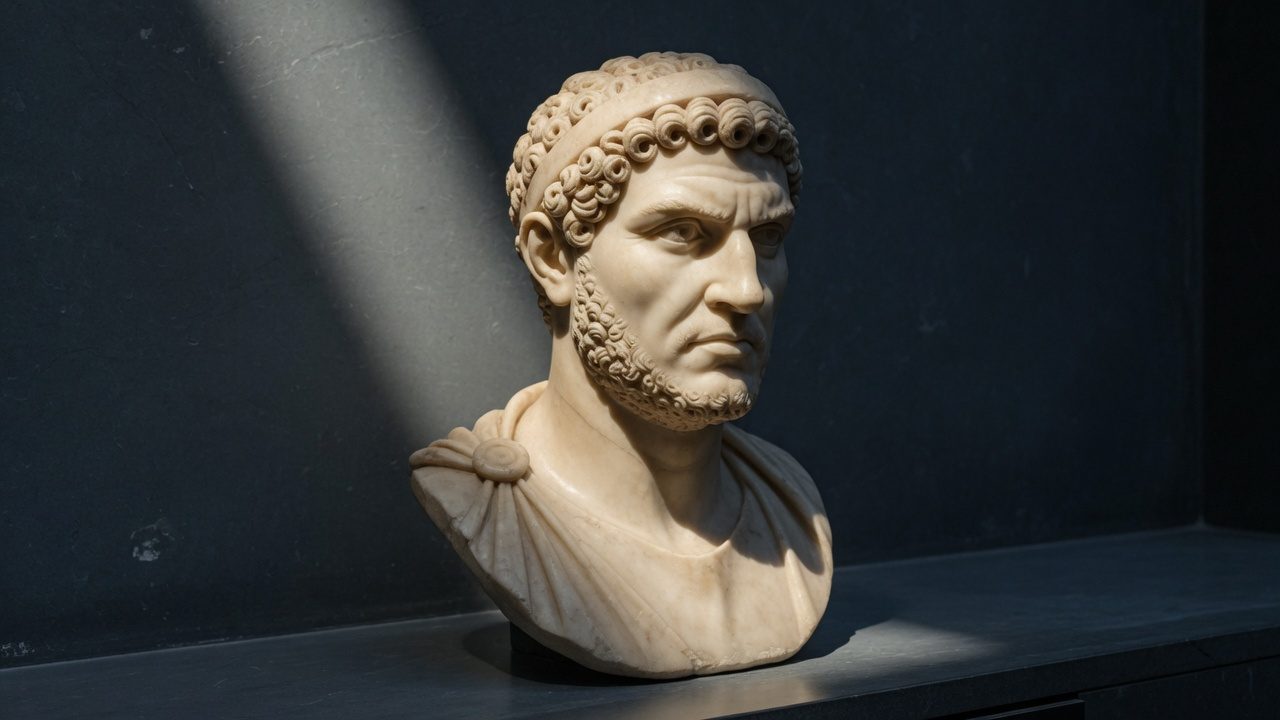
Hannibal Barca. 247 to about 183.
The enemy who taught Rome war.
Not a cartoon.
Not a god.
A commander, a long way from home, who kept an army alive until the map ran out.