Insert these segments where marked · spoken ~35–45 min @ 130–140 wpm
How to use: After recording A–C, record these inserts and drop them at the markers below.
To get Cicero, you have to get the machine he was trying to save.
The Roman Republic was not a modern democracy. It was a competitive oligarchy with popular assemblies, powerful magistrates, and a Senate that believed it was the mind of the state. In good years, ambition ran through law, custom, and the ladder of offices. In bad years, ambition found an army.
By the time he was born, the bad years were becoming normal.
The Gracchi had already shown reform and violence could fuse. Marius and Sulla had shown generals could march on Rome. Proscriptions had shown political enemies could be turned into corpses and real estate. Every precedent taught the ruthless the same lesson: if the system blocks you, break the system.
Cicero’s generation inherited a constitution that still looked ancient and sacred — and a political culture that increasingly treated that constitution like a costume.
That is the ground under every chapter of his life. He is not fighting for a perfect golden age. He is fighting to keep the remaining rules real, while men with more soldiers treat rules as optional.
Keep that in mind and his wins look braver. His failures look less like personal quirks and more like structural doom.
INSERT IN EDUCATION SECTION
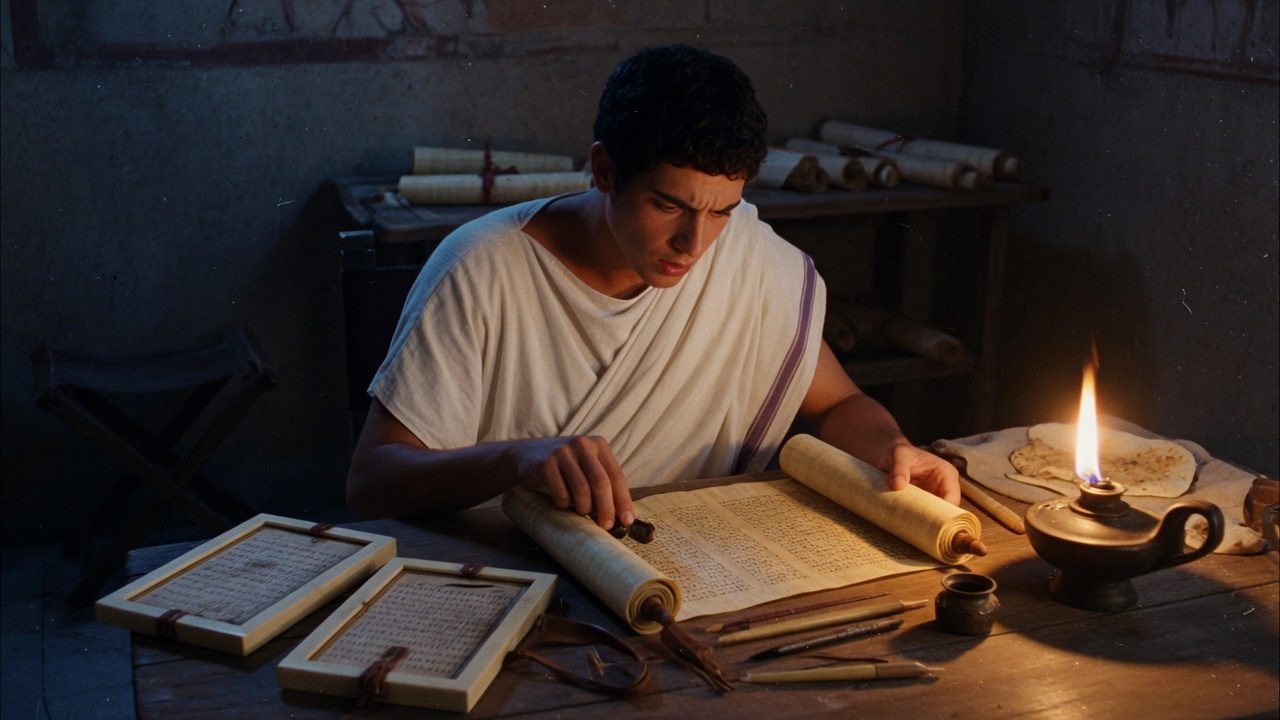
Roman elite education was not “personal growth.” It was weapons training for public life.
Boys of means learned to read, recite, argue, remember, and perform. They studied models. They imitated speeches. They learned law not only as rules, but as a language of citizenship. Greek literature and philosophy were prestige and toolkit at once: Homer for grandeur, the orators for technique, the philosophers for ethical vocabulary.
Cicero took this more seriously than almost anyone. He did not want to be a clever attorney only. He wanted the full package: jurist, speaker, thinker, statesman. That ideal — the orator as a broadly educated citizen — becomes one of his gifts to later civilizations. Medieval and Renaissance schooling would, in different forms, keep chasing versions of that complete mind.
There is a cost. If your identity is excellence in public speech, then exile, silence, and irrelevance feel like annihilation. His later despair is not random melancholy. It is what happens when a man built for the Forum is pulled out of the Forum.
To feel the danger of the Roscius case, remember Sulla.
The dictator had proven civil victory could be monetized through death lists. Proscription was not only terror. It was a market. Accusations could be investments. Property could be the dividend of loyalty.
When Cicero defends a man accused of killing his father in that climate, he is not doing abstract legal philosophy. He is walking into a system where truth is negotiable and powerful freedmen can weaponize the courts.
That is why the case matters in his legend. It says: this new man will risk something. Not always. Not perfectly. But early, when the risk is real.
It also teaches him a lifelong pattern: frame the legal fight as a moral story about Rome itself. Make judges feel the verdict is not about one defendant, but about whether justice still exists.
That pattern will beat Verres. It will lift him against Catiline. It will finally get him killed when he uses it against Antony.
The Verrines repay a slower look.
Cicero does not win only by calling Verres bad names. He builds a world. Inventories crimes. Reconstructs scenes. Uses witnesses and documents. Shames the audience with the gap between Roman self-image and provincial reality.
Rome loved to imagine itself as the bringer of order. Sicily under Verres looks like a crime scene with a governor’s seal.
There is imperial politics here too. If governors can loot without consequence, the empire becomes a feeding trough and the capital a receiver of stolen glory. Cicero positions himself as the man who will not let that become normal — at least not without a speech that makes everyone look at it.
Of course, selective outrage is part of elite politics. He is not a modern human-rights activist. He is a Roman climbing. But the standard he performs in the Verrines becomes part of his brand: competence, indignation, and the claim that law can still catch the powerful.
Every brand is a promise. Later enemies will make him pay when the promise collides with emergency power.
INSERT BEFORE CONSULSHIP
How does a new man become consul?
Not by birth. By network, timing, money, reputation, and looking safer than the alternatives.
The courts made him famous. Alliances made him viable. His equestrian base mattered. Careful courtship of Pompey mattered. His image as a defender of order mattered in a city tired of conspiracy talk and street instability.
He also benefited from whatever procedural integrity the Republic still had. There was still an election to win, not only an army to buy. Easy to forget because we know the ending. In 63 BC the ladder still worked well enough for talent to reach the top.
Cicero never stops loving that fact. It is the emotional core of his republicanism: the system that let a chickpea-named outsider become consul must be defended, because if it dies, men like him do not rise — warlords do.
That love will blind him at times to how hollow the system has already gone. But it is sincere. You can hear it even in his ugliest political fights.
MAJOR CATILINE EXTENSION
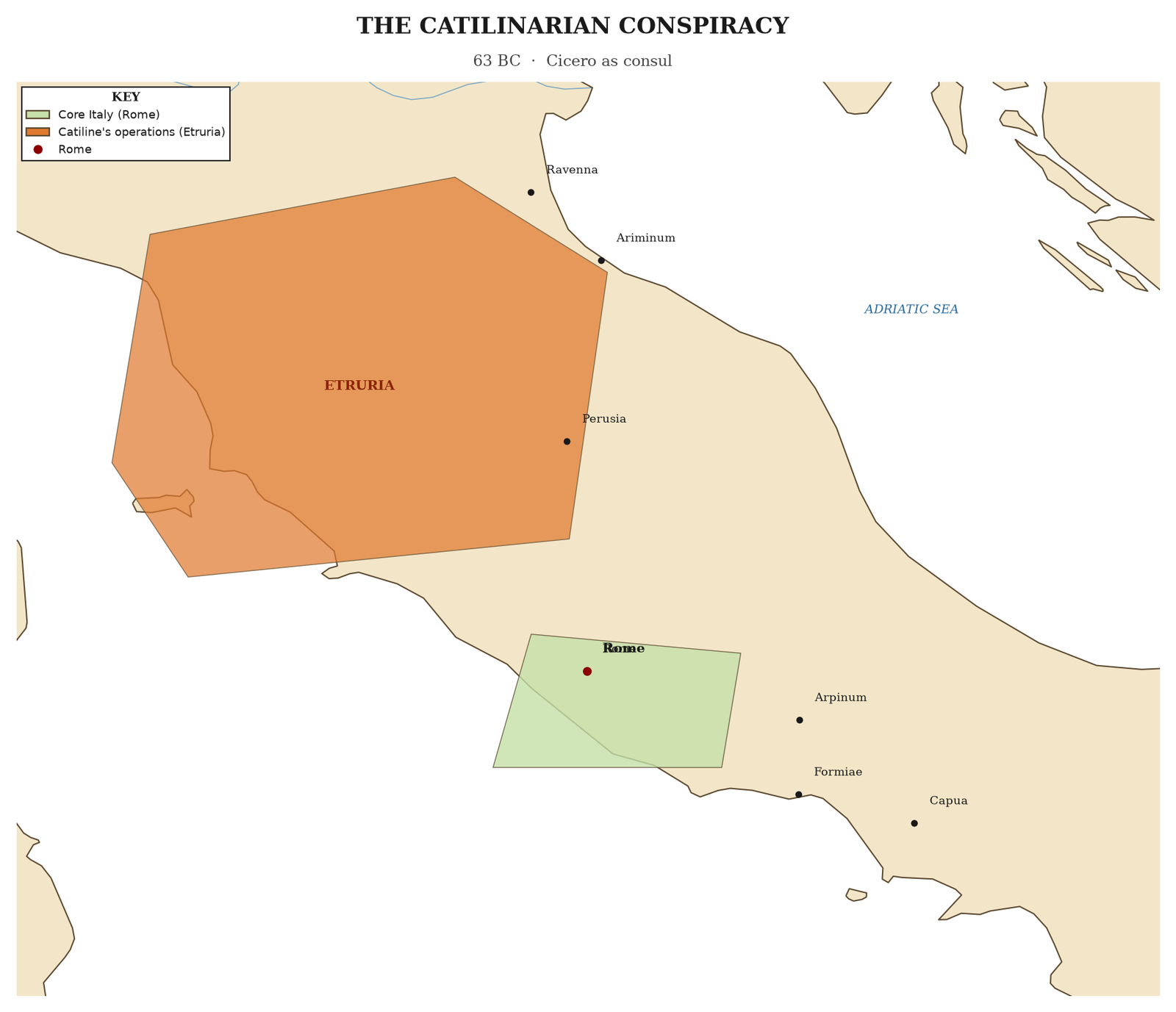
Return to 63 BC and stay there longer. This is the year that makes and unmakes him.
Catiline is easy to cartoon as pure villain. Better treatment is colder. He is a product of aristocratic decline and debt politics: a man with a name, appetites, failed campaigns for power, and a constituency of people who believe the current order offers them no future.
Rome’s economy of status ran on land, credit, patronage, and political victory. Fall behind, and desperation becomes ideology. “Cancel the debts” is not only greed. For some, it is oxygen.
Cicero’s consulship meets that desperation with the full force of establishment panic.
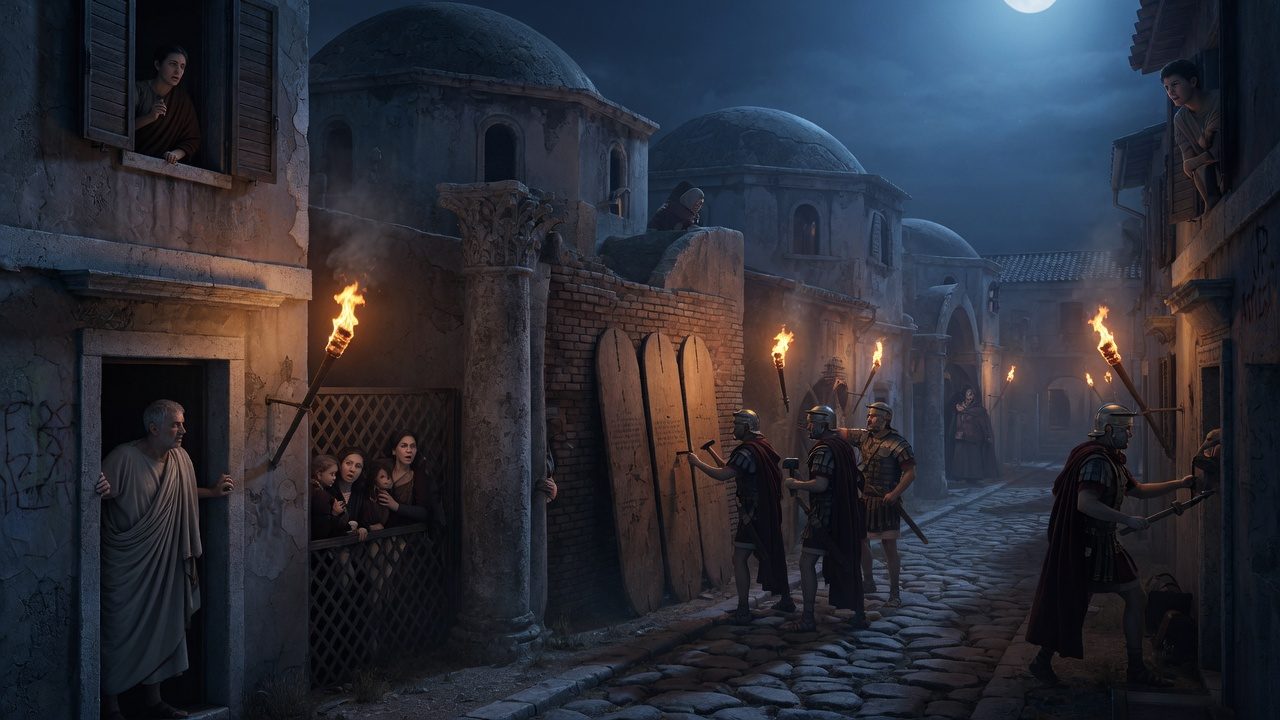
Watch the method. First intelligence. Then public isolation. Then legal-political theater in the Senate. Then the framing of emergency. Then the irreversible act.
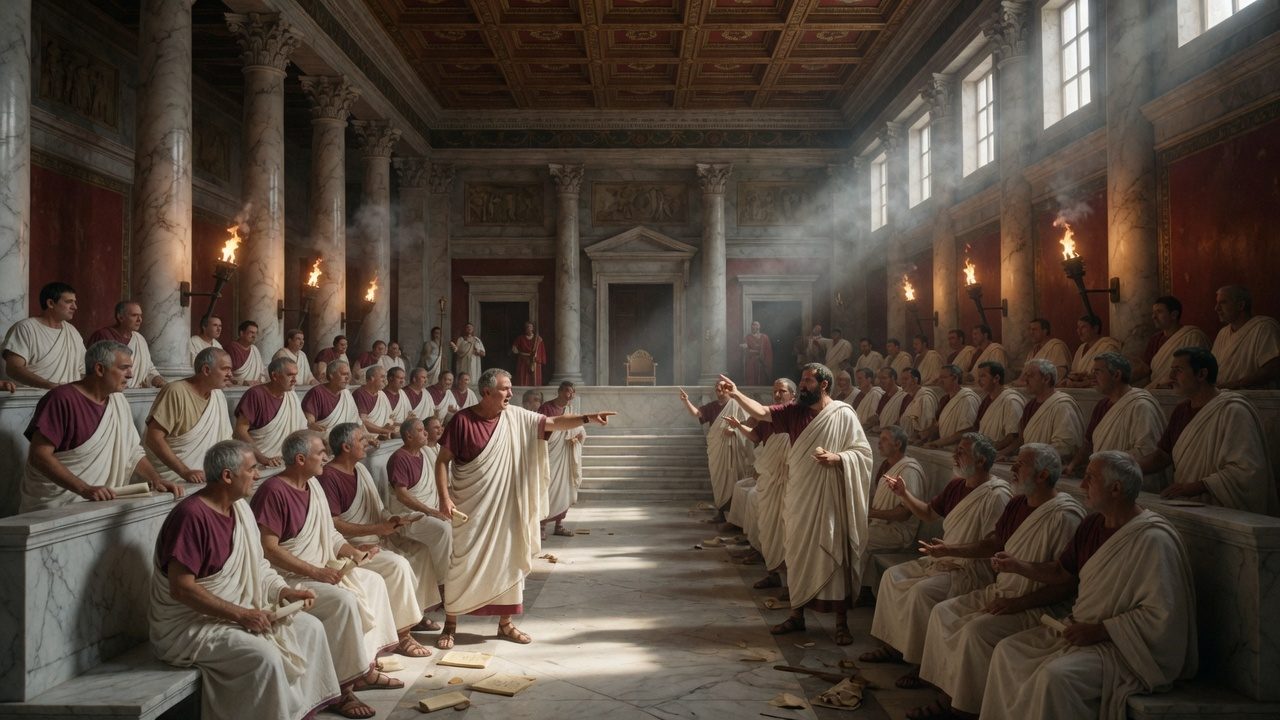
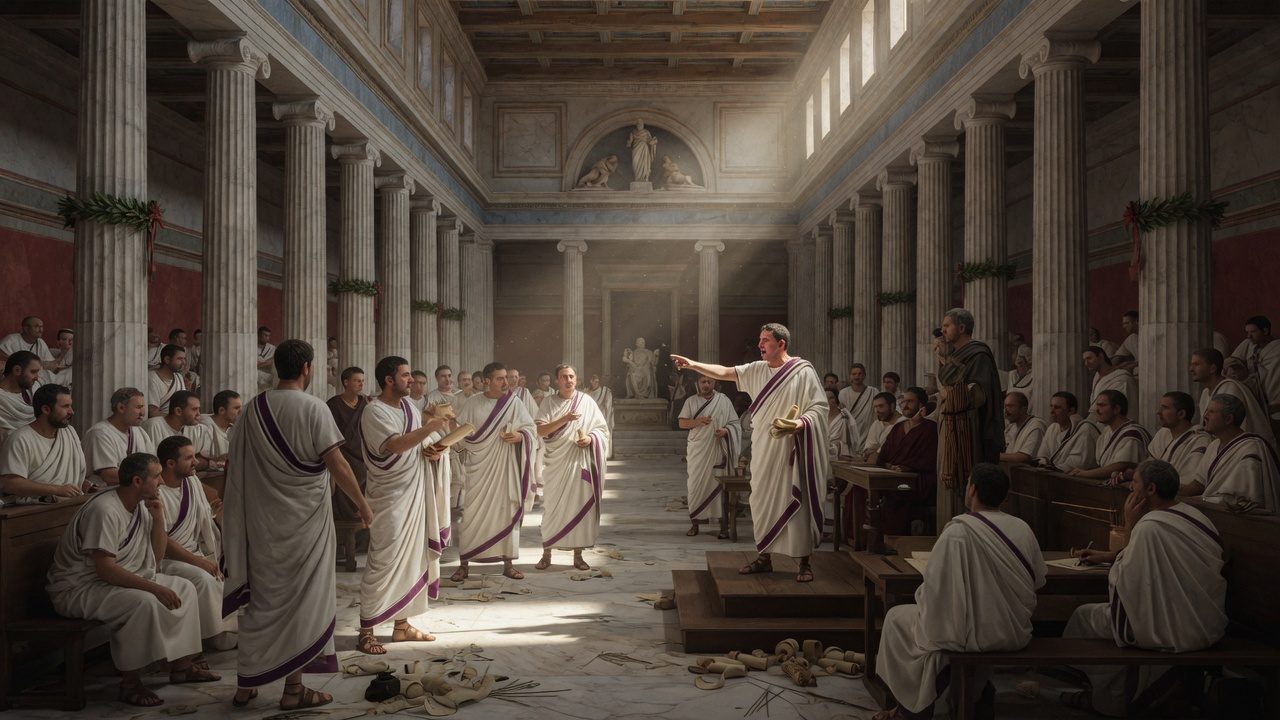
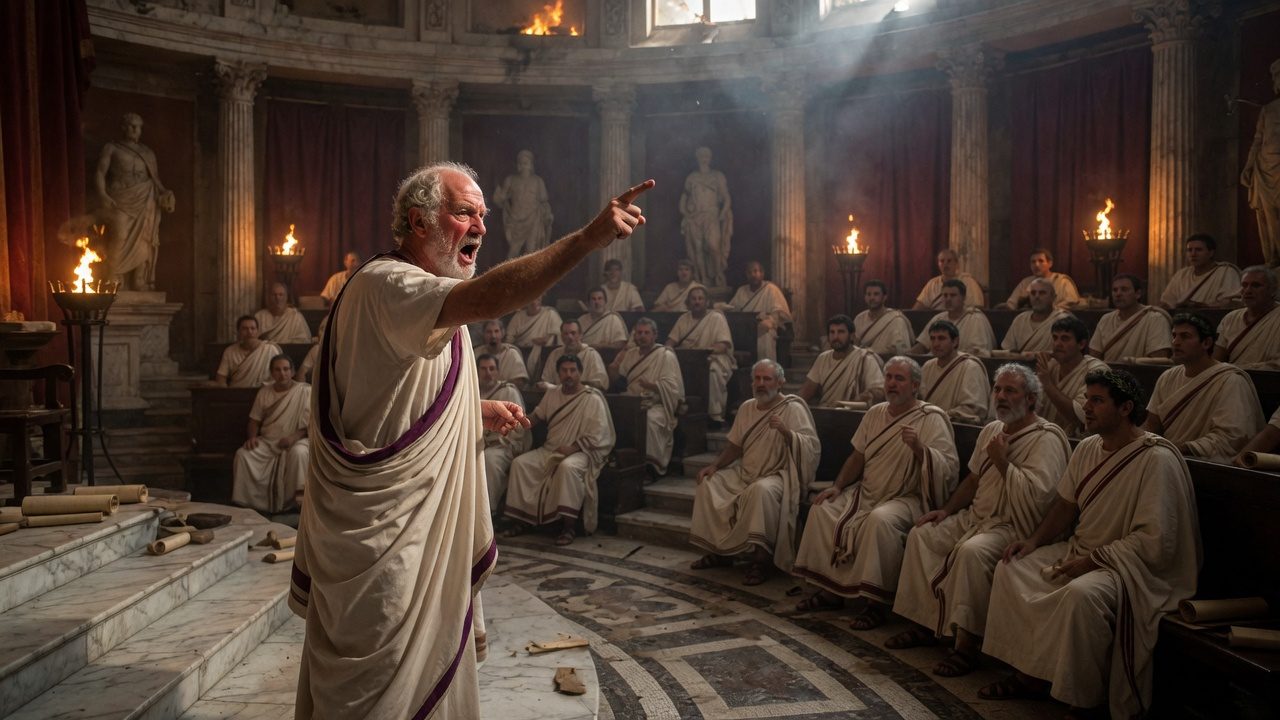
The First Catilinarian is famous because it is great literature. It is also famous because it is a political technology: make the enemy present, name him, shrink the room around him, force everyone else to choose.
When Catiline leaves Rome, Cicero wins a visual victory. The traitor flees. The consul stands. But the hard part is never the speech. The hard part is what to do with captives when fear is still high and proof is in hand.
December 5th is the moral crossroads of the late Republic in miniature.
Caesar’s intervention matters because Caesar is not a soft man. His argument against execution is strategic and legal-political: do not create a precedent that can be turned into a weapon. Cato’s counter is emergency absolutism: destroy the threat completely.
Cicero implements death.
If you are building a republic of laws, that decision is a crack. If you are stopping a massacre, it may be necessity. The terrifying possibility — the one he can never escape — is that it can be both.
“Vixerunt” is not only a mic drop. It is a confession of finality. No appeal from that word. Only history’s long cross-examination.
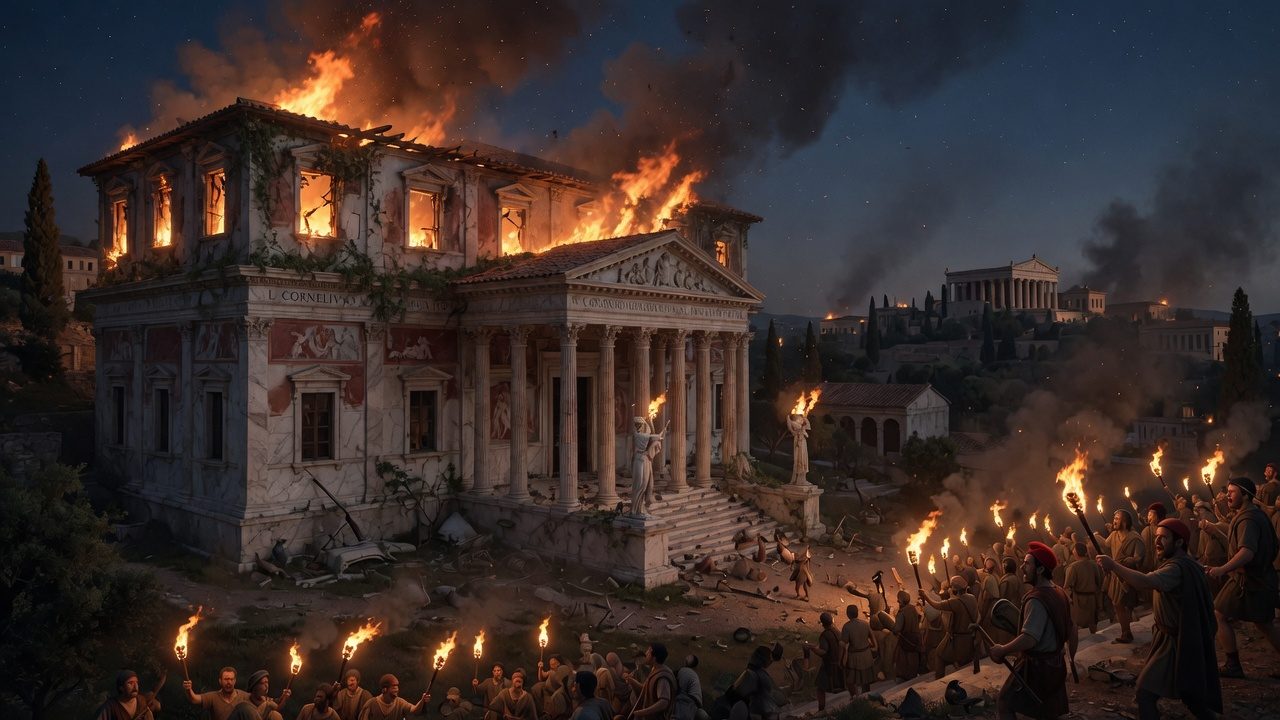
In the days after, Rome loves him. Love in Rome is a loan with variable interest. Within five years, Clodius will demand repayment in exile.
So when modern viewers ask, “Was Cicero right?” the honest answer is not a team jersey. He chose order under emergency, accepted the stain, and spent the rest of his life discovering that stains outlive applause.
EXILE LETTERS DEEP DIVE
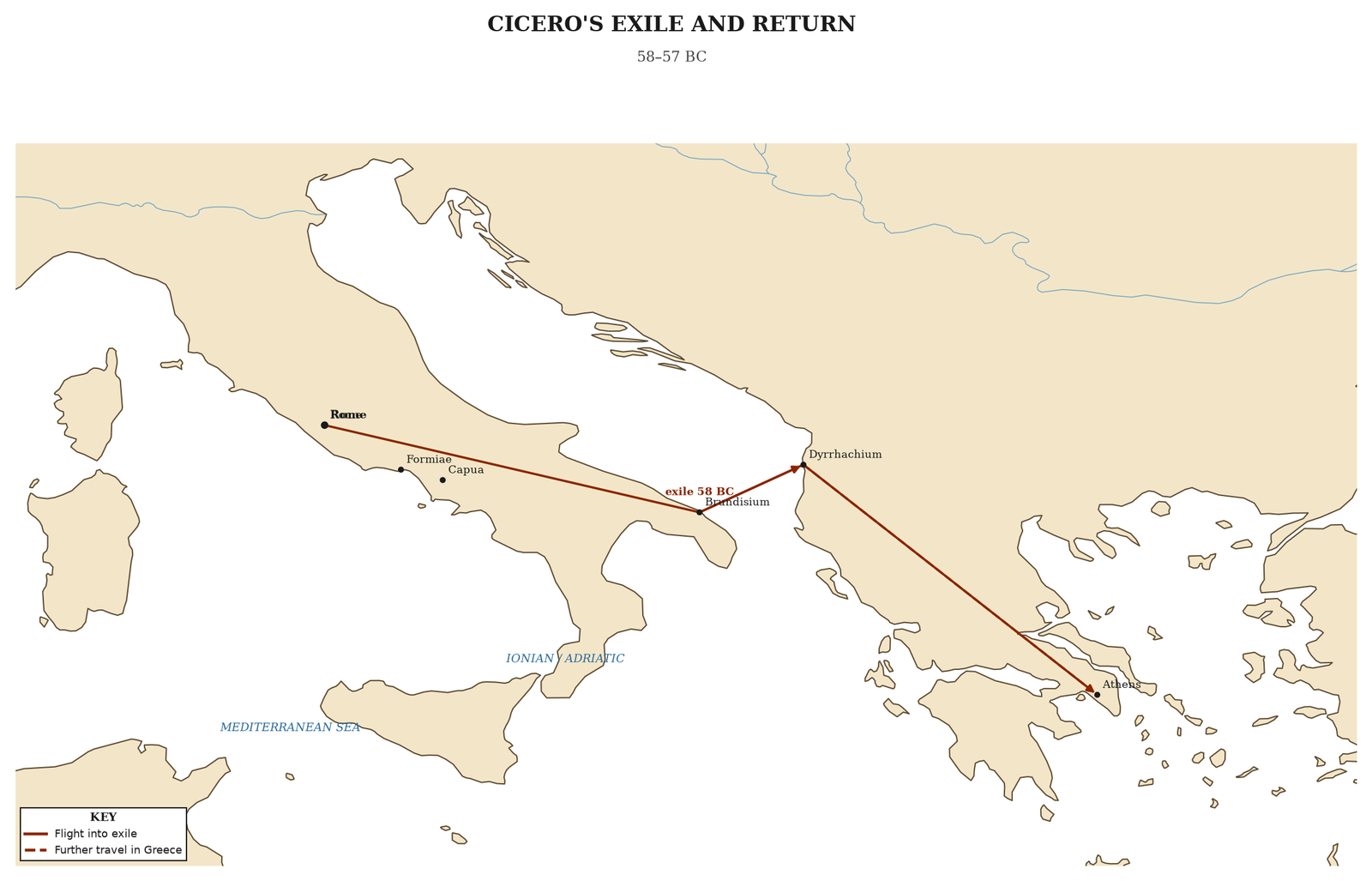
If the Catilinarians show Cicero at maximum public power, the exile letters show him at minimum private control.
He writes as if language might still organize pain. He catastrophizes. He seeks reassurance. He blames enemies, friends, himself. He performs loyalty and need. He is, at times, exhausting — which is another way of saying human.
Atticus receives all of it. That friendship is one of the great uncredited institutions of Roman history. Not a magistracy. A channel. Through it, Cicero remains narratable to himself.
For the documentary, this is gold: the superstar orator who cannot orate his way out of political abandonment. The man of dignity discovering how much of dignity was situational.
And then the return — crowds, restoration, the theater of forgiveness — teaches a second lesson: Rome can reinstate a man without reinstating the world that made him safe. He comes back to a city already being partitioned by stronger wills.
Exile does not end his career. It ends his innocence about gratitude.
CAESAR, POMPEY, AND THE IMPOSSIBLE CENTER
Civil war stories tempt us into team sports. Pompey versus Caesar. Republic versus tyranny. Liberty versus ambition.
Cicero’s letters ruin that simplicity.
Pompey is a republican symbol with monarchical habits of command. Caesar is a revolutionary genius with clemency as public relations and domination as destination. The senatorial hardliners around Pompey can be as threatening to legal normalcy as any popularis strongman. The “center” Cicero wants — lawful competition, senatorial authority, prestige without proscription — is a house with termites in every beam.
So he hesitates, joins, regrets, accepts pardon, writes philosophy, and waits for a miracle that will not come.
That is not cowardice alone. It is what intelligent people do when every available future is a different flavor of catastrophe. His mistake is not that he saw the dilemma. His mistake, later, is believing the dilemma ends with Caesar’s corpse.
It does not. It multiplies.
PHILOSOPHY AS CIVILIZATIONAL BACKUP DRIVE
Slow down on the books. This is how he conquers the future.
When active politics narrows, he turns Latin into a vehicle for Greek thought. That project can sound academic until you see what is at stake: a society losing its political mind needs portable ethics, portable law-talk, portable models of the good statesman.
De Re Publica asks what justice is in a state and why mixed constitutions stabilize power. De Legibus roots law in moral order rather than pure command. De Oratore refuses the idea that persuasion is a bag of dirty tricks separable from wisdom. De Officiis tells a young Roman — and later, half of Europe — that advantage divorced from honor destroys the self and the city.
Is he original the way Plato is original? Not always. Is he decisive the way a translator-builder can be decisive? Absolutely.
Empires run on force. Civilizations run on transmitted categories. Cicero transmits categories: duty, decorum, natural law, public speech as civic act, the fear of tyranny, the dignity of the res publica.
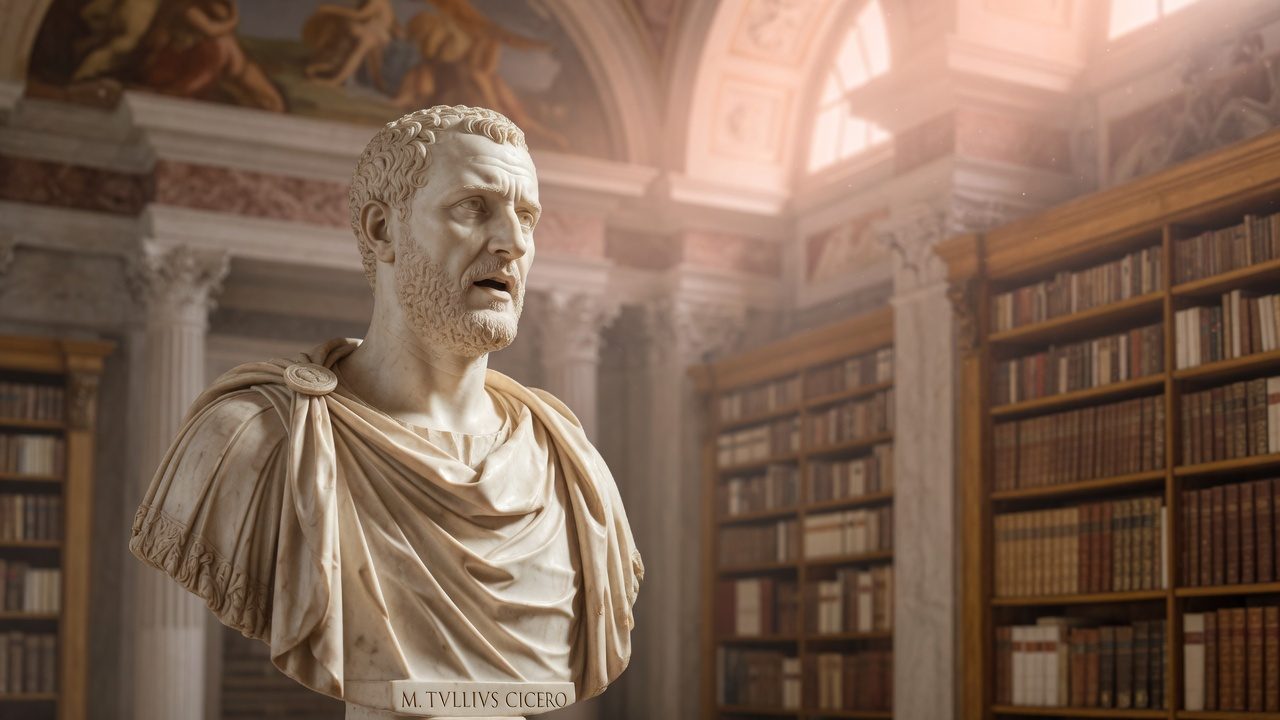
That is why Petrarch’s discovery matters. That is why Enlightenment libraries matter. That is why American founders can be anti-monarchical and still keep a Roman bust in the mental room.
The Republic dies in Italy. The argument of the Republic emigrates through his pages.
PHILIPPICS STRATEGY BOARD
The Philippics are not random insults. They are a strategy.
Isolate Antony morally. Rally the Senate emotionally. Legitimize military resistance. Use Octavian as counterweight. Restore a world in which senatorial speech still allocates honor and disgrace.
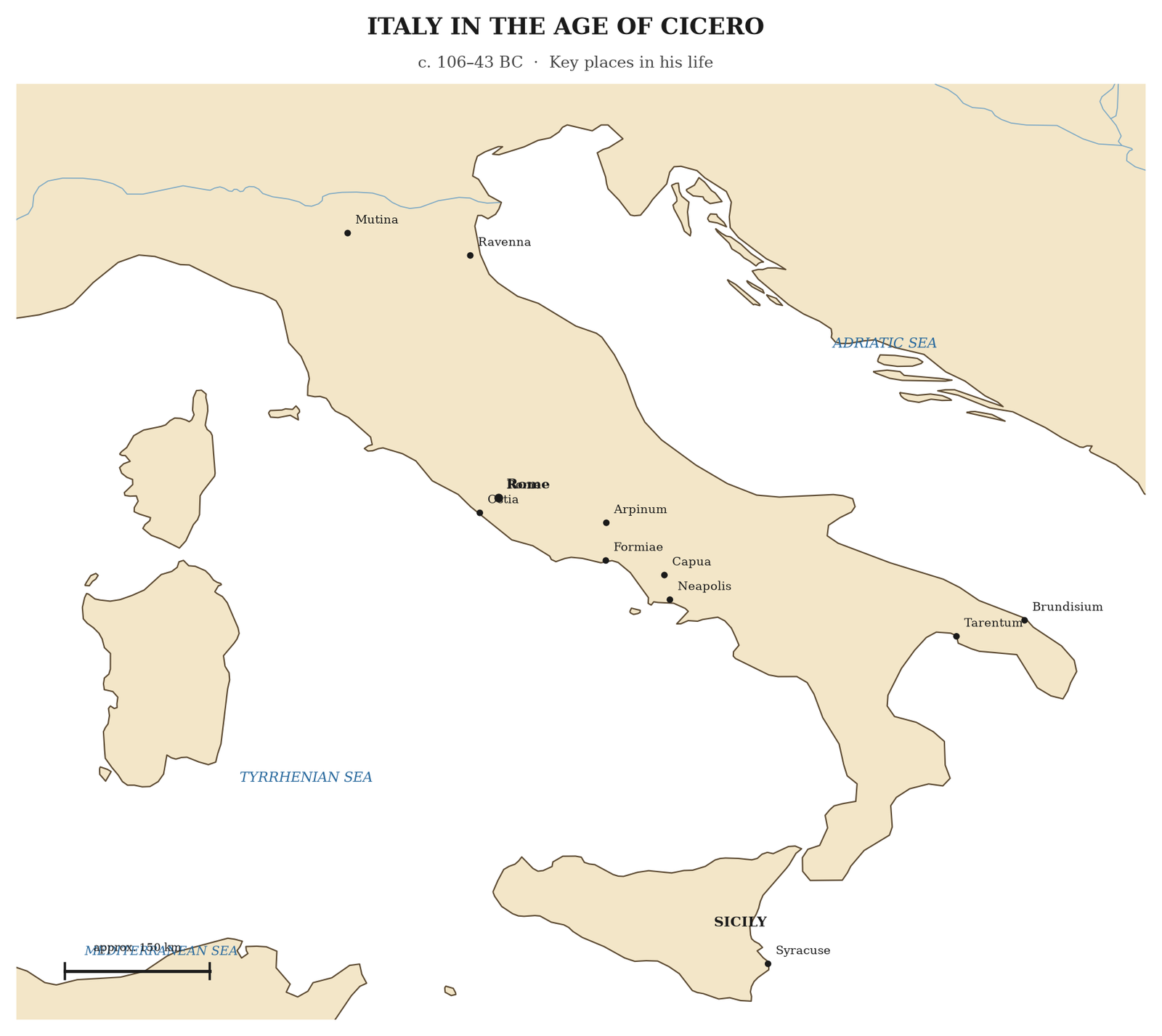
For a brief window, the strategy functions. Antony is damaged. The Senate grows a spine. Mutina happens. Cicero tastes relevance again — the old drug.
But strategy assumes stable payoffs. Octavian’s payoff table changes. Aligning with Antony and Lepidus offers legalized supremacy and revenge capacity. Aligning forever with Cicero offers applause from men with diminishing armies.
Octavian chooses supremacy.
Proscription turns politics into a spreadsheet of who dies. Cicero’s name is not a metaphor on that list. It is an instruction.
Notice the irony he cannot escape: he tried to use a young Caesar to save the Republic from Antony, and the young Caesar helps Antony delete him. He is not only murdered by enemies. He is liquidated by a coalition he helped make possible.
That does not make him foolish in a childish sense. It makes him tragic in the adult sense: right about the danger of Antony, wrong about the instrument he chose, and doomed by a historical transition no speech could reverse.
DEATH AS MESSAGE
Killing Cicero was not enough. Displaying him was the point.
The Rostra had been his stage. Making it his butcher’s block tells every remaining speaker what the new regime thinks of independent language. Hands removed because hands write. Head removed because head invents policy and memory. Later stories about the tongue complete the grammar of the message: speech itself is guilty.
Whether Fulvia’s alleged desecration is solid fact or hostile tradition, ancient writers preserve it because it feels true to the politics of humiliation. The triumviral age does not only defeat opponents. It degrades them as pedagogy.
And yet the pedagogy fails in the long run. The regime can nail a man to a platform. It cannot nail down the future of his books.
LEGACY FOR A MODERN AUDIENCE
Why should a modern viewer spend two hours with Cicero?
Not because ancient Rome is cosplay. Because the pattern repeats.
Emergency powers that feel temporary. Personal armies wearing public costumes. Speech ecosystems that can elevate and destroy. Elites who love rules until rules obstruct them. Publics that cheer strength and then mourn liberty. Intellectuals who believe language can govern violence — sometimes correctly, sometimes fatally.
Cicero is a case study in the courage and limits of institutionalism. He shows what eloquence can do: expose corruption, rally a city, shame a tyrant-in-progress, preserve moral vocabulary for unborn generations. He also shows what eloquence cannot do: replace legitimacy, replace force, replace citizens who no longer want the hard work of self-government.
If you leave this documentary asking only “Who was the villain?” you missed it.
Leave asking: What do free societies do when legality and survival seem to diverge? What do they do with emergency? What do they do with charismatic power? What do they do when their Ciceros are vain and necessary at the same time?
Rome answered with empire.
His ghost keeps asking if we can answer differently.
FINAL ALTERNATE CLOSER (use if long cut)
Marcus Tullius Cicero lost the Roman Republic.
He did not lose the argument about why republics are worth the trouble.
In the end, the men with swords had their day.
The man with sentences had the centuries.
That is not consolation for the head on the Rostra.
It is a warning for every age that thinks the Rostra cannot come back.
ROME AS A STAGE (OPENING ATMOSPHERE EXTENSION)
Before names and dates harden into a biography, feel the stage.
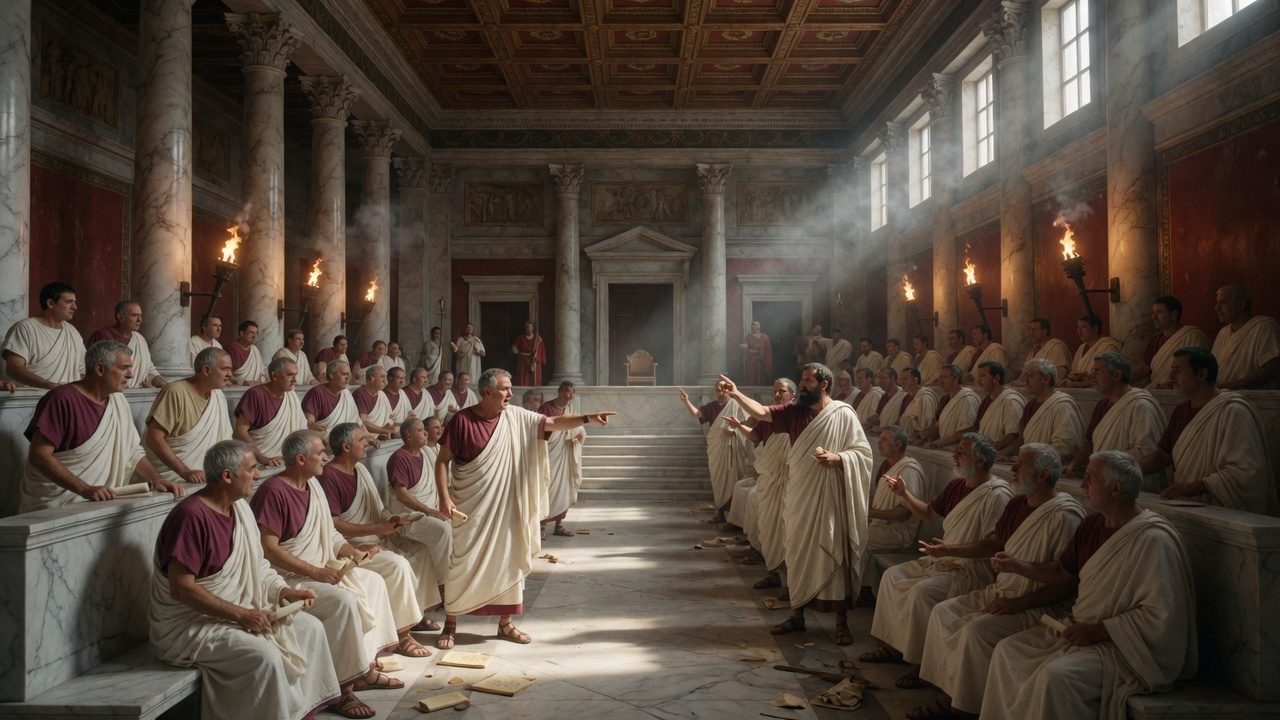
Rome in Cicero’s lifetime is the capital of a Mediterranean empire still pretending to be a city-state with old manners. Its institutions were designed for a smaller world: annual magistrates, competitive elite honor, assemblies that could be managed, a Senate that advised and dominated. Then the world got larger. Armies got permanent. Provinces poured wealth into private hands. Generals became brands. The constitution did not scale cleanly into that new reality.
So the late Republic becomes a contest between two ways of holding power.
One: law, custom, speech, election, prestige.
Two: loyalty of soldiers, control of cash, speed, fear.
Cicero is a virtuoso of the first. His enemies increasingly prefer the second. That mismatch is the master plot of his life.
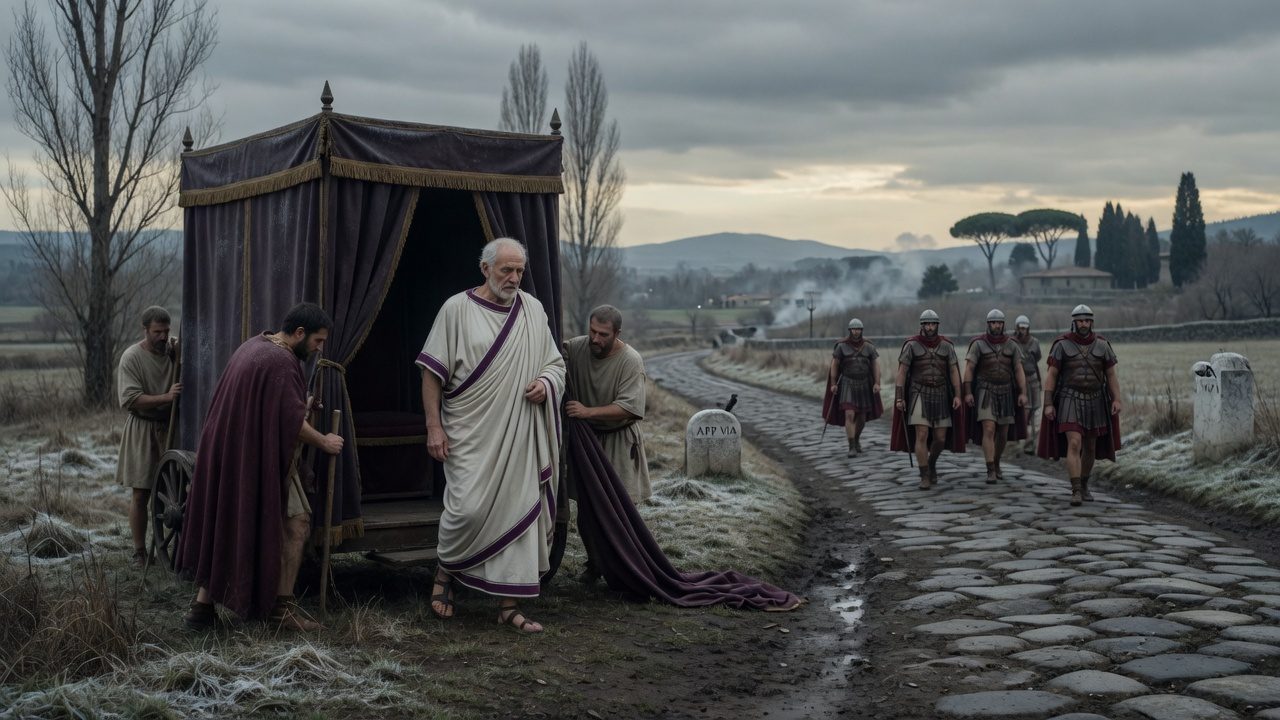
When you see him win in court, you are watching the first at its best. When you see him die on a road, you are watching the second collect the debt.
WOMEN, HOUSEHOLD, AND THE PRIVATE REPUBLIC
Public Rome is male on the surface of our sources. Private Rome is not empty of women, money, or family strategy.
Terentia, Cicero’s wife for decades, appears in the record as a partner in property and political survival — sometimes allied, sometimes estranged, finally divorced. Tullia is the emotional center of his private world, and her death nearly unhouses his mind. These facts are not sentimental decoration. They show that the republican statesman is also a household enterprise: dowries, estates, reputations, marriages, grief.
A full documentary should not turn him into a lone marble brain. His courage and panic both happen inside relationships. Atticus is the friend. Terentia is the long marriage. Tullia is the loss. Without them, the Philippics look like pure ideology. With them, they look like a man with everything to protect and, eventually, almost nothing left but voice.
Augustus wins. The Republic becomes a story the empire tells about why empire was necessary.
And yet schoolboys still learn Cicero. Rhetoricians still imitate him. Moralists still quote him. The regime that needed him dead discovers it still needs him as a curriculum.
That is the deepest irony of Roman cultural power. Political losers can become educational winners. The empire can suppress a man’s faction and still require his Latin. Over centuries, that educational afterlife becomes political again: republicans of later ages borrow Cicero against kings, against corruption, against the cult of the strong leader.
So when we say he “outlived Rome,” we do not mean his side won in 43 BC. We mean his categories remained available for reuse whenever people tried to build free government again.
Different kind of immortality than conquest. Slower. Quieter. Harder to nail to a platform.
VIEWER TAKEAWAYS (END-OF-FILM LIST)
If you remember only five things, remember these.
One: outsiders can rise when institutions still reward talent.
Two: emergency measures can save a city and poison a republic at the same time.
Three: exile reveals the man under the orator.
Four: books can back up a civilization when politics fails.
Five: speech is power — and power without speech still kills.
Everything else in this documentary is evidence for those five claims.
TRANSITION LINES FOR EDITORS (SHORT BRIDGES)
Use as glue between sections if cuts feel abrupt:
1. "But fame in Rome is only a down payment on danger."
2. "Victory had given him a title. It had also given his enemies a legal theory."
3. "If the courts made him, the Senate would unmake him — and then, much later, the libraries would remake him."
4. "He had survived Catiline. He would not survive the logic Catiline represented: politics as civil war by other means."
5. "The man who believed in words was about to meet men who believed only in wills — and wills backed by steel."
LONG FORM: THE AMERICAN AFTERLIFE (optional deep ending)
When later republicans reached for models, they did not only want Athens. They wanted a Rome that had argued with itself about corruption, virtue, ambition, and law.
Cicero was perfect for that need. Not a mythical founder-king. A lawyer-statesman in a complex society with money, elections, armies, and propaganda by speech. To early modern and Enlightenment readers, he looked strangely contemporary.
The American founding generation read classical history as a warning library. Caesar was the cautionary tale of charismatic overthrow. Cato was the rigid martyr of virtue. Cicero was something more usable: the gifted institutionalist who tries to keep the game lawful while the game collapses.
You can disagree with how selectively they read him. Most political traditions are selective. What matters is that he provided language for natural law, public duty, mixed government anxieties, and the moral education of elites. He helped make it possible to say, in a modern key, that power should answer to law and that speech is part of citizenship rather than mere ornament.
So the head on the Rostra becomes, two millennia later, a bust in a study — not because violence lost forever, but because some societies kept choosing to train themselves on the loser who wrote things down.
If empire is the victory of force, education is the long revenge of memory.
Cicero specializes in that revenge.
LONG FORM: COULD ANYONE HAVE SAVED THE REPUBLIC?
Viewers always ask the counterfactual: could Cicero have won?
Probably not in the way he wanted.
By the 40s BC, too many men had learned that armies outrank arguments. Too much wealth had been privatized into political weapons. Too many precedents had normalized extraordinary commands. Too many citizens had been trained by decades of crisis to prefer a strong protector over a complicated liberty.
His best possible world might have been delay: another decade of uneasy senatorial management, another compromise, another Pompey-shaped stabilizer. That is not the same as saving the Republic’s soul. It is managing decline.
His worst realistic world is the one he got: a brief rhetorical revival after Caesar’s death, then triumviral murder.
That does not make the fight meaningless. It makes it tragic. Meaning and victory are not synonyms. His life is the argument that some defeats are still worth losing correctly — and that “correctly” includes leaving records so later free peoples can study the failure modes.
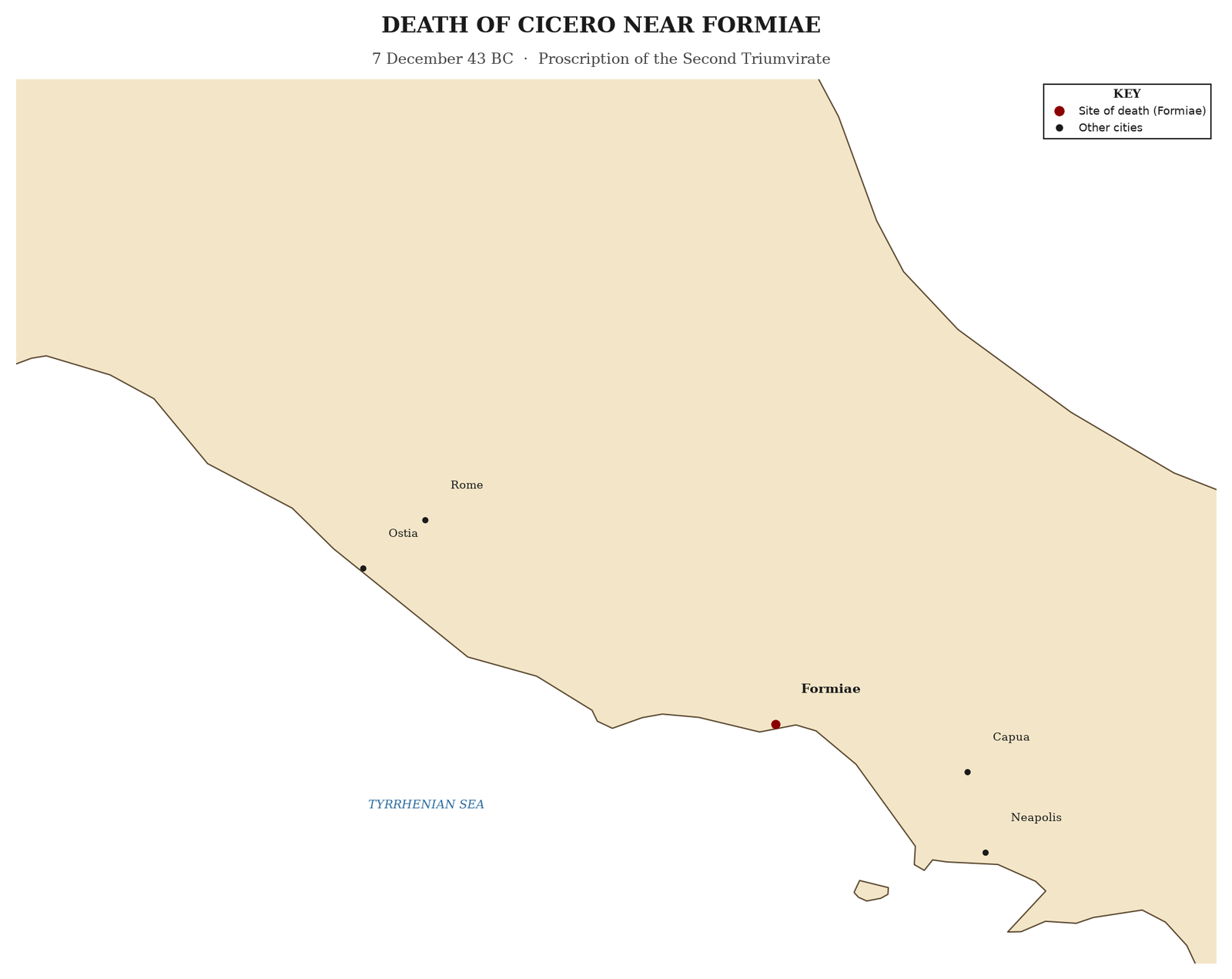
Cold comfort on the Formiae road. The only comfort history actually pays.
End Block D — Extended Scenes