Insert these segments where marked · spoken ~24–28 min @ 130–140 wpm
How to use: After recording A–C, record these inserts and drop them at the markers below. Block D is also a continuous read if you want a sources-and-structure episode cut.
Before we go any further, the books.
If you read one Latin account of this reign, you will read Tacitus. The first six books of the Annals are the Tiberius we inherit: the accession debate, the mutinies, Germanicus, the rise of Sejanus, the island, the trials. It is some of the best prose a historian ever wrote in any language. It is also the work of a senatorial moralist, writing a century later, under another dynasty, about the moment when men like him learned to be afraid of a letter.
Tacitus tells you he will write sine ira et studio — without anger and without zeal. Then he proceeds to do something more interesting than neutrality. He builds a psychology. He lets you watch a reserved man curdle. He is fair enough to record Tiberius’s refusals, the good provincial decisions, the moments of tart intelligence. He is not fair enough to let those moments win. The weather of the book is suspicion. Once you notice that, you can use him. If you do not notice it, he will use you.
Suetonius is a different animal. He is a biographer and an archivist of talk. The Life of Tiberius is organized the way many of his lives are: origins, public career, then a turn into vices, with anecdotes stacked like evidence that would not survive a modern cross-examination. He will give you the pillow at Misenum, the island stories, the looks, the cruelty, the sex. Some of that talk is contemporary slander that became tradition. Some of it may be true in outline. Almost none of it should be filmed as fact. When this series says “Suetonius collects gossip,” that is not a dismissal of Suetonius. It is a user’s guide. He is invaluable for what people were willing to say. He is dangerous as a camera.
Velleius Paterculus is the corrective people forget to read. He served under Tiberius in the Balkans and published his short history around AD 30, while Sejanus still stood and the emperor still lived. Of course he is friendly. He would have been a fool to be otherwise. That does not make him useless. He preserves a view from the officer class: Tiberius as the commander who showed up, who endured, who finished the Illyrian war, who was the necessary man after the grandsons died. If Tacitus is the Senate’s memory, Velleius is the camp’s press release. Hold both.
Cassius Dio writes later still, in Greek, from a senatorial tradition already filtered through Tacitus’s century and others we have lost. He is good on structure, on the Guard, on money, on the way power looked to a man who had seen the empire under the Severans and knew the Principate’s endgame. Use him for the bones. Do not let him be your only face.
There is also the silence.
We do not have Tiberius’s own memoirs — he wrote something of the kind; it did not survive as a public voice. We do not have Agrippina the Elder’s memoirs, except as a rumor of a book. We do not have the Germanicus correspondence. The people who lost left fewer files.
So the rule for this film is simple.
When the sources agree on a public act — a law, a campaign, an adoption, a death date — say it clean.
When they agree on a motive, be careful. Agreement about motive is often just agreement about a story.
When they disagree, or when the only witness is a hostile set-piece, say so in one line and move.
We do not have CCTV from the Villa Jovis.
Livia Drusilla is not a supporting actress in someone else’s biopic. She is one of the architects.
Born in 58 BC, into the Livii Drusi — a family with its own stubborn republican glamour. Married young to Tiberius Claudius Nero. Mother at about sixteen. In the chaos after Caesar she is on the run with an infant and a husband who has chosen badly. Then she is the woman Octavian decides he needs, and the pontiffs make the pregnancy legal, and the rest of her life is spent inside the invention of the Principate.
Augustus did not share power in any way a law textbook would accept. He did listen. The later tradition makes Livia a whisperer, a poisoner, a gardener of heirs. Tacitus cannot resist her as a political intelligence with a woman’s tools, which in his moral world is almost never a compliment. Dio has her advising Augustus to clemency with a fox-and-lion fable that sounds like a schoolroom. Suetonius keeps the jokes and the control.
Strip the cartoon.
She is married to the founder for more than fifty years. She is the mother of the second emperor. She is the grandmother, great-grandmother, of most of the disaster that follows. She receives extraordinary honors: statues, a seat at games, the name Augusta. After AD 14 she is not merely a widow. She is a living piece of Augustus, and Tiberius — who is fifty-four and has commanded more armies than she has — still has to be her son in public.
That is not a small psychological tax.
He keeps her out of official partnership. He rejects, or starves, some of the titles the Senate is happy to throw at the emperor’s mother. When she dies in 29 he stays on Capri. No consecration. No son at the pyre. You can read that as ugliness. You can also read it as the first time he can refuse a performance he has been giving since he was three.
Was she a murderer of Marcellus, of Gaius, of Lucius, of Agrippa Postumus, of Germanicus. That is the greatest-hits list of Julio-Claudian gossip. It is too useful. Every death that helps Tiberius can be laid at Livia’s door, which then helps Tacitus keep Tiberius both guilty and slightly secondary, a man steered by a mother. Convenient for a writer who wants the dynasty to be rotten in the root.
What she certainly was: the continuity. The one person who had seen the Republic’s last knives and the marble peace, and who knew that the difference was not virtue. It was management.
Tiberius is her son in more than blood. The closed face, the patience, the refusal to be loved on command — you can find all of that in the household she ran.
A word on the soldier, because the monster story is so loud it erases the professional.
Tiberius is, by the standard of men who had seen both, one of the best Roman generals of the age. Not the most dashing. Drusus had more shine. Germanicus will have more press. Tiberius has the unfashionable virtues: supply, discipline, a sense of when a frontier is a frontier and not a dare.
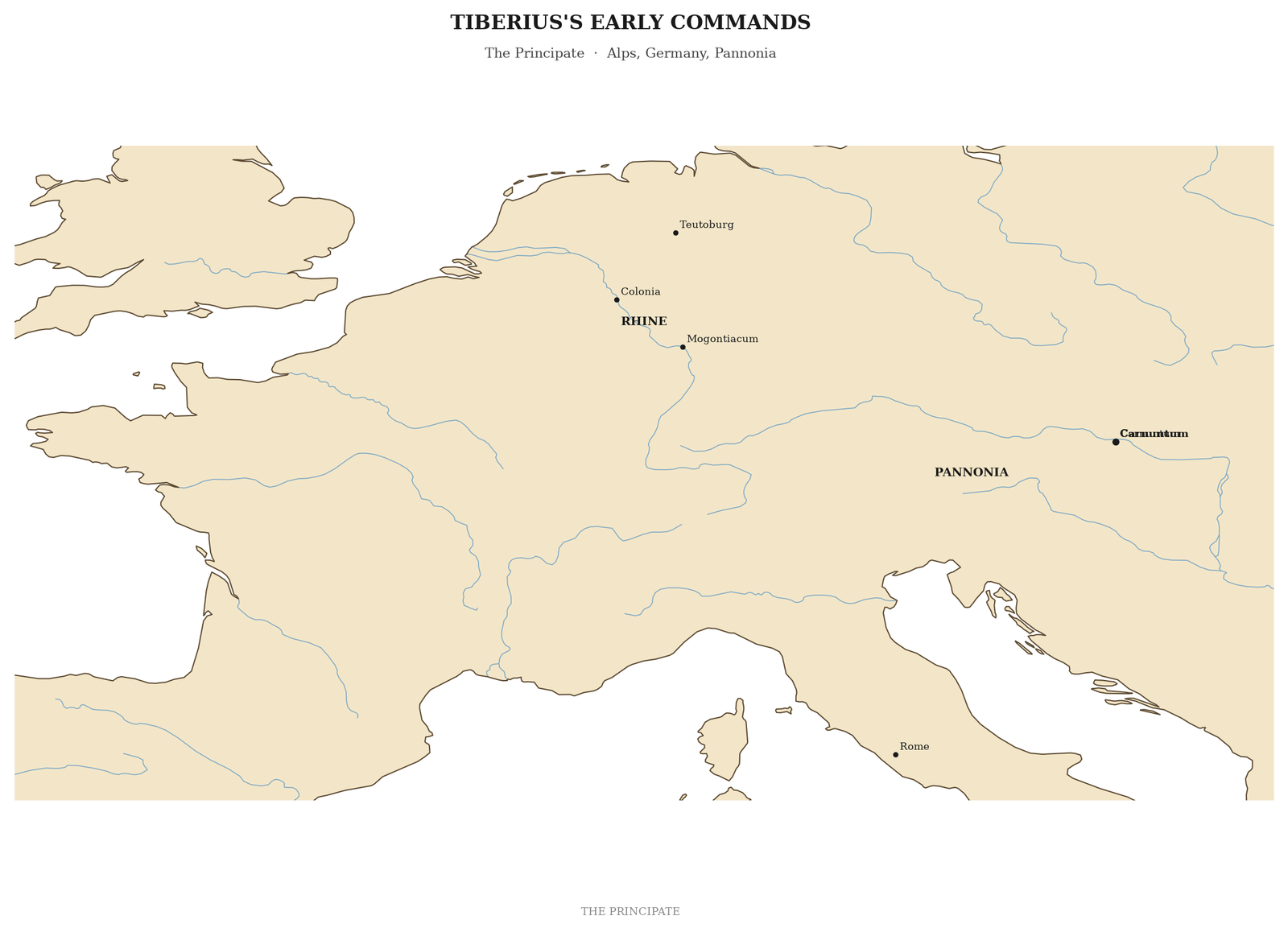
The Alpine war of 15 BC is infrastructure with blood. Raetia and Vindelicia become the platform for the upper Danube. The Pannonian campaigns of the next decade pull the western Balkans into a shape Rome can tax and recruit. The great revolt of AD 6 to 9 is an imperial near-death. Velleius is not wrong about the scale even if he is wrong about the adjectives. Tiberius refuses to give the rebels the battle they want on the ground they want. He uses hunger, forts, time. It is ugly. It works.
After Teutoburg he is the anti-Varus. He does not march to soothe an audience in the Forum. He rebuilds the Rhine army as an army. When Germanicus later wants to keep Germany open as a theater of glory, Tiberius’s recall is not only jealousy, though jealousy is cheap to allege and hard to disprove. It is consistent with twenty years of the same brain. The Elbe is a fantasy. The Rhine is a policy.
If you drop this man into a modern staff college, he looks conservative, competent, slightly despised by the cavalry romantics. That is the general the Principate actually needed after Augustus decided the age of big conquest was over. The tragedy is that the same temperament is then asked to be a politician in a city that runs on display.
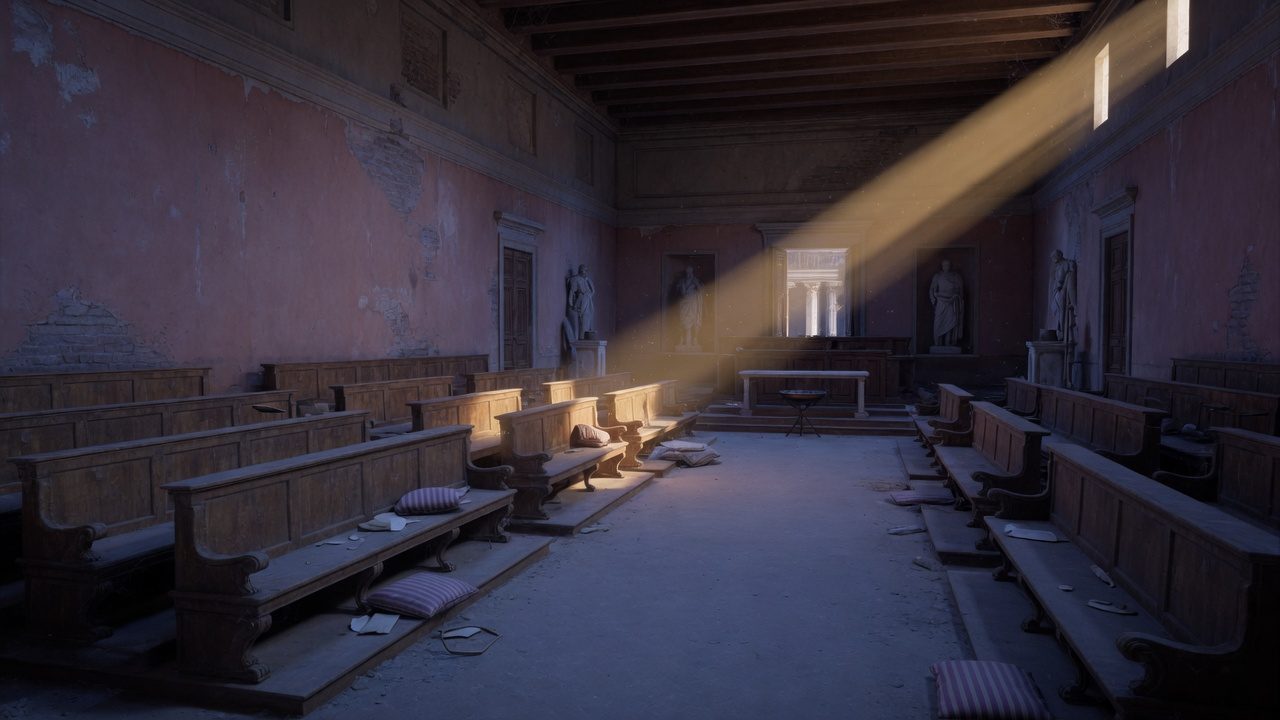
The Senate of AD 14 is a working body with a broken job description.
It still supplies governors for the public provinces. It still hears major cases. It still debates. The aerarium — the old treasury — still has a relationship with these men that the emperor’s private fiscus is quietly replacing. Elections have become a negotiation. The interesting commands, the ones with legions, are the princeps’s to allot.
What can they do.
They can flatter. They can anticipate. They can compete to be the first to propose the honor he will refuse, which is itself a form of information: you learn what he wants by what he will not take. They can prosecute. In a system without a free press and without a loyal opposition, the treason trial becomes the one dramatic procedure left. It is how the aristocracy talks to itself about danger.
Tiberius, especially early, seems to want something older from them. Debate. Disagreement. The dignity of a council. He is bad at making that safe. A man with his power cannot ask for candor and then go cold when he gets it. Senators who remember friends ruined for a sentence will not test the new emperor’s sincerity twice.
So the house invents a style: long loyalty, short opinions, sudden ferocity when a victim has been marked. Tacitus writes that style as degradation. He is not inventing the degradation. He is also writing as a man who wishes his order had been braver, which is a wish, not a plan.
If you want a single sentence for the politics of this reign: the Senate is asked to govern and rewarded for obeying, in alternating pulses, until only the second pulse is left.
INSERT WITH SEJANUS / BEFORE CAPRI
The Praetorian Guard is Augustus’s idea. A permanent armed presence for the first man, recruited mostly from Italy, paid better than the line, close enough to matter.
What Augustus does not do is stack them in one monument. Cohorts distributed. A power that is felt more than it is seen. Sejanus’s camp — the Castra Praetoria, begun in the early 20s — changes the architecture of the capital. There is now a fortress-city of the Guard on the Viminal’s edge. A wall. Gates. A command that can be given to the whole force at once.
From that moment, no emperor is only a senatorial princeps. He is also, whether he likes the word or not, a man whose survival is a military question inside walking distance of the Forum.
Sejanus understands this in his bones. He is not a senator playing at arms. He is an equestrian officer whose power is the camp. When he becomes the filter for a distant emperor, the Guard is not a bodyguard. It is a second government. Macro, who takes it from him in AD 31, understands the same fact. Gaius will understand it. Claudius will be put on a throne by it. The year of four emperors will be its coming-out party.
Tiberius allows the concentration because it is tidy and because he trusts the man who proposed it. That is one of the reign’s real decisions, larger than most of the dinner-party crimes. He leaves Rome with a single throat. Then he leaves Rome.
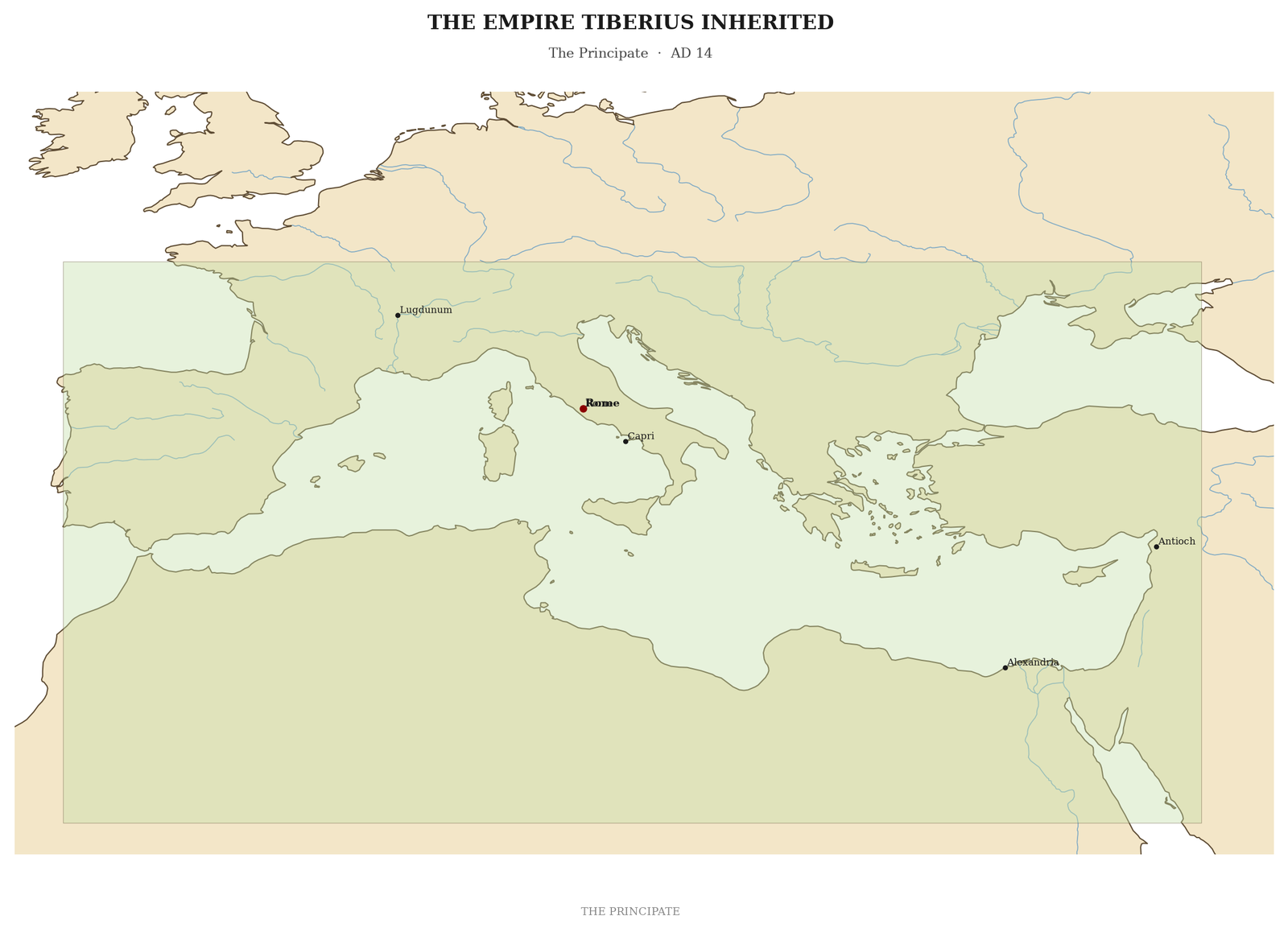
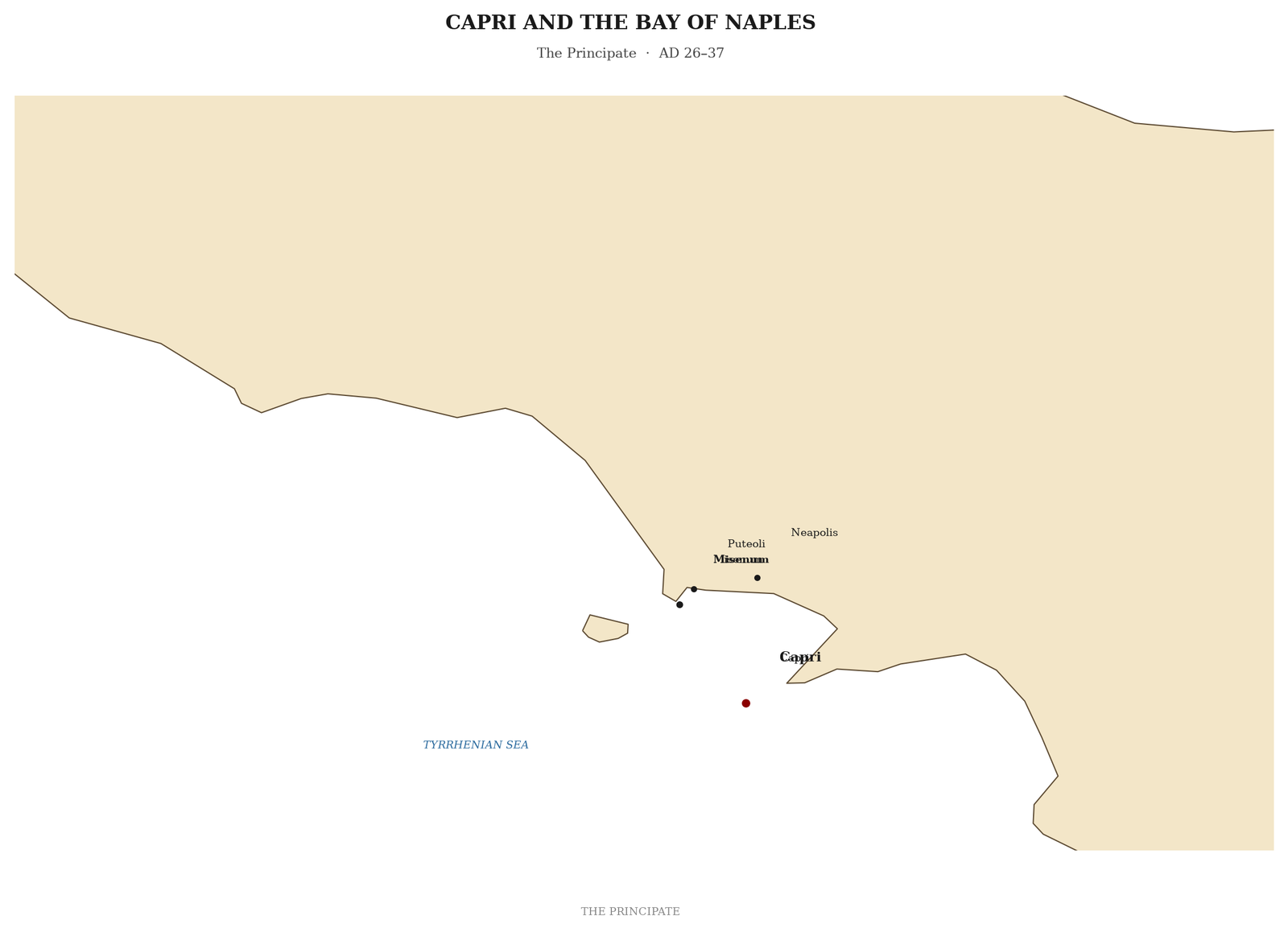
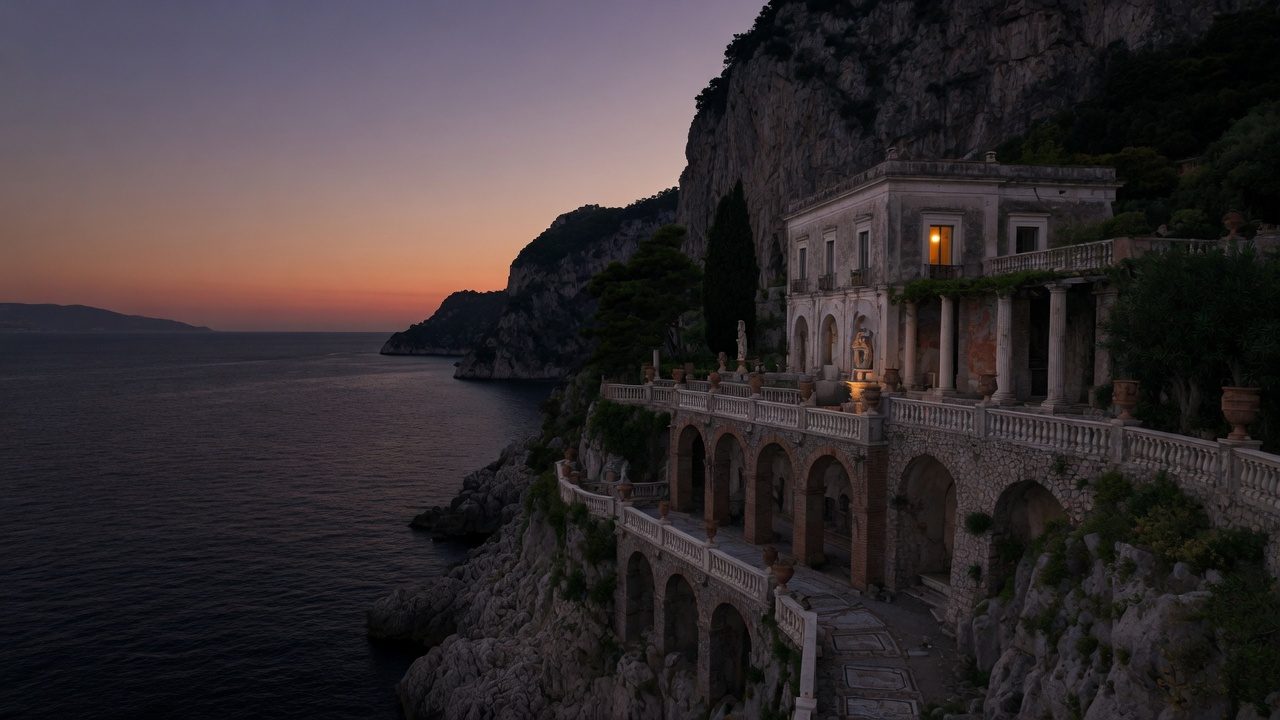
Capri is a small limestone island, steep, beautiful, defensible. Augustus had already used it. Tiberius makes it a seat of government.
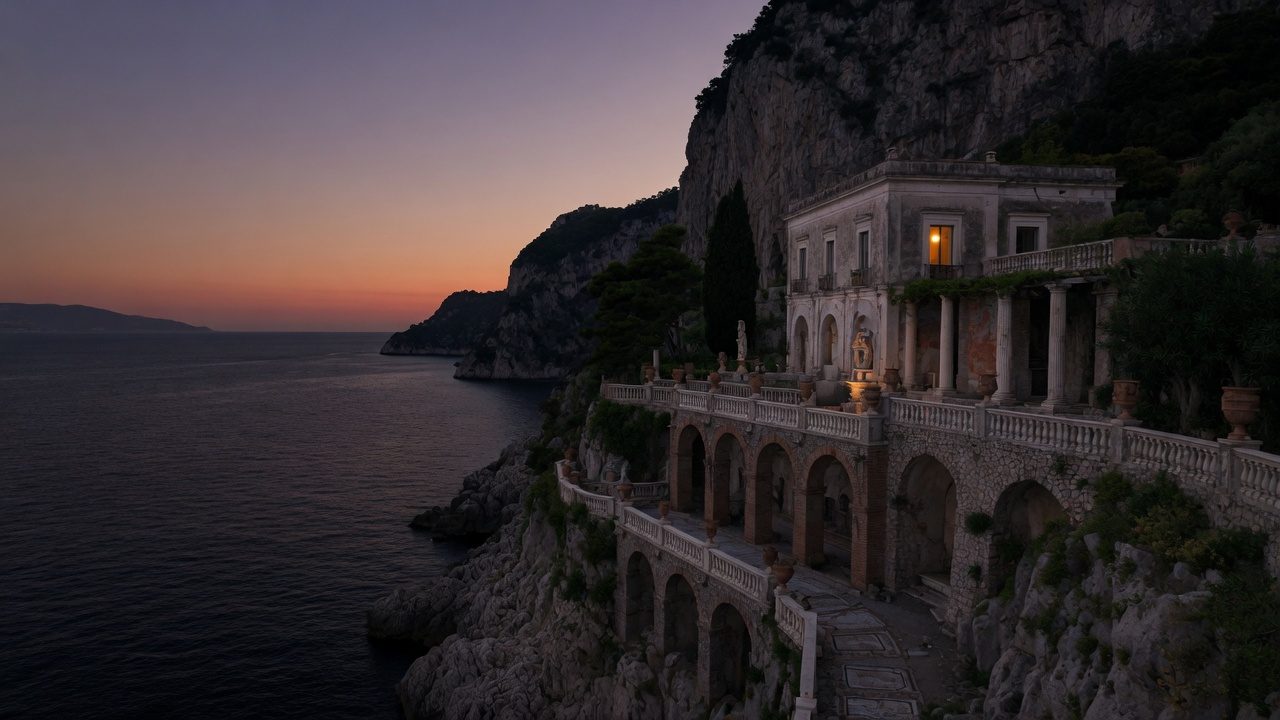
There are twelve villas in the later count. The one that matters in the imagination is the Villa Jovis, on the northeast cliff: platforms, cisterns, a drop that does the work of a wall. From there you see the Bay of Naples, the grain routes, the weather. Misenum, the fleet base, is a short crossing. This is not the end of the earth. It is a watchtower with good wine.
Why he went.
Health is offered. Irritation with the city. Livia. Sejanus’s encouragement — of course Sejanus encouraged it. A lifetime of being looked at by men who wanted a signal. The Campanian coast is where Roman power goes when it is tired; Augustus died on it; Tiberius will die on it.
What he did there, day to day, is mostly lost. Administration by correspondence is not glamorous, which is why it is probably the truth. Astrology is attested often enough to be more than a smear; a man that old, that isolated, that powerful, looking at the sky for a date, is a human fact, not a scandal. The rest — the invented rooms, the swimming horrors, the children — is a tradition that grew because an unpopular recluse cannot defend his private hours, and because later readers prefer a dirty king to a depressed bureaucrat.
This film will not help that tradition grow.
The serious charge against Capri is not vice. It is distance. A state whose law is the emperor’s mind cannot afford to have that mind become a rumor. Every vacant week on the Palatine is a week in which fear writes policy in his handwriting.
MONEY AND ADMINISTRATION
Here is a fact that sits badly with the monster.
When Tiberius dies, the reserves are enormous. Suetonius gives a figure on the order of twenty-seven hundred million sesterces — 2.7 billion. Dio is in the same country. Gaius will burn through it at a speed that becomes its own legend. Even if the exact number is a round ancient guess, the direction is not in dispute. Tiberius left the state richer than he found it.
How.
He almost stopped building for show. Rome under Augustus had been a construction site with a press agent. Tiberius finishes some of his predecessor’s work — temples of Concord, Castor, the restoration of Pompey’s theater — and then, mostly, quits. No new forum with his name in ten-foot letters. Few games. Tight gifts. A famous stinginess that the city, which liked to be paid to cheer, experienced as a personality defect.
He watched the provinces. Extortion cases still happen; he does not like them. A good governor is left in place longer than republican custom would have allowed, because competence is rarer than rotation. He refuses new wars of conquest, which is the largest fiscal decision a Roman government can make. Legions are expensive. Failed invasions are more expensive. The Rhine policy is a budget.
He is also, in the Italian grain sense, lucky and careful. Egypt stays closed to senatorial amateurs. The fleets at Misenum and Ravenna mean something. A Mediterranean without a major pirate war or a new civil war is a tax base that can breathe.
None of this makes the treason trials cheaper for the people who died in them. It does mean that if you were a farmer in Baetica or a merchant in Ephesus, the reign of Tiberius might have felt like weather: taxes, law, a distant name. The Annals are a book about the temperature in one city and one class. The surplus is a reminder that the empire is larger than that room.
Syme, in a hard mood, would say the Principate was always about the provinces, and Rome was the theater that had to be kept from burning. Tiberius ran that theory until the theater accused him of not attending.
Look at a coin if you want the official face. TI CAESAR DIVI AVG F AVGVSTUS — Tiberius Caesar, son of the divine Augustus, Augustus. The titles are inheritance made metal. He does not mint a new fantasy. He mints continuity. That is the whole reign in a legend around a head: I am the son of the man you already accepted. The surplus in the basement and the name on the silver are the same policy. Do not excite the city. Do not empty the chest. Do not admit that the head on the coin is a king.
MAIESTAS, IN ONE CLEAN PASS
Maiestas means greatness, dignity, the standing of the Roman people.
Under the Republic, diminishing that standing could be a crime: a bad general, a traitor, a man who made Rome look small. Under the Principate the people have a representative who is also a person. Insult the person and a lawyer can say you have wounded the people. The leap is conceptual and, once made, almost impossible to reverse.
Augustus touched the tool. Tiberius lives with the tool fully alive. He did not, every year, crank it. The early reign is full of cases he rejects. The later reign is full of cases he does not. The delator — the man who accuses for a living — is the professional who grows in the gap between an undefined crime and a frightened court.
If you want a modern rhyme, do not name a modern party. Look at any system where loyalty is unenforceable by open argument and so becomes enforceable by denunciation. The rhyme will sit down on its own.
PRONUNCIATION
Pick a set and stay there. This series uses the English schoolroom versions, not a reconstruction of first-century mouths.
Tiberius — ty-BEER-ee-us
Julius — JOOL-yus
Augustus — aw-GUS-tus
Livia — LIV-ee-uh
Drusus — DROO-sus
Vipsania — vip-SAY-nee-uh
Julia — JOOL-yuh
Germanicus — jer-MAN-ih-kus
Agrippina — ag-rih-PEE-nuh
Sejanus — sih-JAY-nus
(Latin closer to seh-YAH-nus; do not bounce between them)
Macro — MACK-roh
Piso — PEE-so
Livilla — lih-VILL-uh
Gemellus — jeh-MELL-us
Caligula — kuh-LIG-yuh-luh
Gaius — GUY-us
Lucius — LOO-shus
Capri — KAP-ree
Misenum — my-SEE-num
Rhodes — ROADS
Pannonia — puh-NOH-nee-uh
Illyricum — ih-LEER-ih-kum
maiestas — my-EST-ahss
princeps — PRIN-keps
Castra Praetoria — KAS-trah pree-TOR-ee-uh
delator / delatores — dee-LAY-tor / dee-lah-TOR-ays
Velleius Paterculus — vel-LAY-us puh-TER-kyuh-lus
Tacitus — TASS-ih-tus
Suetonius — swih-TOH-nee-us
Dio — DEE-oh
Latin phrases, once each, then English:
tribunicia potestas — the tribunician power
imperium maius — a greater command
sine ira et studio — without anger or zeal
maiestas — treason against the dignity of the state, as the Principate remade it
Leave a beat after the Latin. Do not pronounce it as if you are apologizing.
TIMELINE, SPOKEN
If you only keep a spine, keep this one.
November 16, 42 BC. Born at Rome, son of Tiberius Claudius Nero and Livia.
39/38 BC. Livia marries Octavian while pregnant with Drusus. The boy enters the house that will run the world.
20 BC. Armenian expedition; Parthian settlement in the background.
15 BC. Alpine war with Drusus. Raetia, Vindelicia.
13 BC. First consulship.
12 BC. Agrippa dies. Tiberius is forced off Vipsania and onto Julia.
9 BC. Drusus dies in Germany. Tiberius takes the command.
7 BC. Second consulship. Triumph.
6 BC–AD 2. Rhodes.
2 BC. Julia’s disgrace and exile.
AD 2. Lucius Caesar dies at Massilia. Tiberius allowed home as a private man.
AD 4. Gaius Caesar dies. June 26: Augustus adopts Tiberius; Tiberius adopts Germanicus.
AD 6–9. Great Illyrian revolt.
AD 9. Teutoburg. Tiberius to the Rhine.
AD 13. Renewed tribunician power; partner in practice.
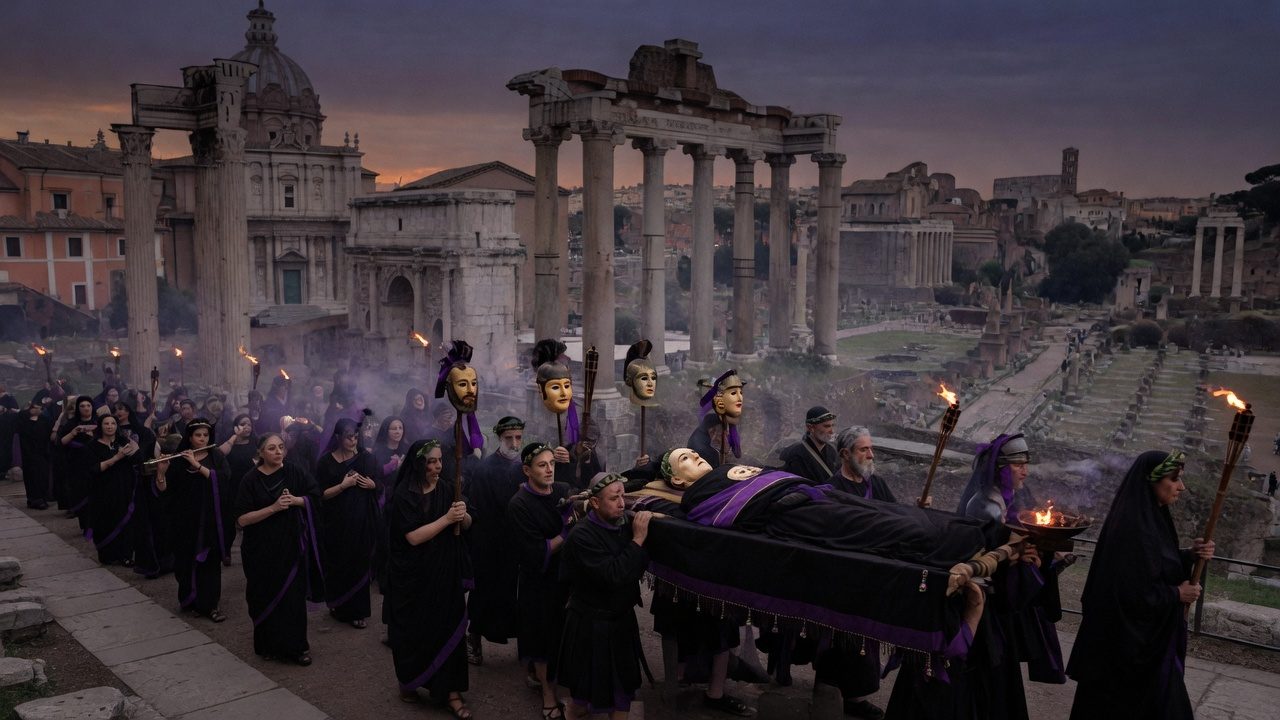
August 19, AD 14. Augustus dies at Nola.
September 17, AD 14. Senate session. Accession.
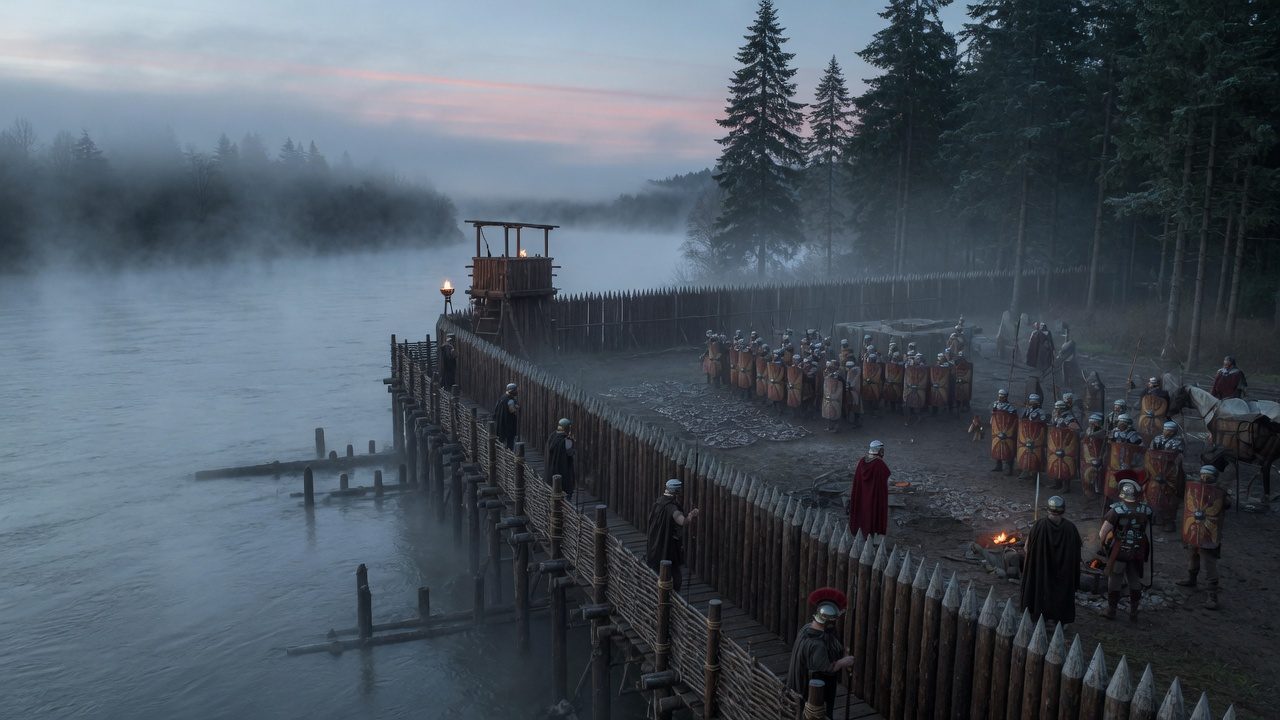
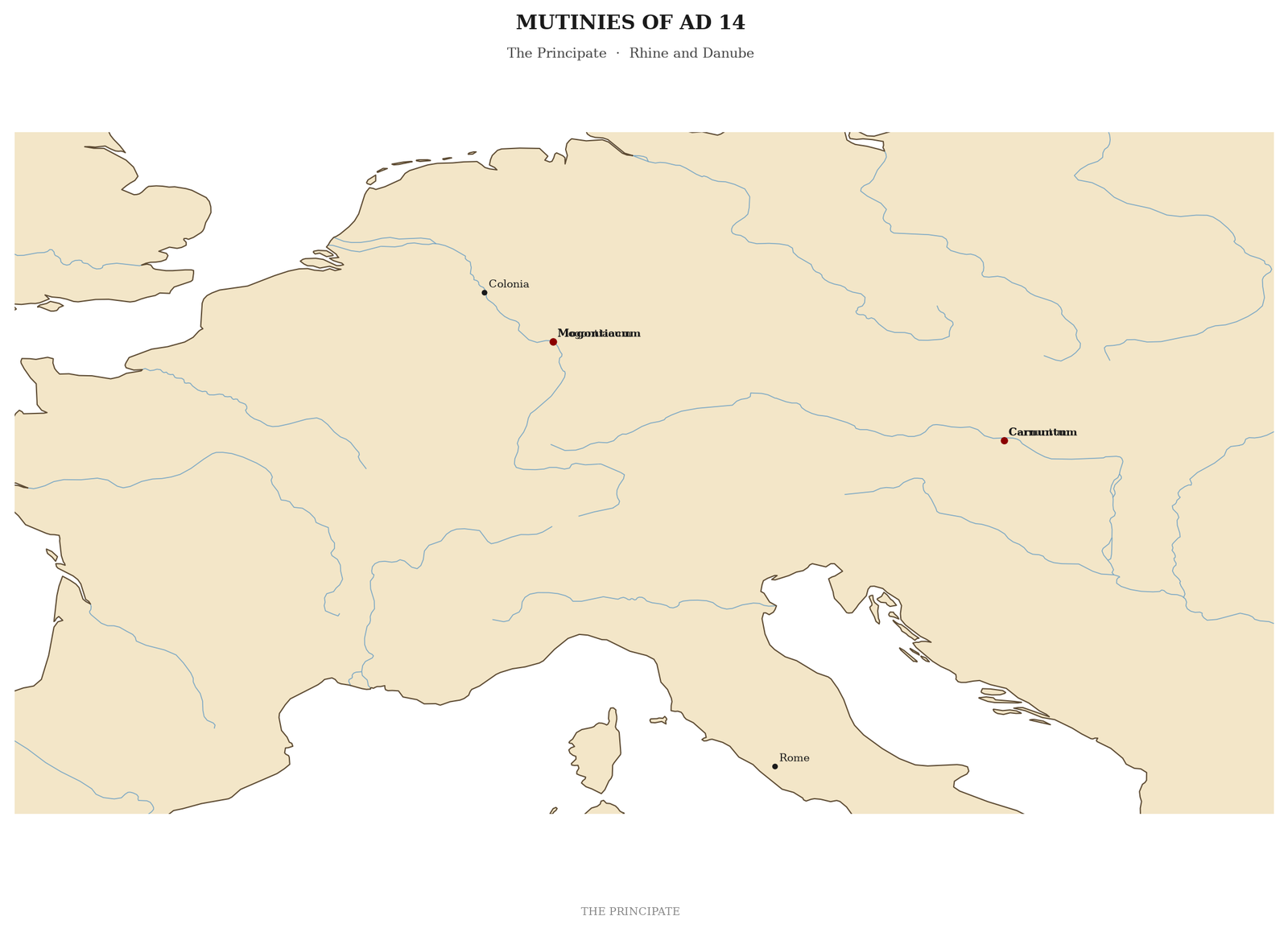
AD 14. Mutinies on the Danube and the Rhine.
AD 15–16. Germanicus in Germany; recalled.
May 26, AD 17. Triumph of Germanicus.
October 10, AD 19. Germanicus dies at Antioch. Do not say murder as fact.
AD 23. Drusus the Younger dies. Sejanus’s shadow lengthens. Praetorian camp in being.
AD 26. Tiberius leaves Rome. Capri becomes the seat.
AD 29. Livia dies. The Germanicus family is opened to destruction.
October 18, AD 31. Fall of Sejanus.
AD 33. Agrippina the Elder dies in exile. Other deaths in that house.
March 16, AD 37. Tiberius dies at Misenum. Gaius is waiting.
That is seventy-eight years from a baby on a civil-war road to an old man on the same coast, having proved that Augustus’s invention could survive the inventor.
WHAT TO DO WITH THE CHARACTER
Resist the temptation to diagnose him.
He was not a modern patient. He was a Claudian aristocrat trained in a civil-war household, used as a tool, discarded, retrieved, and then asked to impersonate a republican magistrate while commanding a monarchy. The reserve, the delayed speech, the taste for Greek island quiet, the drinking, the memory for slights — all of that is in the sources. None of it needs a label to be intelligible.
The useful question is not “what was wrong with Tiberius.”
It is: what does a system do when it is run by a man who is good at the real work and bad at the performance the system still requires.
The real work: frontiers, money, appointments, the refusal of stupid wars.
The performance: presence, warmth, the daily feeding of a Senate that must be both honored and neutered, the management of a family that is also a succession chart.
He did the first until the end. He walked out of the second in AD 26 and tried to do it by mail. The Principate punished that choice without having a legal name for the punishment. It simply generated Sejanus, then a purge, then a mythology.
If you leave this film remembering only the mythology, we have failed.
Leave remembering a competent, reluctant, isolated monarch, and a machine that could not admit what it was — and therefore could not correct itself except by fear.
CLOSE FOR THE LONG CUT
August 19th, 14. March 16th, 37.
Between those two Campanian deaths the Roman world learns a lesson it will spend a century pretending not to have learned.
The first man can be a man you do not love.
The armies can still swear.
The Senate can still meet.
The grain can still come.
And the cost of that stability, if the first man will not stay in the room, will be paid by anyone close enough to be a rumor.
Next in the line is Gaius Julius Caesar Germanicus — Caligula — who watched all of this from a rock, as a hostage-guest with a nickname from the camps.
He will not be reluctant.
End Block D Extended