AUGUSTUS — BLOCK I: MAXIMUM EPIC EXPANSION
Major length boost for 75–110+ min final cut
I1 — The problem Augustus solves
By 44 BC Rome has proven it can produce world-conquerors and cannot produce peaceful succession among them.
Marius and Sulla taught armies to obey men. Pompey taught the public to love super-commands. Caesar taught one man to hold the center. The Ides taught that killing the center without controlling the army only multiplies claimants.
Augustus is the first Roman who solves all four lessons at once: monopolize force, monopolize legitimacy, monopolize narrative, and die in bed with the system still standing. That is a cold achievement. It is also why later centuries keep returning to him when they argue about order and liberty.
I2 — The inheritance
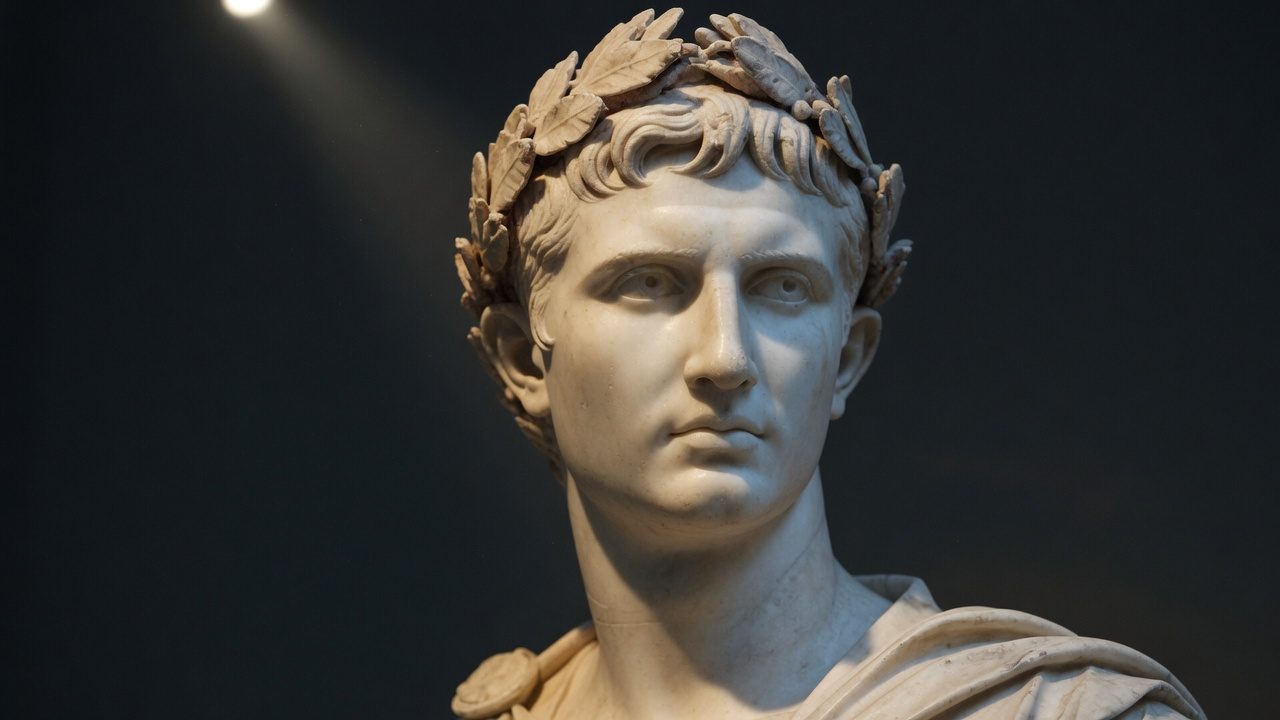
Gaius Octavius is not born emperor. He is born connected. The Julian link through Atia is a fuse waiting for Caesar’s will. When the will adopts him, it does not hand him Italy on a platter. It hands him a lawsuit against reality.
Antony holds the machinery. Brutus and Cassius hold the daggers’ prestige. Cicero holds the Senate’s voice. Octavian holds a name veterans will kill for.
He chooses the name. He chooses the veterans. He chooses time. Eighteen years old, often ill, not yet a general of legend — and already dangerous, because he understands what the name Caesar does to a soldier’s loyalty.
I3 — The education of ice
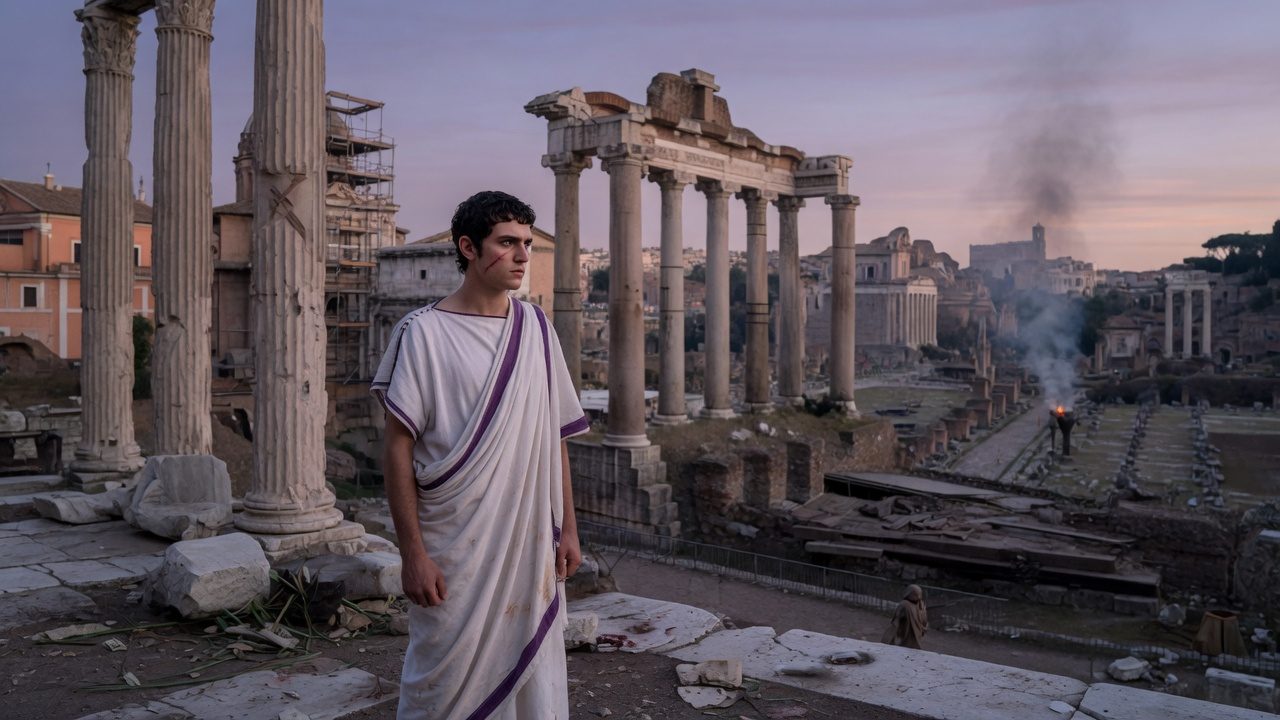
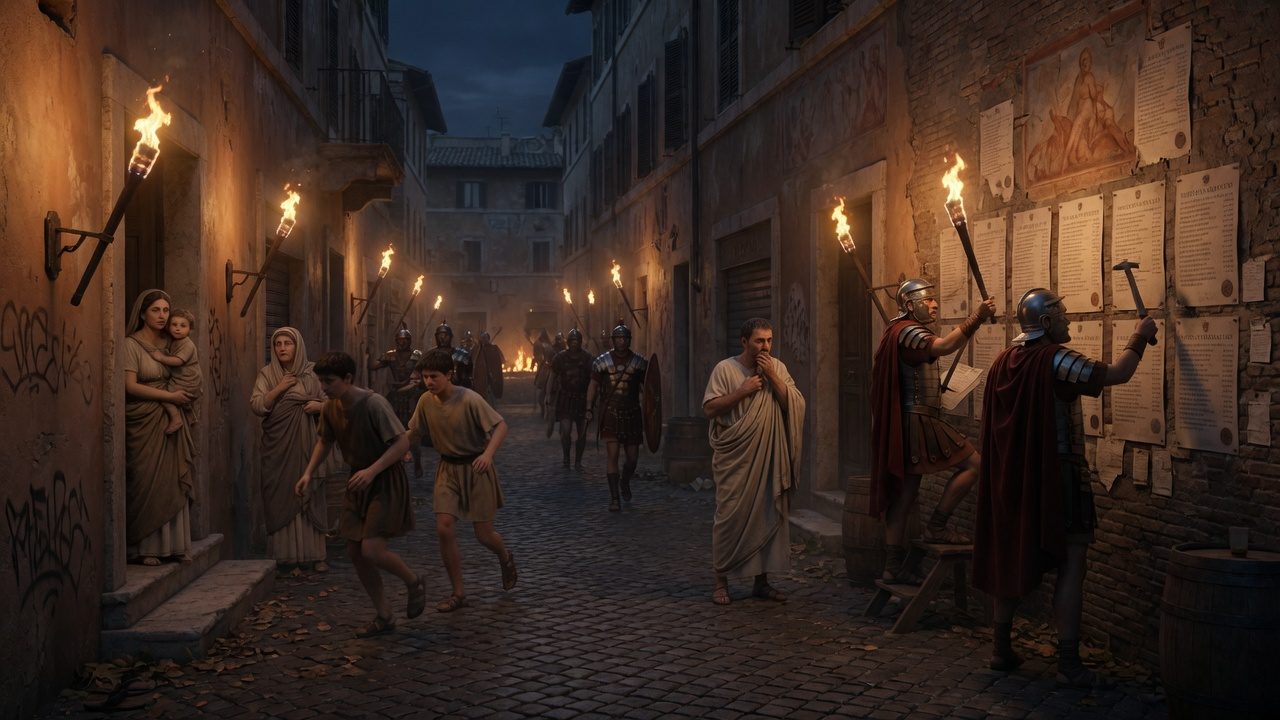
The Second Triumvirate is a graduate school in atrocity. Proscriptions finance land for soldiers and delete opposition. Cicero’s death is Antony’s satisfaction and Octavian’s cold consent.
Later Augustan branding will soft-focus this era into “necessary troubles before peace.” A serious documentary refuses the soft focus. The golden age is paid in advance with lists.
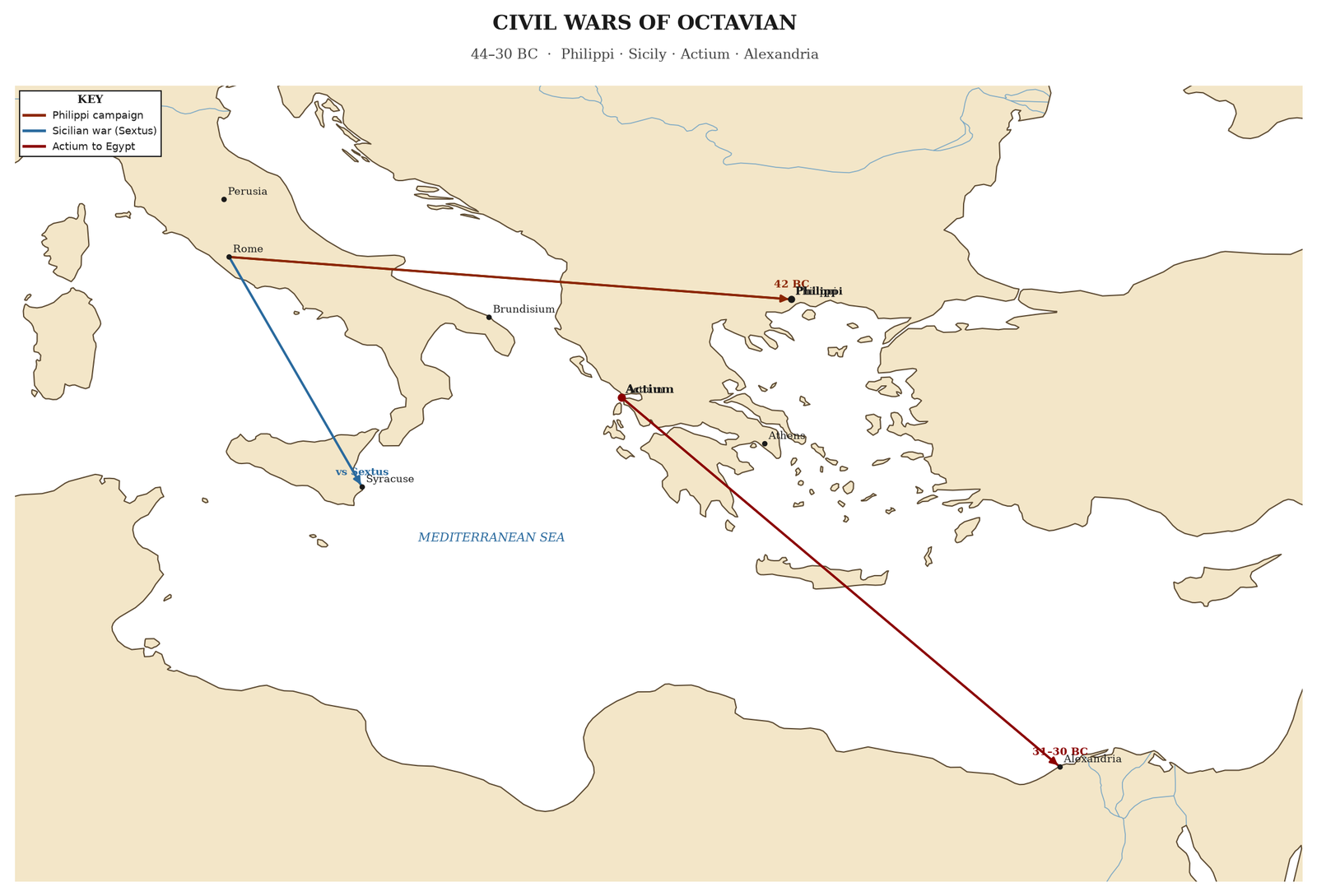
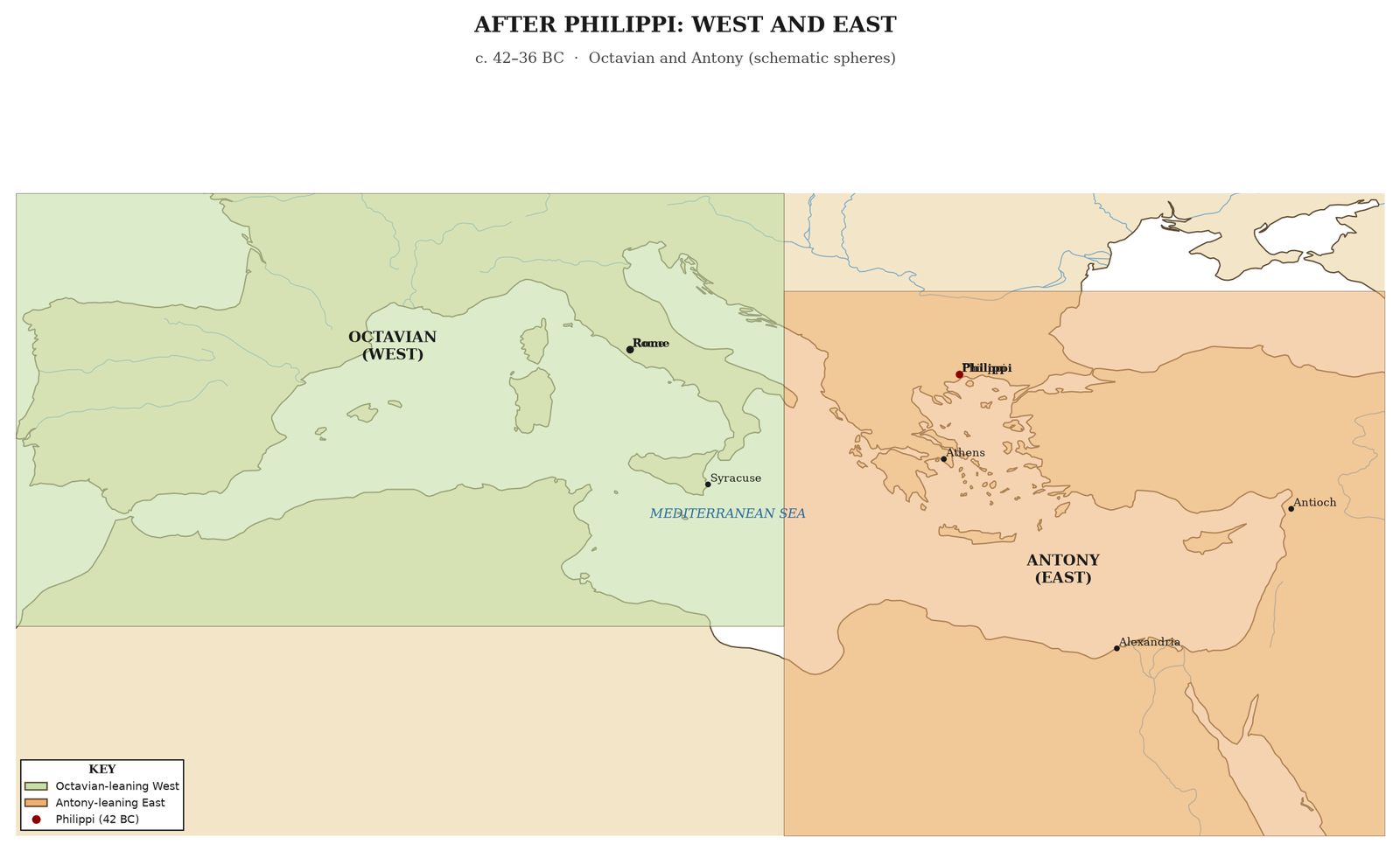
Philippi ends the liberators. It does not end rivalry. Antony’s military star outshines Octavian’s. That imbalance becomes the private engine of the next decade: Octavian must become not only Caesar’s son but Rome’s only possible stabilizer — in story as well as in fact.
I4 — Italy, grain, and Agrippa
Power in Rome is food. Sextus Pompeius on Sicily proves it. Octavian’s early naval humiliations prove he needs Agrippa.
The friendship is the regime’s second founding: strategy plus execution. Agrippa builds fleets, wins wars, raises monuments. He can be raised almost to near-equality in honors because he never becomes a second Antony — no rival brand, no eastern theater of personal monarchy.
When Sextus falls and Lepidus is sidelined, the Roman world becomes a two-player endgame. Italy has already been Octavian’s classroom in land settlement and hatred. Veterans settled. Farms seized. Clients made. Enemies made. That map of loyalty will outlast the civil war.
I5 — War of stories
Antony’s eastern rule can be read as imperial pragmatism: Egypt’s wealth, client kings, Hellenistic kingship as tool. Octavian reads it to Italians as treasonous theater.
Cleopatra becomes the foreign other. Antony becomes the Roman who forgot how to be Roman. The Donations of Alexandria and the publicized will — however obtained and framed — convert civil conflict into a crusade.
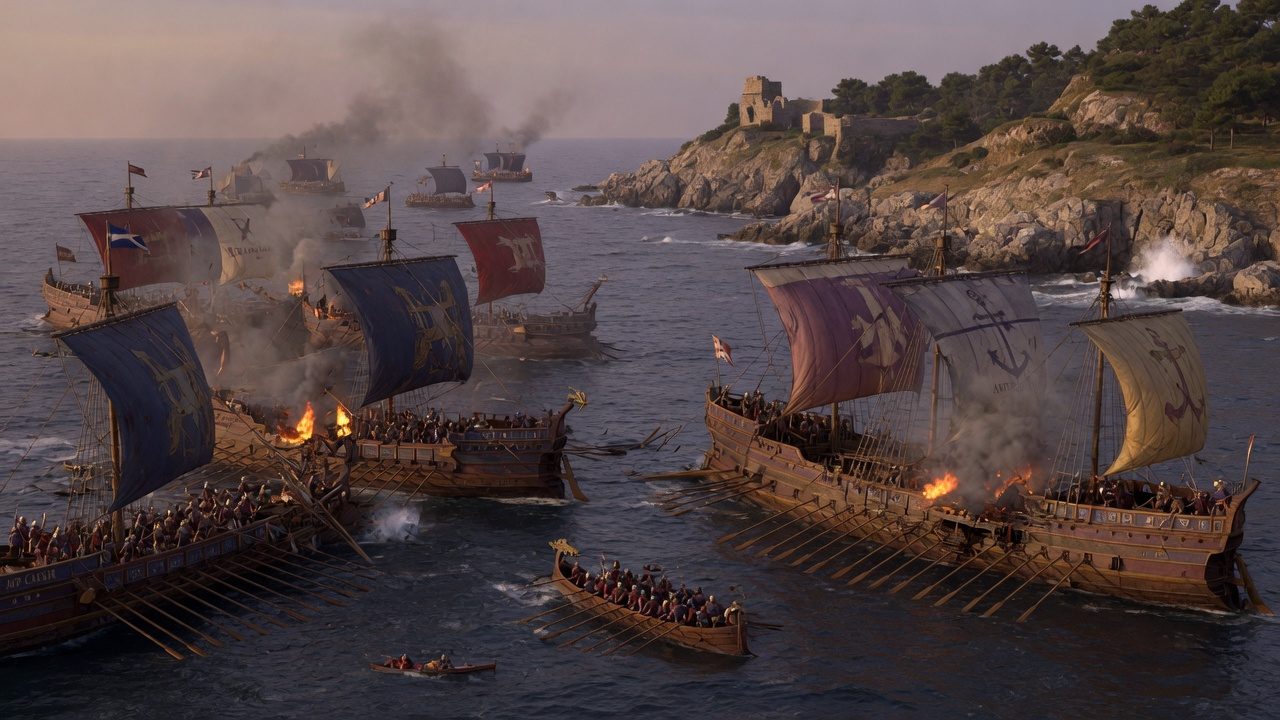
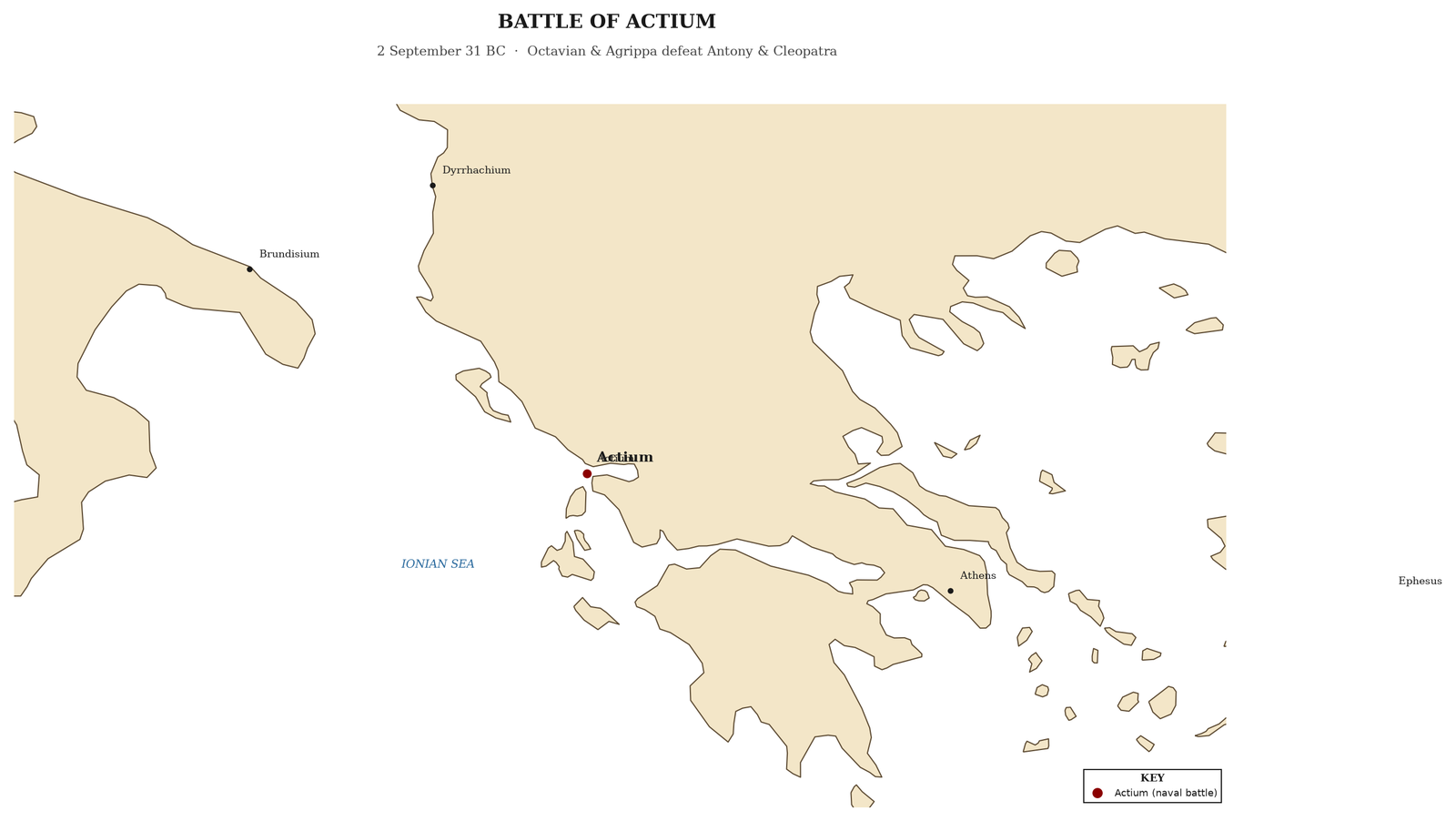
This is modern politics in togas: define the enemy so your side looks like the nation. Coins, speeches, selective outrage. By the time the fleets meet at Actium, half the war is already won in the Italian imagination.
I6 — Actium and after
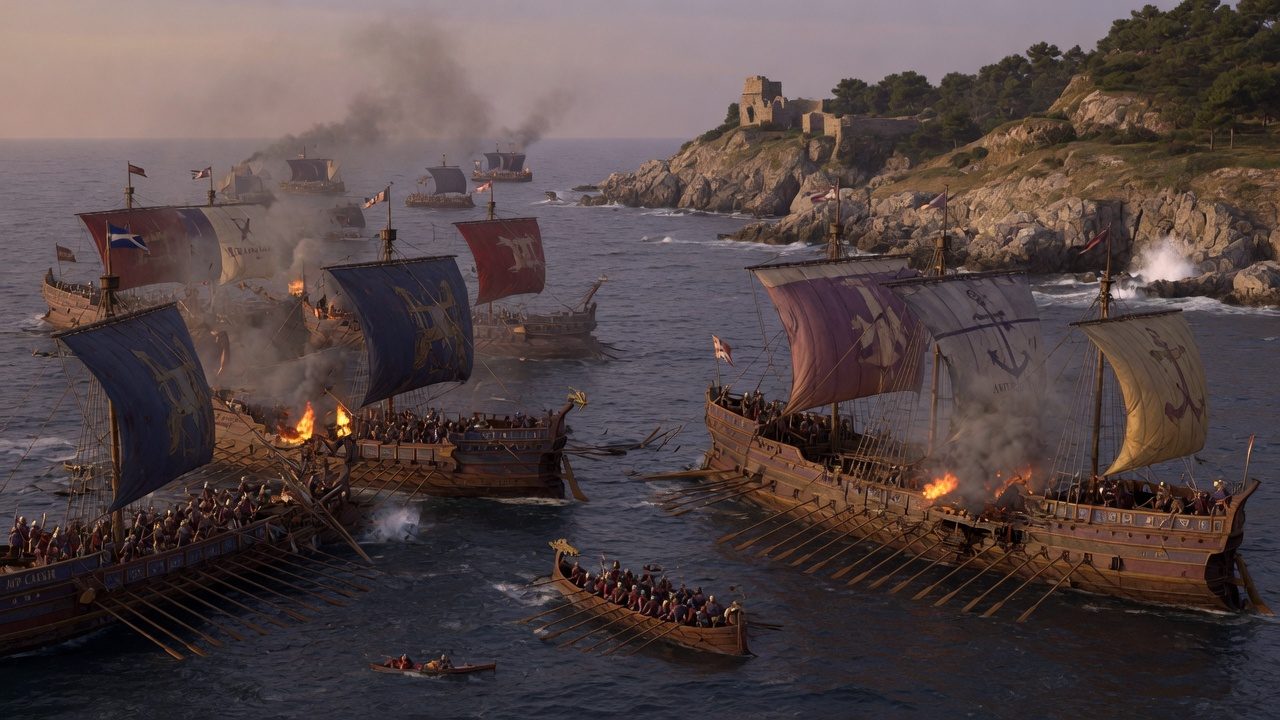
Actium is won at sea and then won again in poetry and ritual. Alexandria finishes the human story of Antony and Cleopatra. Caesarion dies so that “Caesar” has one living owner. Egypt becomes the emperor’s chest.
Octavian returns with the ability to stop looking like a warlord — if he is careful. He is careful. The next decade is not about more battles of the same kind. It is about renaming power until Romans can live with it.
I7 — The settlements as magic trick
27 BC: the performance of refusal and the gift of the name Augustus.
23 BC: refinement after illness and political strain.
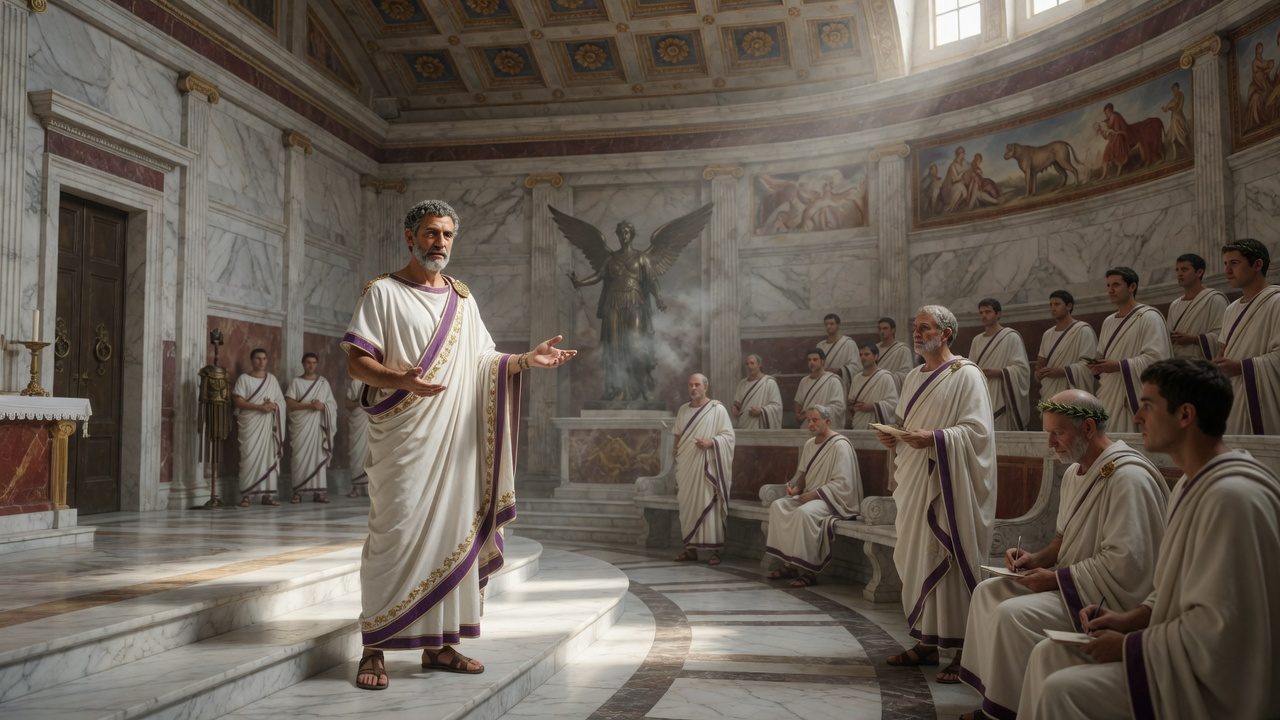
Powers concentrate. Language flatters. The princeps is first citizen, not king — except in every way that matters to armies and provinces. Tribunician power, greater imperium, legionary provinces, priesthoods: the toolkit of monarchy without the diadem that got Caesar killed.
He rebuilds the city as ideology. He polices elite morals while his past includes proscription. He sponsors a culture industry that makes the age feel destined. Virgil, Horace, the marble programs, the recovered Parthian standards — soft power stacked on hard power.
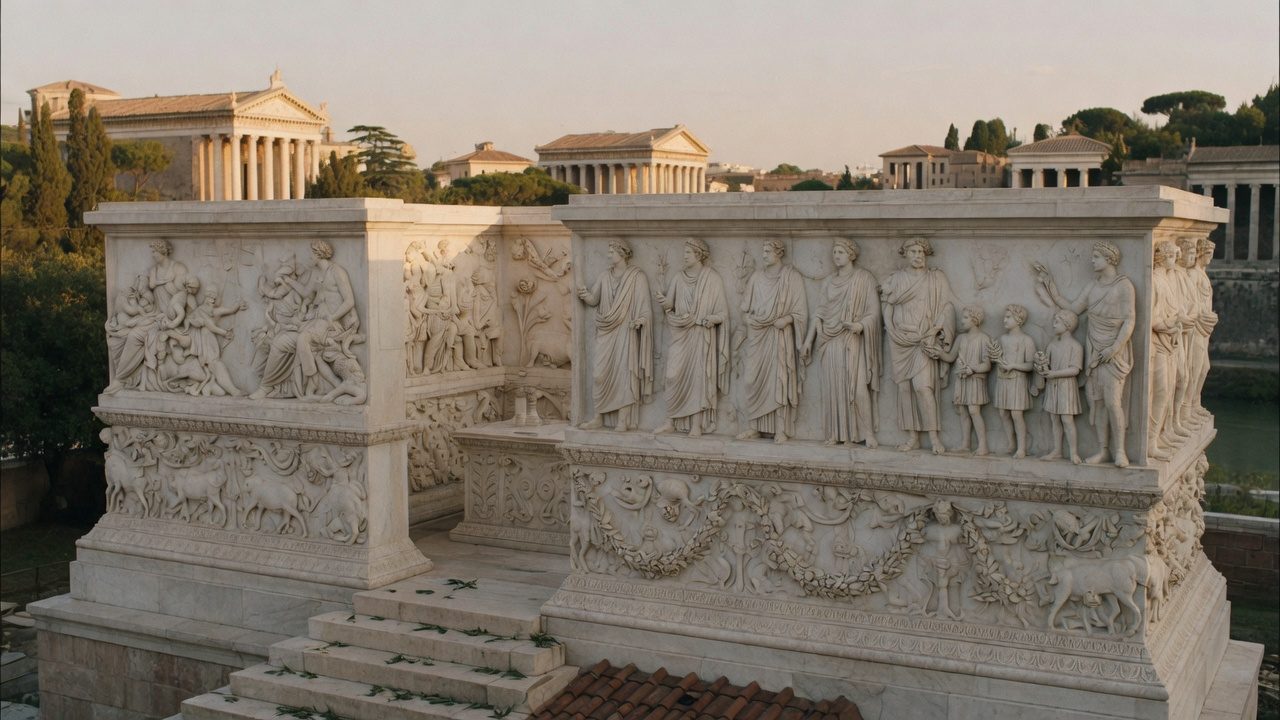
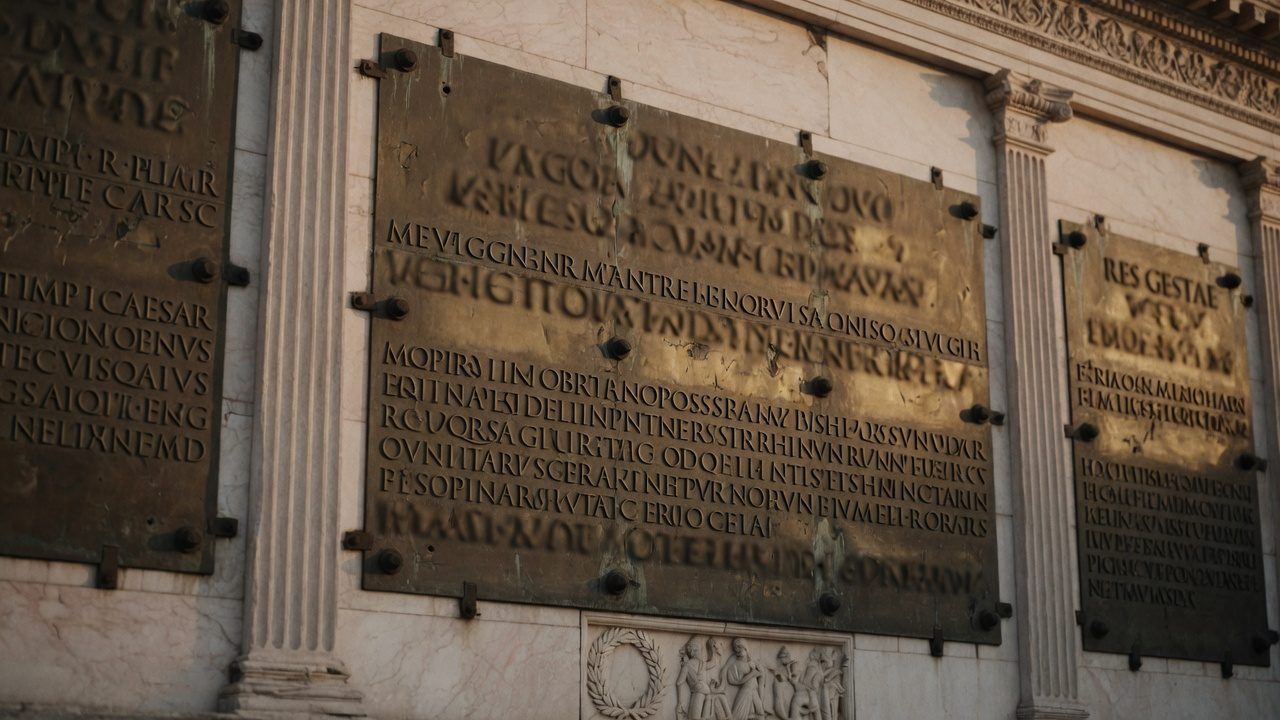
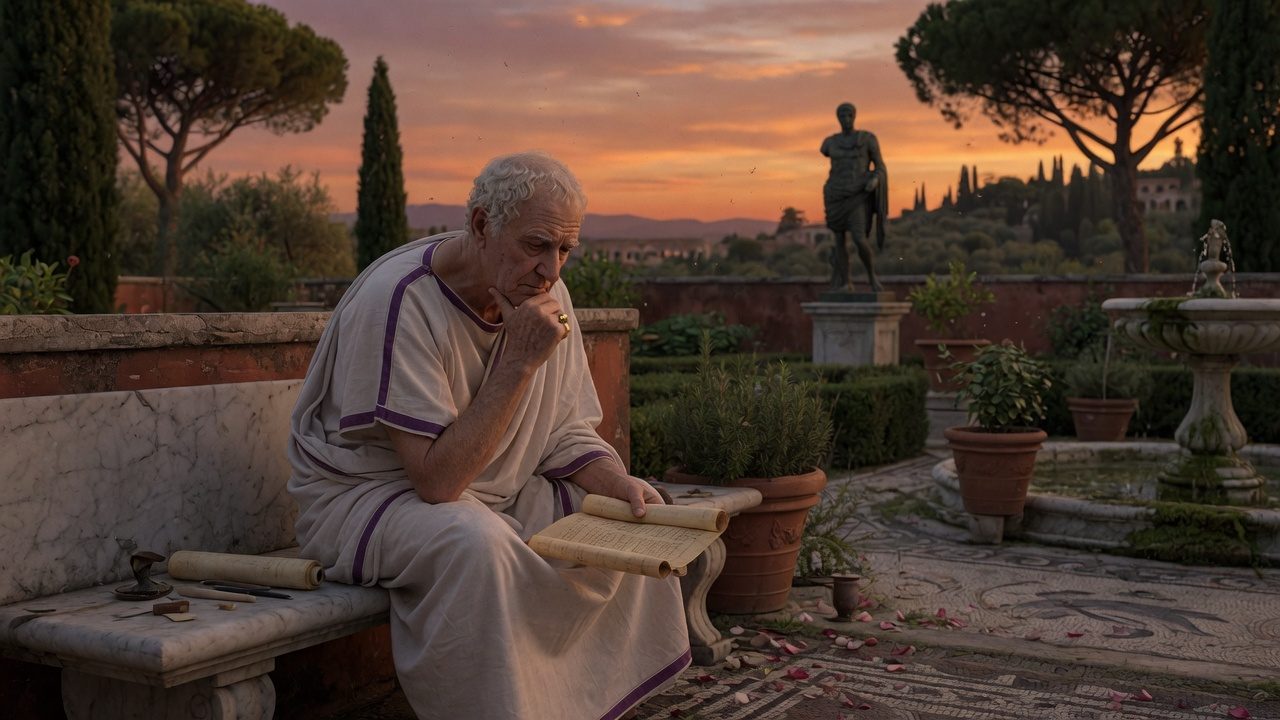
Walk the Forum of Augustus. Stand at the Ara Pacis. Read the Res Gestae. You are inside a press release carved into the world.
I8 — Peace as product
Pax Augusta is real enough to change Mediterranean expectations: fewer aristocratic civil marches through Italy, more bureaucratic empire. It is also a product sold through altars and inscriptions.
Whose peace? Italian elites get oxygen. Provincials get stable exploitation. Peoples beyond the edge get someone else’s word for defeat. Augustus sells peace as moral achievement. Measure it as imperial condition.
The Res Gestae is autobiography as state-religion draft. What is omitted is as important as what is carved. Proscriptions soften. Civil blood becomes necessity. Restoration language covers invention.
I9 — The human bill
Succession disasters pile up: Marcellus, Agrippa, Gaius, Lucius, Julia’s ruin, Tiberius’s sulks and returns. The dynasty is a graveyard of hopes. Every death is a political crisis because the system is still a face.
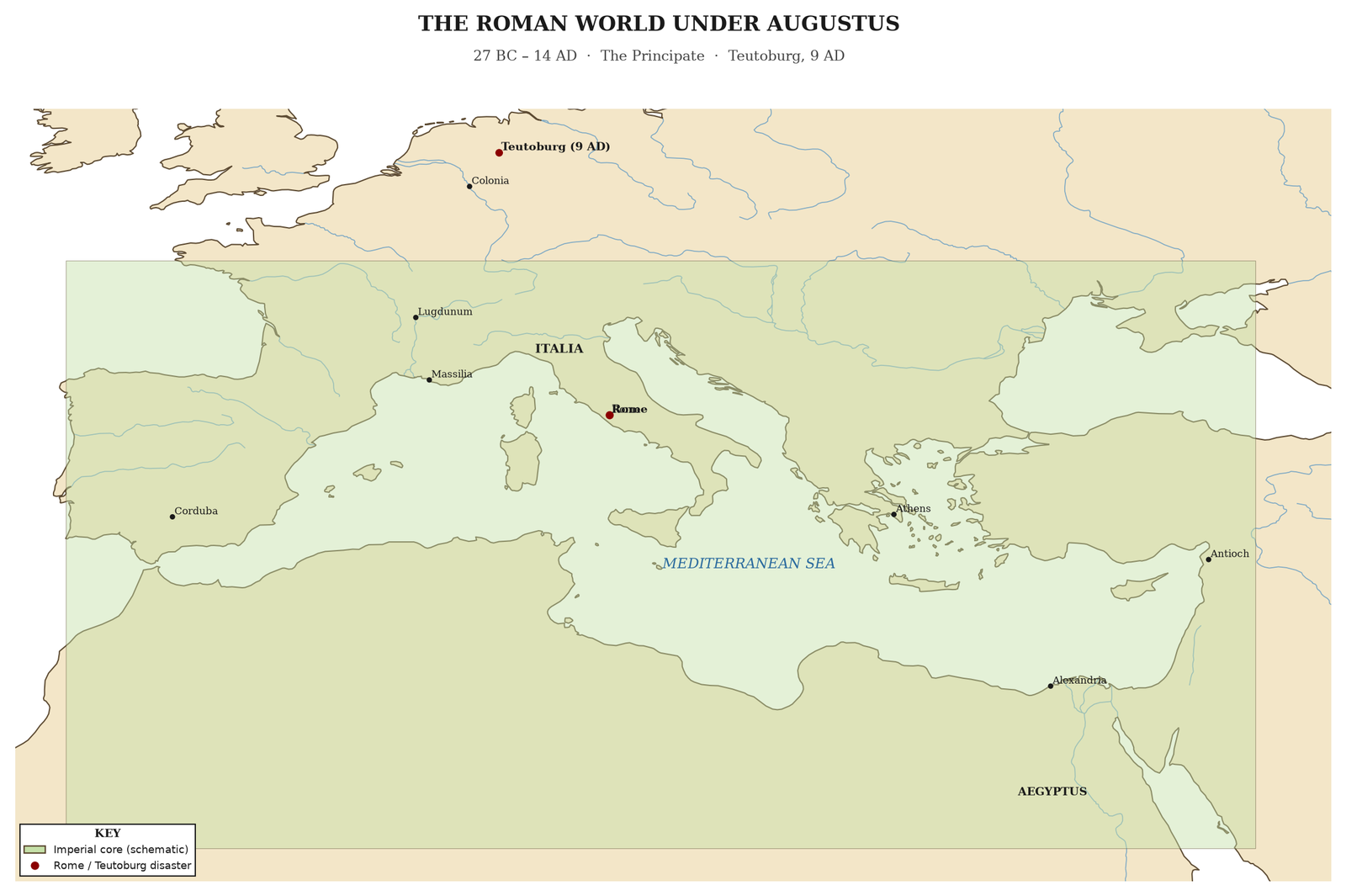
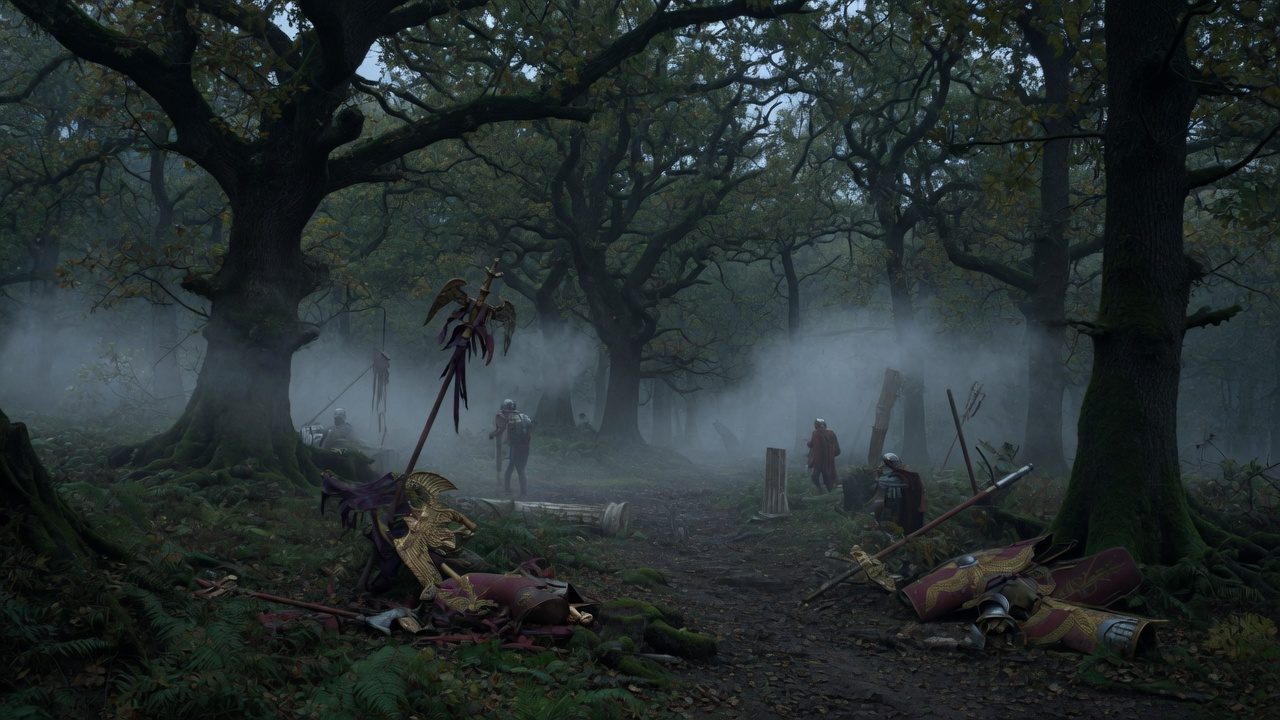
Teutoburg in 9 AD bloodies the myth of endless expansion. Three legions gone. Tradition gives us the old emperor crying for them — Quintili Vare, legiones redde! Limits enter the story. The empire learns that not every forest is a province.
The old emperor becomes a manager of edges and a curator of the least-bad heir. Death in 14 AD works. Deification works. Tiberius succeeds. The system proves larger than one charismatic life — which is exactly what Caesar failed to achieve.
I10 — Judgment
Was Augustus good for Rome? Define Rome.
For senators who wanted open competition for primacy: he ended their world.
For Italians exhausted by civil war: he delivered quiet.
For provincials: he delivered a more coherent master.
For later Europe: he delivered the template of empire and the seductive idea that liberty can be traded for order without admitting the trade.
He is the most successful political learner in Roman history. He studied every corpse between Sulla and Cleopatra, and he graduated — not into innocence, into permanence.
I11 — Final oration
[08] → [00] → [03] → [01] → [05] → [06] → black
Imperator Caesar Augustus began as a boy with a will and ended as a god with a bureaucracy.
He closed the Republic’s remaining chances and marketed the funeral as a rebirth. He turned veterans into a permanent constituency, Egypt into a treasury, poets into architects of consent, and the Senate into a gold-plated chorus.
Caesar showed that one man could rule Rome.
Augustus showed that one man could make Rome accept it as normal.
That normality lasted centuries.
Its shadow lasts longer.
End Block I