Insert these segments where marked · spoken ~22–24 min @ 130–140 wpm
Two cheap Catos walk around in popular history.
The first is a plaster saint. Bare feet, clean hands, a man too good for his century. If only there had been more of him, the Republic would have lived.
The second is a clog. A fanatic who would not pass a farm bill, therefore Caesar, therefore empire, therefore the fault is the stoic in the cheap toga.
Neither survives a year of his actual calendar.
Saints do not have Clodius ship them to Cyprus and then do the job with a clerk’s ferocity. Clogs do not sit in Utica and organize other men’s surrenders. Saints do not help strangle citizens in a basement. Clogs do not spend a quaestorship making Sulla’s leftover bounty-hunters give the money back.
He is a Roman aristocrat with a family myth, a philosophical training, a talent for scenes, and a real hatred of being owned.
Use him that way or you will make a children’s book.
INSERT IN THE STOIC YOUTH SECTION (Block A)
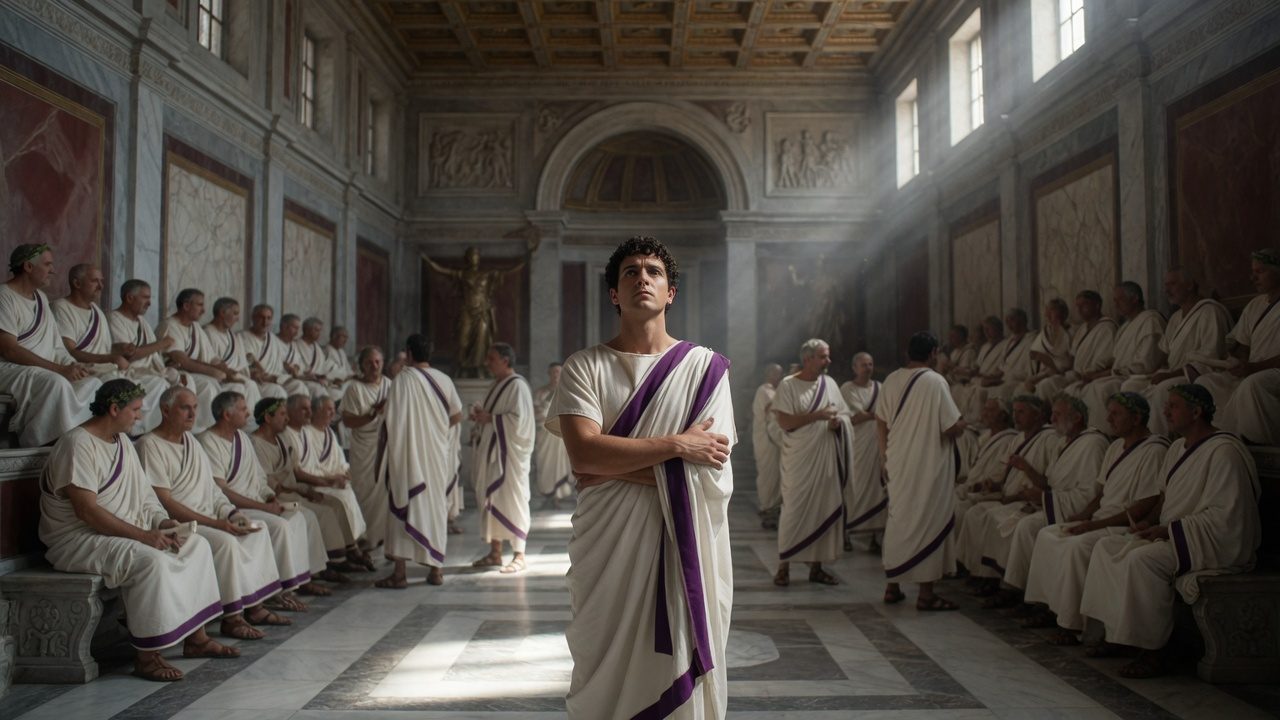
Stoicism in the late Republic is not a scented candle.
It is a Greek system, taught by men like Antipater of Tyre, that says the only true good is virtue — a trained, consistent, rational excellence of the ruling part of you. Everything else is an “indifferent.” You may prefer health to sickness, wealth to ruin, office to humiliation. You may not let the preference become a master.
Translated into a Roman career, that doctrine does specific work.
It lets a man refuse a bribe without calling himself a fool. It lets him lose a consulship and call the loss nothing. It lets him treat exile, confiscation, even a civil-war pardon, as things that happen to his body and his name, not to him.
It also traps him.
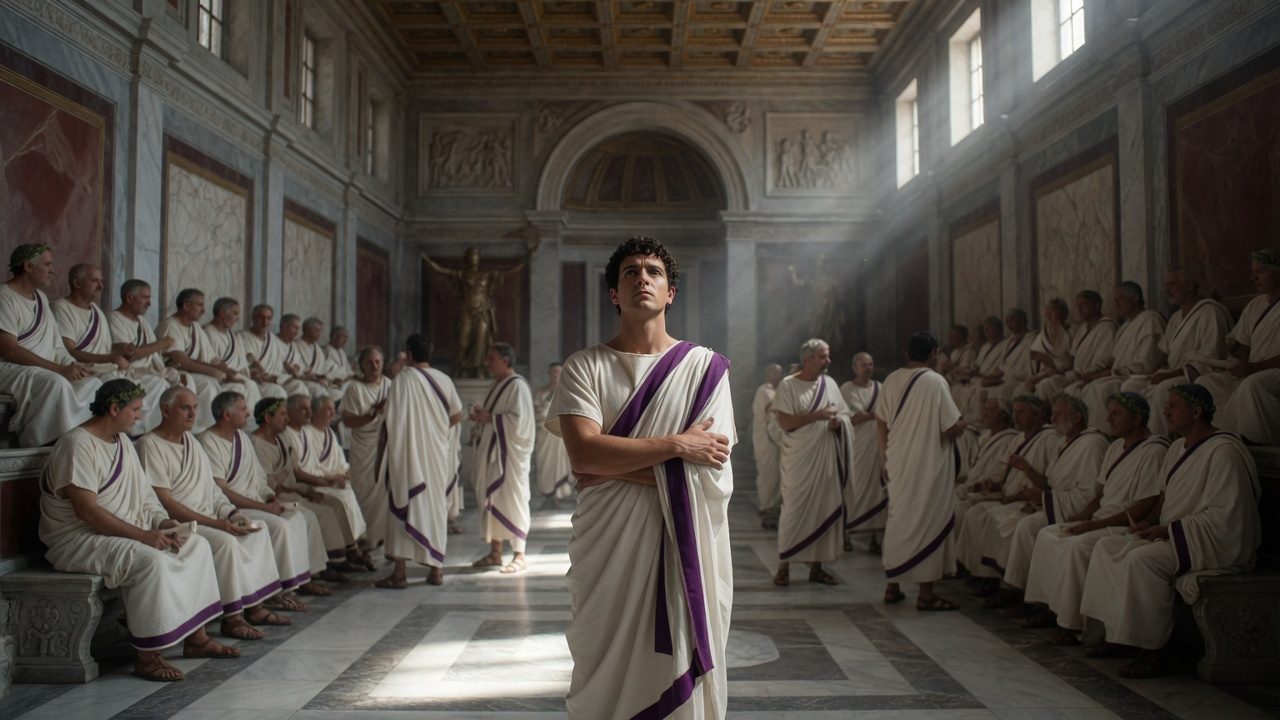
Because the same school says you are a political animal. You owe the city your effort. You do not get to take your virtue into a cave and call the cave wisdom. So Cato has to stay in the Forum, where the indifferents — votes, armies, grain, marriages — are the only language other people speak.
He solves the trap by performance.
The cheap toga is a sentence. The bare feet are a sentence. The long talk against a bill is a sentence. He is trying to make virtue visible in a city that only believes what it can see.
Performance is not the opposite of sincerity. It is how sincerity travels.
The danger is obvious, and Cicero will spend years poking it. If you need your virtue to be visible, you can start choosing the visible no over the useful half-yes. You can start needing an audience the way other men need a bribe.
Did Cato need an audience?
Yes. At least sometimes. The man who walks when he could ride is not only thinking about his soul. He is thinking about your eyes.
Did that make the treasury audit fake?
No.
Hold both. Stoicism as politics is a tool that cuts the user. It kept him from being bought. It also kept him from being a partner.
Under the emperors this will get domesticated. Seneca will write letters about inner freedom while advising a young Nero. The doctrine that took Cato out of Caesar’s triumph becomes, two generations later, a way to stay in a palace and still feel unowned.
That later use is not Cato’s fault. It is what happens when a suicide becomes a syllabus.
The historical man did not want a syllabus. He wanted a Senate that could still say no to a general and have the no stick.
A little more doctrine, because the words will keep returning.
The Stoics divide what is in your power from what is not. Assent, intention, the shape of a choice — yours. The rest — weather, votes, other men’s armies — not yours. Cato lives as if that split were a constitution. It makes him hard to bribe. It also makes him bad at the only politics available, which is the art of moving things that are not in your power by talking to men who are.
They also talk about oikeiosis — the widening circles of what is “one’s own,” from the body out to family, city, human race. Cato’s circle is real and narrow in practice: brother, a few friends, then a city that is actually a class. The human race does not get a vote in Cyprus.
When the no stopped sticking, he did not update the doctrine.
He updated the location.
Utica.
They are on the same side until they are not, and even when they are, they grate.
Cicero is a new man who believes words can still build a coalition. He needs Pompey. He needs the boni. He needs yesterday’s enemy to become tomorrow’s letter of support. His genius is adjustment without (in his own mind) becoming a villain.
Cato is an old name who believes adjustment is how villains are made.
In 63 they stand near each other on the Catilinarians. Cato pushes death. Cicero, as consul, executes. Afterward Cicero wants the act wrapped in praise and legality. Cato thinks the act was simply necessary. Already the temperatures differ.
Then Pro Murena.
Lucius Licinius Murena, consul-elect, is prosecuted for bribery. Cato is among the accusers — of course he is; electoral dirt is the disease. Cicero defends, and the speech we have is a masterpiece of affectionate insult. He teases Stoic paradoxes in front of a jury. He says, in polished jokes, that a city cannot be run by men who treat every peccadillo as the end of the world. He wins. Murena is consul. The Republic gets a competent pair of hands and a lesson: Cato can be out-talked when the room wants to survive the year.
Cicero is right about juries.
Cato is right that if you keep laughing the dirt away, the dirt becomes the constitution.
The letters are where the grain is.
Cicero to Atticus, across the 50s and into the war, returns to Cato like a tongue to a sore tooth. He admires him. He blames him. He wants him to be a little more useful and a little less famous for not being useful. After the African end he will write the praise, the Cato, that goads Caesar into the Anti-Cato.
That sequence is their relationship in miniature.
Cicero tries to turn Cato into literature the Republic can still use.
Caesar tries to turn the literature back into a man with faults.
Cato, being dead, finally cannot object to either.
If you need a single contrast for the series: Cicero dies talking, trying to recruit one last young strongman into a constitutional script. Cato dies silent, having refused to be recruited into anyone’s script, including the script called mercy.
They are both republicans.
They do not mean the same job by the word.
One more grain from the letters, because this is the best contemporary camera we have.
Cicero can praise Cato to a third party and then, to Atticus, complain that the man will wreck a workable motion for the pleasure of being seen not to bend. After Pharsalus Cicero will take Caesar’s pardon and hate the taste. Cato will not take it and will become, for Cicero, both a reproach and a book to write. The Laus Catonis is affection, politics, and guilt in one lost package. We know it existed because Caesar answered it. Friendship, in that class, is also a pamphlet war.
Cato, for his part, seems to have found Cicero brilliant and soft — the kind of ally who is indispensable in a court and unreliable at a door. The Murena speech, with its Stoic jokes, would have been hard to forget. You do not tease a man like Cato in public and then expect him to treat your next compromise as wisdom.
They needed each other. The 50s did not let them be enough.
A coalition is a machine for counting to a majority without anyone getting everything.
The late Republic still had the hardware: Senate, assemblies, magistracies, courts. What it was losing was the habit of letting a rival leave the room with a piece of the prize.
Cato’s principle — no extraordinary personal power, no laws passed like thefts, no veterans’ land that is really a private army’s pension — is coherent. It is also, in a system already full of extraordinary commands, a demand that the game revert to a rulebook other players have already burned.
So what happens in a room with Cato in it?
Pompey cannot be given a clean, boring ratification and then reattached to the Senate. He is made to feel like a petitioner. He goes and finds Caesar and Crassus, who will not make him feel like a petitioner.
Caesar cannot be given a consulship that is merely a consulship. The brake is pulled so hard that he decides the only safe future is a province with an army attached for years.
The “good men” cannot run a slate that wins, because the man who is their moral advertisement will not spend what a slate costs.
This is not a sermon against having principles.
It is a description of a type.
There are politicians whose usefulness is to name the thing that is happening. Cato names it: these men are turning the public thing into a partnership.
There are politicians whose usefulness is to delay the worst version of the thing by selling a lesser one. Cicero tries to be that, and hates himself in the mornings.
A coalition that contains only the first type will be righteous and small.
A coalition that contains only the second type will be large and then suddenly owned.
The 50s needed both types to share a math problem, and they could not.
Cato’s no after Luca is admirable if you think Luca was already a coup.
It is reckless if you think a bought Pompey, peeled off Caesar, was the last ugly peace available.
Scholars still split on that. Syme’s generation liked the hard structural story: the Republic was already an aristocracy failing to police its warlords. Other readers, closer to the letters, still think there were months when a cheaper land law and a little less humiliation might have bought time.
We do not have to pick a team in a voiceover.
We have to be honest that “principle” is not a synonym for “wisdom.”
It is a decision about which losses you will not sign.
Cato’s unsigned losses became Caesar’s signed provinces.
A coalition, said more coldly, is a list of people who will swallow something they dislike at the same hour. The anti-Caesar list in the late 50s included: Cato, who would swallow almost nothing; Cicero, who would swallow and then write about the taste; Pompey, who would swallow if it still looked like primacy; a crowd of nobles who would swallow if their dignities were saluted. That is not a majority. That is a waiting room.
Give Pompey a clean land law in 60 and you might — might — have kept him from the private room with Caesar and Crassus. Cato treats that “might” as a sin. Caesar treats it as an opening.
That does not make Cato the author of the Principate.
It makes him one of the reasons the last republican majority never quite existed on the day it was needed.
PRONUNCIATION AND TIMELINE
A few names, said so we are in the same room.
Cato — KAY-toh. If you prefer a more Italianate KAH-toh, pick it and stay there.
Marcus Porcius Cato Uticensis — MAR-kus POR-shuss KAY-toh yoo-tih-SEN-sis. Uticensis just means “the one of Utica.”
Cato the Censor — the great-grandfather. Do not give the Younger the Carthage line. That growl is the Elder’s.
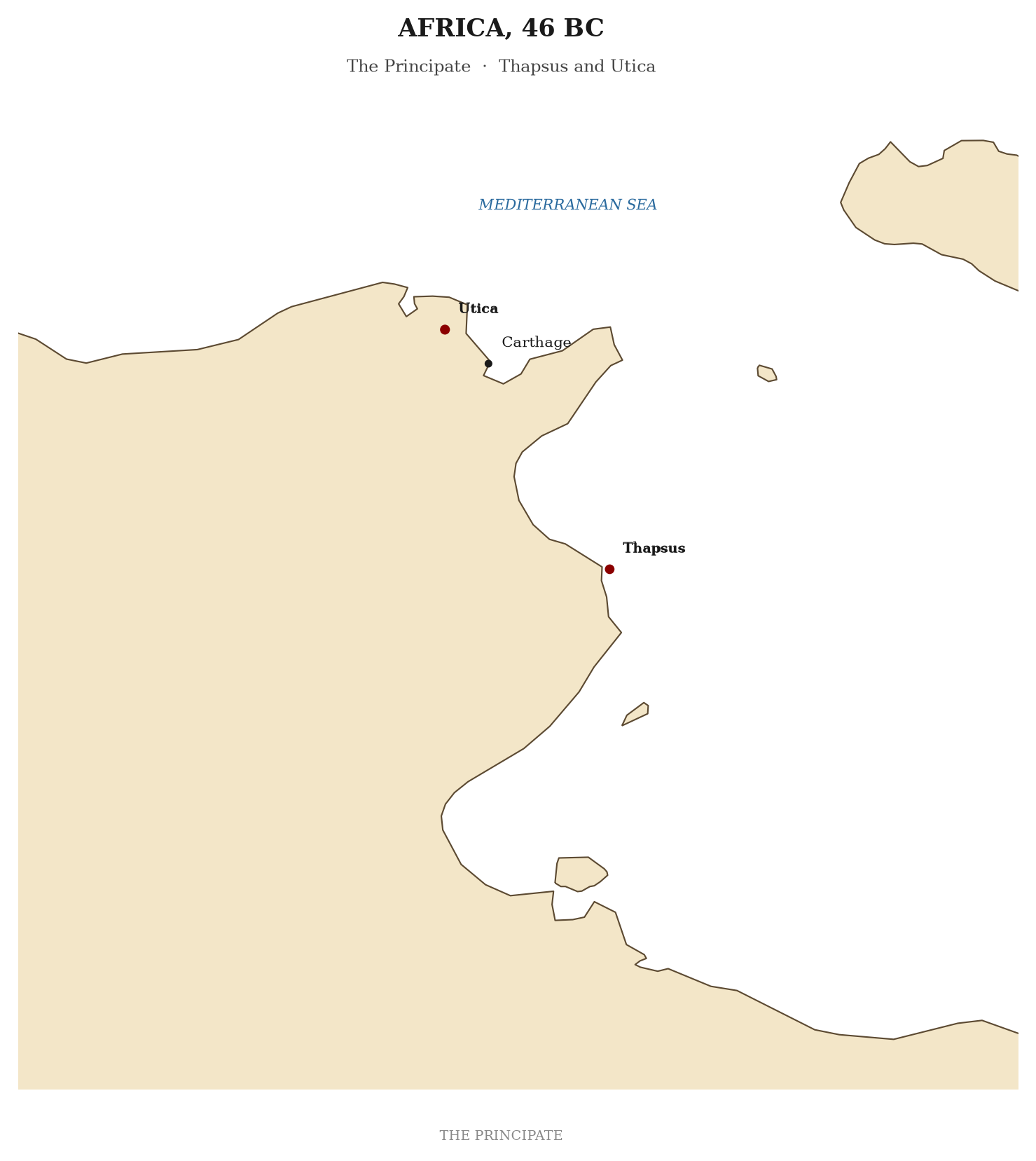
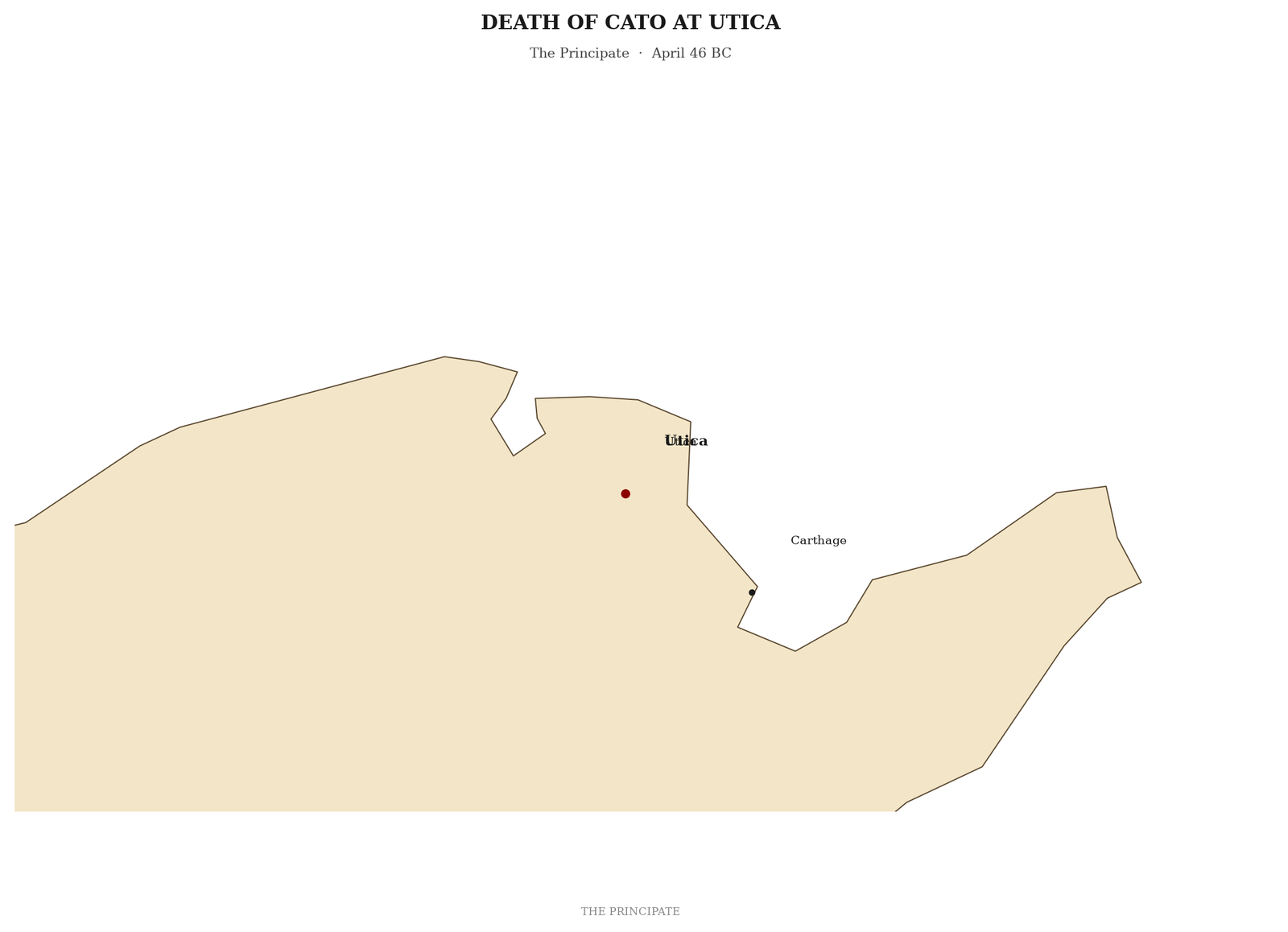
Utica — YOO-tih-kuh.
Phaedo — FEE-doh. Plato’s dialogue. Socrates in a cell, then the cup.
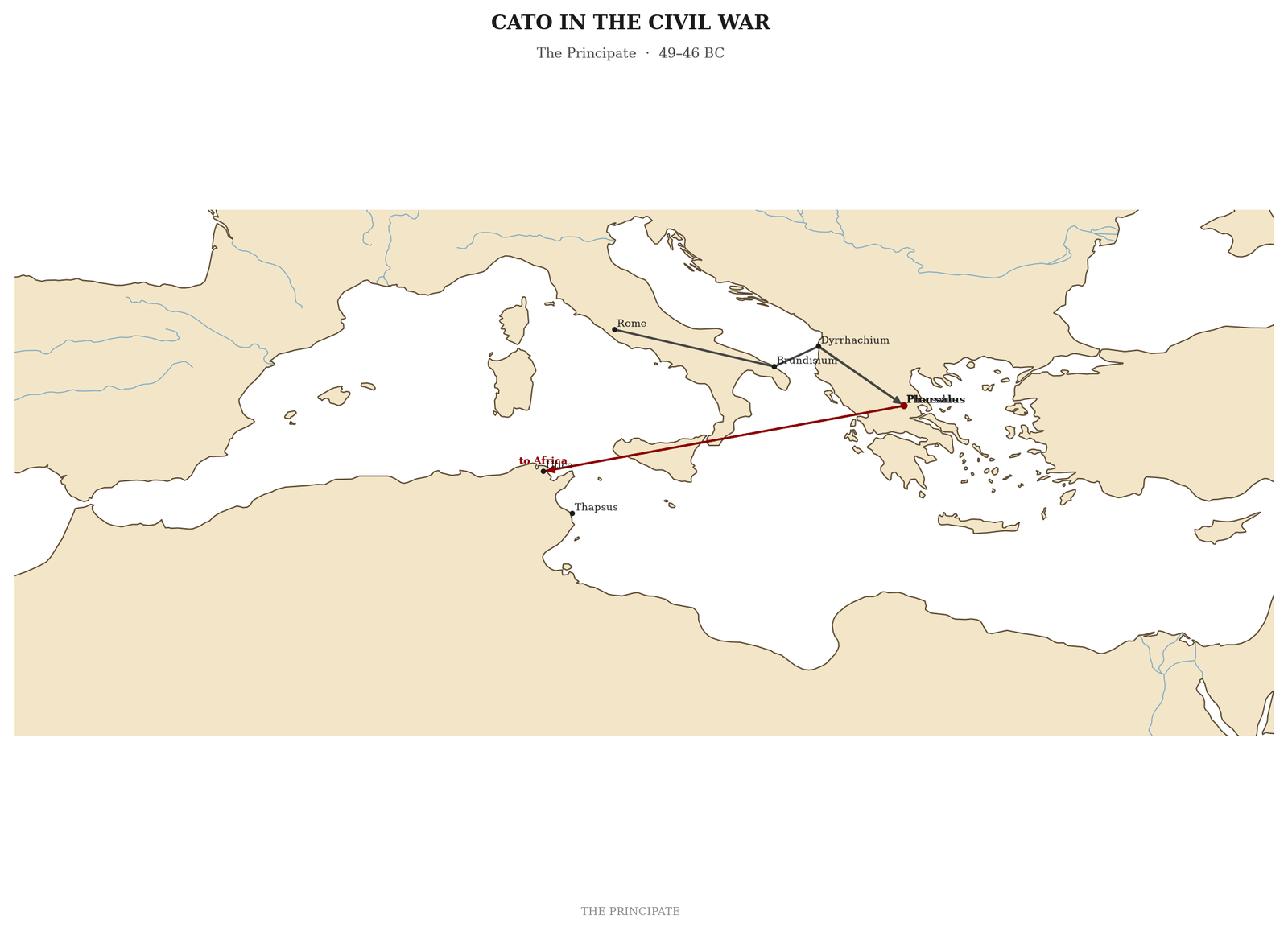
Thapsus — THAP-suss. The African defeat, April 46.
Pharsalus — FAR-suh-luss. Thessaly, 48.
Clodius Pulcher — KLOH-dee-us PUL-ker. Tribune of 58. The man who sent Cato to Cyprus and Cicero into exile.
Servilia — ser-VIL-ee-uh. Half-sister. Mother of Brutus. Caesar’s long attachment.
Brutus — BROO-tus. Nephew. Later, a knife.
Livius Drusus — LIV-ee-us DROO-suss. Uncle. Tribune of 91. Murdered at home.
Metellus Scipio — meh-TELL-us SKIP-ee-oh. The commander in Africa who was not equal to the job.
Juba — JOO-buh. King of Numidia. Ally, complication.
clementia — kleh-MEN-tee-ah. Caesar’s pardon as policy.
aerarium — eye-RAH-ree-um. The treasury Cato audited.
senatus consultum ultimum — seh-NAH-toos kon-SUL-toom UL-tih-moom. The emergency decree of 63.
Victrix causa deis placuit, sed victa Catoni — WIK-triks KOW-sah DAY-ees PLAH-kwit, sed WIK-tah kah-TOH-nee. Lucan. The winning cause pleased the gods; the losing one pleased Cato.
The years, in a straight line, without romance.
95 BC — born.
91 — Livius Drusus killed. The boy is in that household’s wreckage.
late 70s–60s — military tribune in Macedon. Stoic study.
64 — quaestor. The treasury.
63 — Catilinarian debate. Speaks for death. Caesar speaks for prison. The basement.
62 — tribune. Fights Metellus Nepos. Starts the long no to Pompey’s extra grants.
59 — Caesar’s consulship. Land bills. Dragged from the house. Bibulus watching the sky.
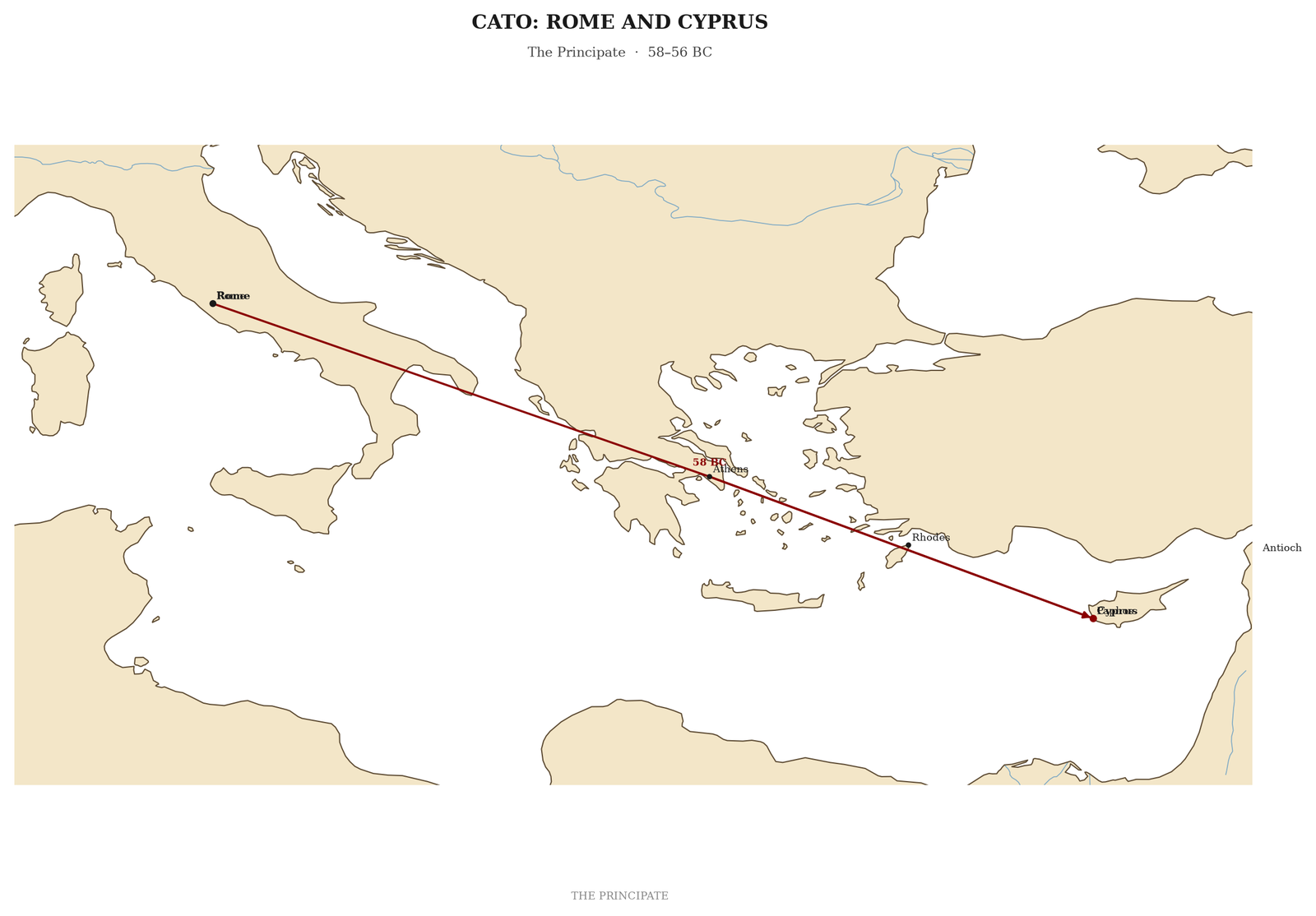
58–56 — Cyprus. Annexation, inventory, return to a leased city.
56 — Luca. The three renew the lease.
54 — praetor. Julia dead. The stitch between Pompey and Caesar gone.
53 — Carrhae. Crassus gone. Two heads left.
52 — Clodius killed. Senate house burned. Pompey sole consul. Cato supports the anomaly.
51 — loses the consulship he would not buy.
49 — civil war. He wanted it. Sicily, then Pompey’s camp.
48 — Pharsalus. Pompey murdered in Egypt. Cato toward Africa.
47–46 — Utica as a last republican office. Scipio in the field.
April 46 — Thapsus. Then the house. Then the second attempt.
after — Cicero’s Cato. Caesar’s Anti-Cato. Brutus. Lucan. Seneca. Addison. Valley Forge.
A few more names, because the film will say them once and should say them right.
Atilia — ah-TIL-ee-uh. First wife.
Marcia — MAR-shuh. The wife in the Hortensius story.
Porcia — POR-shuh. Daughter. Later Brutus’s wife. A legend of her own, some of it later paint.
Hortensius — hor-TEN-shuss. Orator. The borrowed marriage.
Bibulus — BIB-yoo-luss. Caesar’s consular colleague in 59. Sky-watcher. Cato’s ally by marriage and temperament.
Metellus Nepos — meh-TELL-us NEP-oss. Tribune of 62. The platform fight.
Luca — LOO-kah. The 56 meeting. The lease renewal.
Corcyra — kor-SY-ruh. Raft after Pharsalus.
Cyrene — sy-REE-nee. The African approach.
Juba — JOO-buh. Again, because he will be on a map.
Addison — ADD-ih-sun. 1713. The English Cato.
Trenchard and Gordon — Cato’s Letters. English liberty pamphlets wearing a Roman mask.
That is the spine. Everything else is commentary.
CLOSER: CATO AND THE PRINCIPATE’S LANGUAGE OF LIBERTY
This series is called The Principate.
That word is a later convenience for what Augustus builds: one man at the head, offices still named, a Senate still seated, liberty still spoken, power sitting somewhere else.
Cato does not live to see the settlement. He dies twelve years before the Ides, eighteen before Philippi, twenty-seven before Actium, twenty-nine before the first careful use of princeps becomes a reign.
He is still one of the authors of its vocabulary.
Not because he designed a monarchy. Because he spent a life insisting that the opposite of monarchy had a look: a man who cannot be bought, a law that does not kneel, a death preferred to a pardon.
The Principate needs that look.
An emperor cannot rule a Roman upper class on soldiers alone. He needs the old words. Libertas. The Republic restored. The citizens safe. The Senate advised. He needs men to perform Cato in their faces while they file through a palace.
Read the Res Gestae with Cato in your ear and you can hear the theft. Augustus lists restorations. Temples. Laws. A republic handed back. The voice is the voice of a man who has taken everything and would like the furniture to stay familiar. Cato’s generation had used those same words as brakes on generals. The Principate uses them as upholstery.
Tacitus, later, will write as if he can still smell the difference — liberty as a lost climate, not a slogan. He is not Cato. He is what you get when Cato’s pose has been house-trained for four generations and a historian wants to hurt the house without leaving it.
So Cato becomes safe.
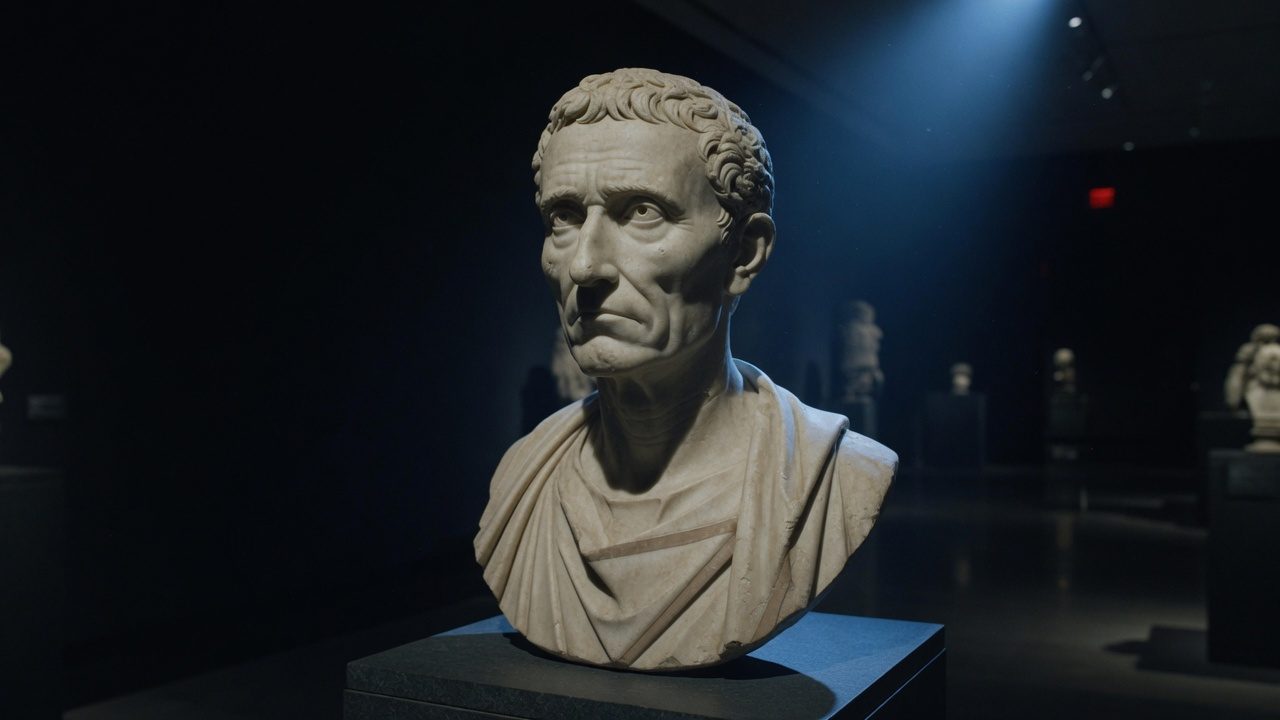
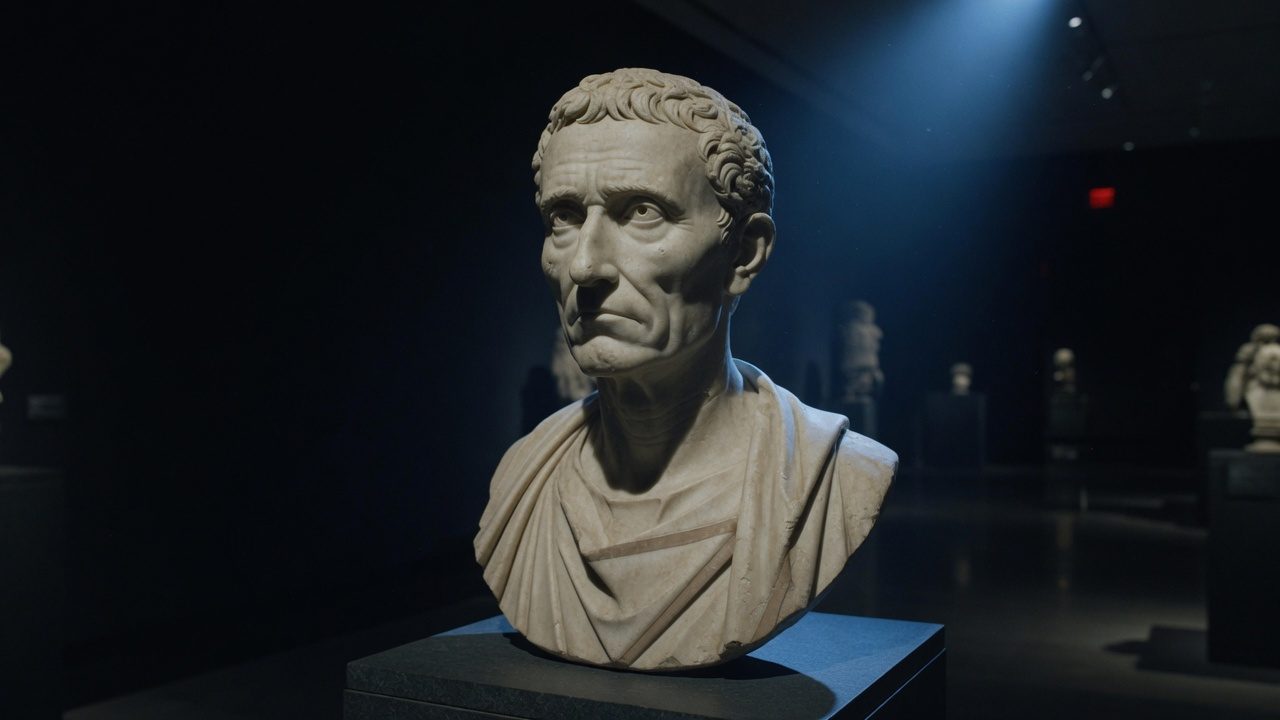
A bust in a villa. A school exercise. A Stoic example of constancy. A tragic play. A toast in a free country that has not yet decided what to do with its own strong men.
The historical man would have been a disaster at Augustus’s dinner table. He was already a disaster at Pompey’s. The afterlife is more polite than the life.
That is how liberty talk survives an empire.
It is moved off the machinery and onto the walls.
When later Romans praise libertas under a Caesar, they are often praising a Cato-shaped absence: the right to be severe, the right to say no in a letter, the right to die well, not the right to strip a general of his province.
When English and American writers reach for Cato, they are reaching for a man who made refusal look like the whole of virtue.
Sometimes a republic needs that look. Valley Forge is not a silly place to want a play about standing upright.
Sometimes a republic needs the other look — Cicero’s exhausted letter, the ugly count of votes, the farm bill that keeps a general from walking into a private room with two other men.
Cato would not practice that second look. He called it bargaining. He was not entirely wrong. Bargains in his decade had a way of turning into leases.
He was not entirely right. A politics with no bargains is just a waiting room for the first army.
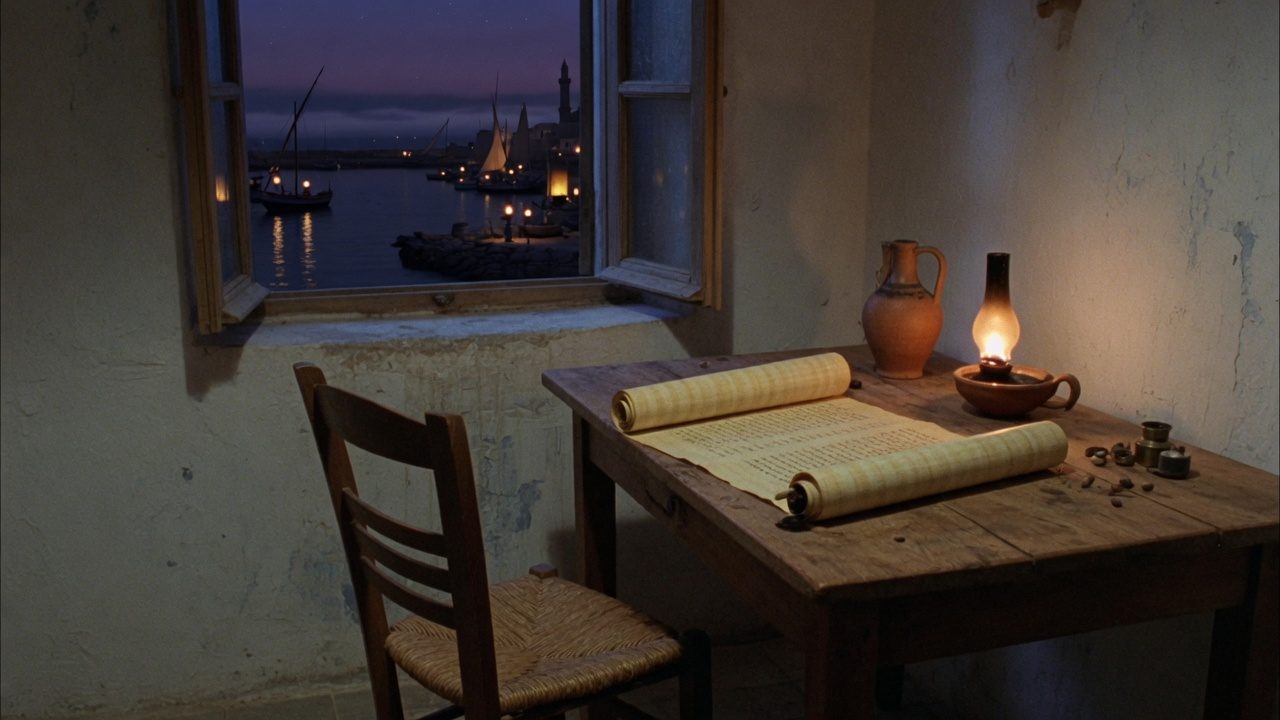
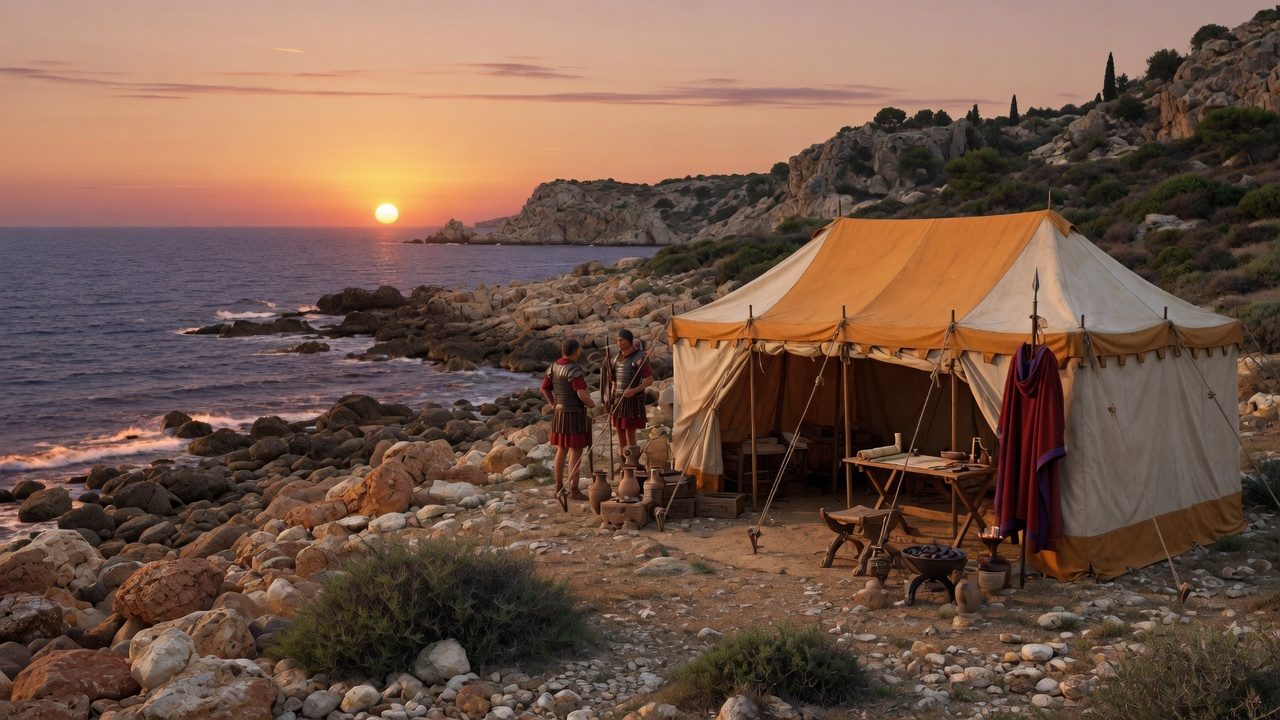
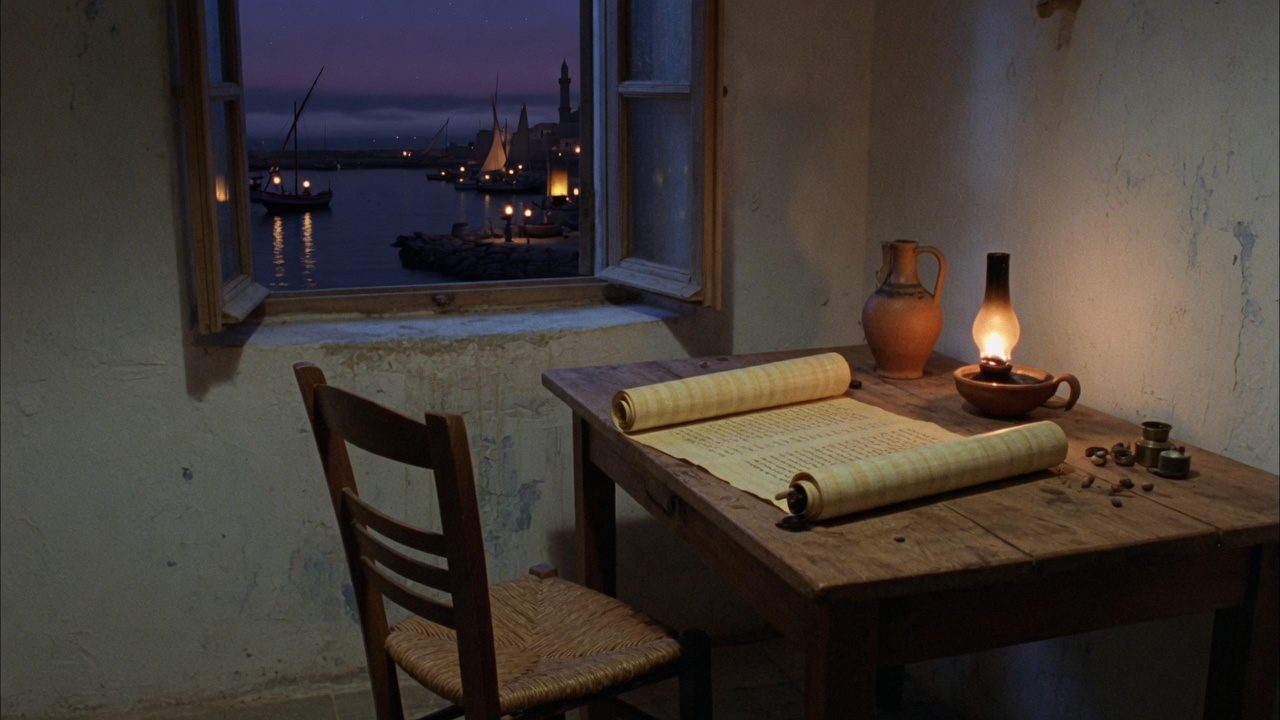
Utica, again.
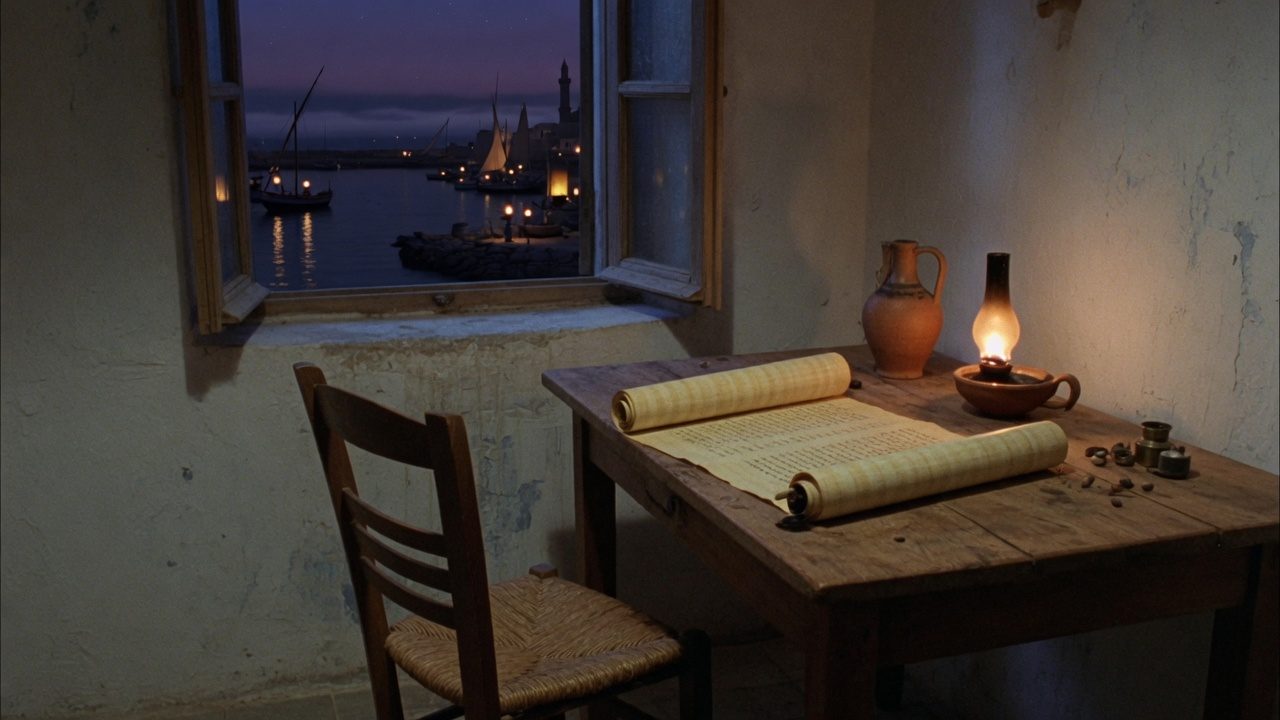
A lamp. A book about Socrates. A city full of people he has told to live.
The Republic, as a set of working habits, is already gone. The Republic, as a sentence one man will not unsay, is still in the room.
That is why he belongs in this series between the dynasts and the emperors.
Not as the cause.
As the measure.
The Principate will inherit his words and empty them, inherit his pose and housebreak it, inherit his nephew’s dagger and turn the Ides into a cautionary tale about what happens when you take the pose literally.
The man himself is smaller and worse and better than the pose.
Stubborn. Performative. Useful in a treasury. Ruinous in a coalition. Kind, at the end, to other people’s survivals. Unkind, at the end, to the idea that Caesar’s kindness was kindness.
He would not bargain.
The age bargained without him.
What was left was a night on the African coast, and a name later governments could hang on the wall when they needed to talk about freedom without practicing the part that costs them a province.
Marcus Porcius Cato.
Ninety-five to forty-six.
The man who would not bargain.
And the long quiet after the second attempt, in which everyone else got back to the math.
End Block D — end of host narration